Nikola Tesla Technical Museum Review
History Museums · Zagreb, Croatia. Situated in Zagreb, the Nikola Tesla Technical Museum offers a window into the evolution of technology and science in Croatia and beyond, through the lens of Nikola Tesla’s pioneering work. Tesla, a Croatian-born inventor…
History Museums · Zagreb, Croatia. Situated in Zagreb, the Nikola Tesla Technical Museum offers a window into the evolution of technology and science in Croatia and beyond, through the lens of Nikola Tesla’s pioneering work. Tesla, a Croatian-born inventor…
Best forMuseum lovers, culture travelers, first-time visitors
Review focusCollections, visitor experience, and practical planning
Historical Context
Situated in Zagreb, the Nikola Tesla Technical Museum offers a window into the evolution of technology and science in Croatia and beyond, through the lens of Nikola Tesla’s pioneering work. Tesla, a Croatian-born inventor and engineer, was a key figure in the development of alternating current electrical systems, radio technology, and a host of other innovations that shaped modern electrical engineering. The museum’s establishment reflects not only a tribute to Tesla’s legacy but also a broader commitment to preserving the history and progress of applied sciences in the region.
Founded in the mid-20th century, the museum has grown from modest beginnings into a comprehensive institution documenting technological advances from the industrial revolution to more contemporary developments. Its collection helps contextualize the scientific breakthroughs that underpin everyday technologies, especially in electrical engineering, mechanical construction, and communication. The museum also aims to educate visitors about the fundamental principles that Tesla’s inventions popularized and how these technologies influenced both Croatian industrial growth and global technological trajectories.
Despite its focus on Tesla, the museum does not exclusively center on the inventor’s biography. Instead, it situates his work within a wider historical and technical framework, demonstrating the interconnectedness of various scientific disciplines. This approach highlights the multi-dimensional nature of technological progress and serves as an educational force encouraging curiosity about the sciences. It holds significance not only for those interested in Tesla himself but for anyone keen to understand how innovation evolves and spreads over time.
What You See on Arrival
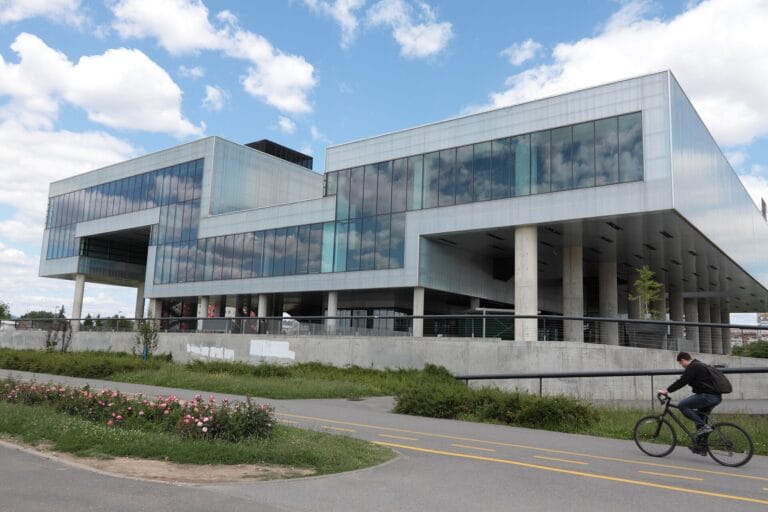
Visitors approaching the Nikola Tesla Technical Museum in Zagreb encounter a facility that clearly signals its scientific and educational mission. The building is designed to present a professional but not ostentatious appearance, allowing the focus to remain on the contents rather than the architecture. This utilitarian character is in keeping with many technical museums, where clarity and function tend to align with the subject matter.
The entrance area tends to include introductory displays and the reception, where visitors can orient themselves and acquire any necessary maps or schedules. Signage here usually emphasizes the museum’s dual role as an educational institution and a guardian of a specific historical legacy. Information about Tesla’s life and inventions often sets the tone for the visit, giving newcomers a preliminary context that aids understanding of the subsequent exhibits.
Visitors might also find some general historical background on Croatian industry or the broader scientific milieu of Tesla’s time. The arrival experience prepares the audience for an exploration of mechanical, electrical, and communication technologies, and it invites curiosity about the inventions that underpin contemporary life. The museum’s presentation avoids overwhelming visitors at this early stage, providing a clear and accessible starting point without heavy technical jargon.
Highlights and Key Exhibitions
At the core of the Nikola Tesla Technical Museum’s appeal is its extensive collection of scientific instruments, technical models, and historical apparatus that demonstrate key principles of physics and engineering. One of the foundational themes revolves around electricity and electromagnetism, fields where Tesla’s contributions were crucial. Visitors can expect to see displays explaining the generation, transmission, and application of alternating and direct current power, as well as early electrical machines such as dynamos and transformers.
Tesla’s inventions and patents receive detailed attention, with specific exhibits dedicated to their functional and historical importance. The museum often exhibits replicas or preserved early examples of Tesla coils, wireless transmission devices, and various electrical measuring tools. These displays clarify how Tesla’s experiments laid groundwork for radio communication and high-voltage power systems. Technical diagrams and interactive elements sometimes support this material, making complex concepts more tangible.
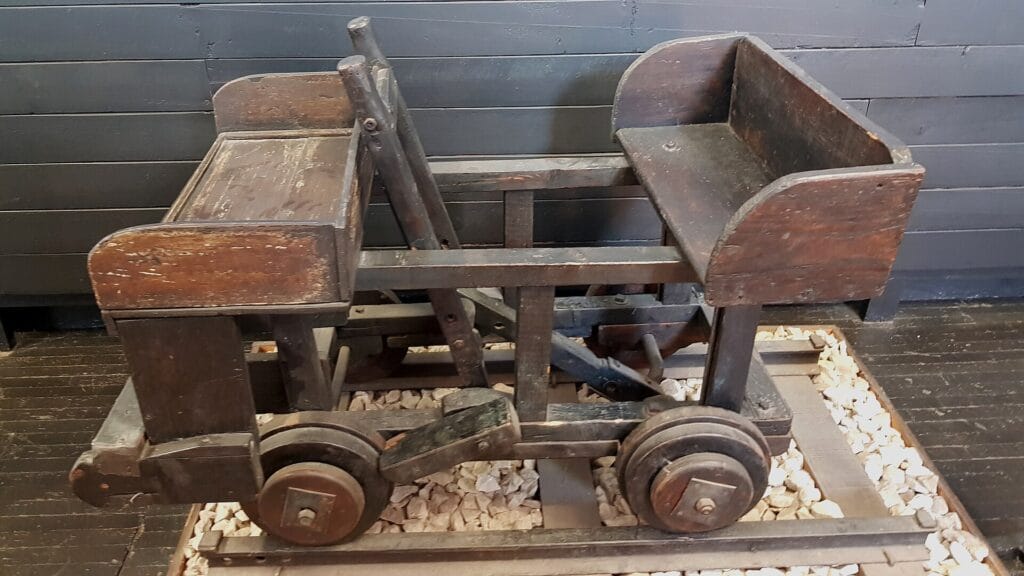
Another significant area covers mechanical engineering instruments, including early engines, pneumatic devices, and industrial machinery components. These exhibits emphasize the industrial environment in which Tesla worked and show its interplay with advances in electrical engineering. The museum also curates sections on precision tools and measurement devices critical to the development of modern technology, illustrating the incremental progress behind headline inventions.
Communication technologies occupy a prominent place as well, with particular focus on telegraphy, telephony, and the transmission of signals over distance. These exhibits contextualize Tesla’s role in experimenting with radio waves and wireless transmission. Collections of early radios and electrical communication devices chart technological evolution from static-filled beginnings to more reliable systems.
The museum’s approach leans heavily on historical artifacts combined with explanatory materials that focus on functionality and principle. This grounded presentation suits visitors interested in the technical details of invention as much as in the broader story of scientific progress. However, the sometimes dense nature of the technical descriptions may not appeal equally to all audiences, particularly younger visitors or those seeking purely visual or narrative-driven experiences.
Visitor Experience
The Nikola Tesla Technical Museum caters primarily to visitors with an interest in science, engineering, and history. Its interpretative style tends toward the detailed and factual rather than the sensational, which can provide a rewarding experience for those willing to engage with the subject matter at a technical level. The museum arranges its exhibitions to encourage a logical progression from basic principles to more complex inventions, supporting gradual comprehension.
For visitors with some prior scientific knowledge or a curiosity about the mechanics of technology, the museum offers substantial content and a clear educational trajectory. Exhibits often combine textual explanations, diagrams, physical artifacts, and occasional interactive elements. This multi-format approach helps sustain visitor attention and provides multiple pathways into the material.
At the same time, the museum’s format may challenge casual visitors or families seeking a lighter experience. There is relatively little emphasis on entertainment or thematic storytelling, which means the museum demands active engagement and patience. The organization generally avoids overly technical language but does assume a willingness to read and absorb detailed information.
The overall pacing of the museum appears manageable, with spaces that prevent overcrowding and allow visitors to move at their own speed. However, some of the mechanical exhibits might feel static compared to more dynamic museums with large-scale working machinery or multimedia presentations. For those prioritizing hands-on learning or digital interactivity, expectations should be tempered accordingly.
Tickets, Access, and Planning
Information regarding tickets and access to the Nikola Tesla Technical Museum should be confirmed directly via the museum’s official website or official tourist sources before planning a visit. This includes up-to-date details on admission fees, whether various concessions or group discounts are available, and any requirements for advance booking or timed entry.
Similarly, potential visitors should check current opening hours, as these can vary seasonally or in response to public health guidance. Information about guided tours, multimedia guides, or educational programs is also best obtained from official channels to ensure accuracy.
Details on accessibility for visitors with special needs are not always comprehensively published, so interested parties are advised to contact the museum in advance if this is a concern. Additional practical information such as parking facilities, onsite services, or nearby transport connections may also be available on the official site.
Final Verdict
The Nikola Tesla Technical Museum in Zagreb serves as a focused institution that chronicles the historical and technical dimensions of Nikola Tesla’s work and its enduring impact on electrical engineering and related fields. Its collection offers substantial evidence of technological evolution and reflects Tesla’s central role in shaping modern science.
The museum is particularly well-suited to visitors with an academic or professional interest in science and technology, or those whose curiosity drives them to understand the mechanics behind familiar inventions. It presents a serious, sometimes dense exploration of Tesla’s contributions and the broader field of electrical and mechanical engineering.
Conversely, visitors looking for a more narrative-driven or visually dynamic museum experience might find this institution somewhat limited. The museum’s educational approach is thorough but avoids modern interactive or theatrical elements that could engage a wider or younger audience more readily.
Overall, the Nikola Tesla Technical Museum occupies an important niche in cultural heritage by preserving and explaining aspects of Croatia’s scientific legacy. It rewards visitors willing to engage with detailed technical content and provides important context about the origins of many modern technologies. Prospective visitors should prepare by consulting official information to plan their visit carefully, balancing their interest level and expectations with what the museum offers.