Museu d’Història de Barcelona Review
Archaeology Museums · Barcelona, Spain. The Museu d'Història de Barcelona (MUHBA) provides a focused exploration of the city’s extensive past, tracing its transformation from Roman auspices through medieval development into a modern European metropolis. Established as part of wi…
Archaeology Museums · Barcelona, Spain. The Museu d'Història de Barcelona (MUHBA) provides a focused exploration of the city’s extensive past, tracing its transformation from Roman auspices through medieval development into a modern European metropolis. Established as part of wi…
Best forMuseum lovers, culture travelers, first-time visitors
Review focusCollections, visitor experience, and practical planning
Historical Context
The Museu d'Història de Barcelona (MUHBA) provides a focused exploration of the city’s extensive past, tracing its transformation from Roman auspices through medieval development into a modern European metropolis. Established as part of wider municipal efforts to preserve and present Barcelona’s unique heritage, the museum seeks to knit together layers of civic history within the urban fabric itself. Its collections and research concentrate on archaeological remains, urban development, and social history, illustrating the long continuum of local life. This emphasis on the city’s identity as a living organism—not solely as an abstract historical subject—has shaped MUHBA’s institutional mission since its inauguration.
The museum’s foundation during the late 20th century mirrored broader trends in European cultural heritage preservation, reflecting a shift toward integrating archaeology and architecture with urban narratives. Barcelona’s varied historical influences—from its Roman origins as Barcino, subsequent medieval growth shaped by commerce and politics, to industrial and twentieth-century epochs—receive detailed scrutiny through the museum’s archives and exhibitions. In positioning itself both as an archaeological site and an interpretive center, MUHBA engages a spectrum of audiences interested in how a city’s past continues to influence its present and future.
What You See on Arrival
Visitors approaching the Museu d'Història de Barcelona are met with a physical and conceptual encounter that foregrounds the city’s ancient roots. The flagship location, the Roman ruins in the Plaça del Rei, offers a distinctive museum experience distinct from typical exhibition halls. The archaeological site itself defines much of the initial impression—an underground network of excavated Roman houses, streets, and civic structures beneath the medieval square’s surface.
Unlike museums housed purely in conventional buildings with artifact displays detached from their origins, MUHBA’s main site anchors the historical narrative in situ. The site’s architectural frame consists of Gothic and medieval royal palace structures, now repurposed as exhibition and visitor spaces above the ruins. This layered setting invites visitors into a dialogue between past and present, demonstrating how history lies literally beneath the feet of the contemporary city.
The museum’s identity is thus closely tied to place and materiality. Signage and visitor facilities prepare guests for an archaeological experience combined with interpretive presentations outlining urban histories. The integration of multilayered historical periods—from Roman through medieval to modern Barcelona—frames the entire visit as a spatial-temporal journey. This grounding in the city’s heart gives MUHBA a distinctive role not just as a museum, but a focal point for local historical consciousness.
Highlights and Key Exhibitions
MUHBA’s primary strength lies in its Roman archaeological site, often considered Europe’s best-preserved urban excavation of a classical city subsurface. The ruins beneath Plaça del Rei expose remains of Barcino’s forum, residential quarters, and public baths dating back to the first centuries AD. Visitors can trace fragments of Roman walls, mosaic floors, and street layouts, providing tangible insights into the urban planning and domestic life of ancient times. The excavation reveals not just monumental public spaces but also everyday settings, emphasizing the lived experience of Roman inhabitants.
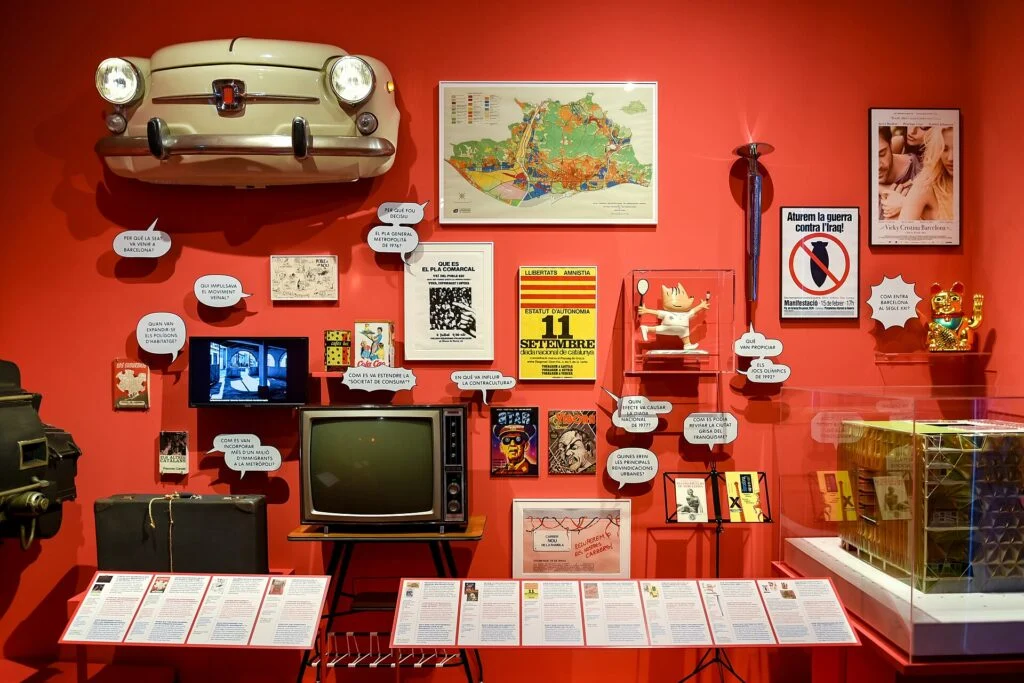
Above ground, within the Palau Reial Major, the museum curates exhibitions that narrate Barcelona’s medieval and later developments. Displays address local governance, economic transformations, and political shifts, highlighting the city’s role in Mediterranean trade and Catalan history. Artifacts including medieval ceramics, architectural fragments, sculptures, and documentary reproductions elaborate upon the evolving urban fabric across centuries.
One notable aspect is the museum’s layered approach to storytelling, connecting archaeological evidence with social history and urban growth. Rather than isolating periods, MUHBA contextualizes Roman remains within wider historical processes—tracing how medieval rulers repurposed Roman structures, or how urban expansion during industrialization reshaped the city. This thematic coherence offers a multidimensional understanding of continuity and change.
Curatorial attention to material culture and architecture helps visitors grasp the complex intersection of local and external influences on Barcelona. Coins, tools, and everyday domestic objects supplement more monumental elements, imparting a grounded perspective on city life. The museum also benefits from integrated displays that link present-day Barcelona’s urban layout with its historical substratum, underscoring the persistence of place through time.
From an academic and public history standpoint, MUHBA’s collections and exhibitions serve both as a resource for specialized research and an accessible introduction for non-specialists. The archaeological site itself is a crucial educational asset, illustrating excavation methods and conservation challenges. Interpretative panels and multimedia components elaborate on construction techniques, social hierarchies, and cultural practices uncovered through centuries of material remains.
Visitor Experience
The experience at MUHBA combines elements of an outdoor archaeological visit with indoor museum interpretation, demanding some adaptability from visitors expecting conventional gallery spaces. Navigation involves descending from medieval courtyards into excavated underground zones, which may not suit all mobility levels. The sequential exposure to foundational Roman structures followed by thematic indoor exhibits encourages a narrative progression but can occasionally feel disjointed due to the different spatial environments.
For audiences keen on archaeology, urban history, and material culture, MUHBA offers a rich and thoughtfully composed visit. Clear interpretative texts, well-conceived exhibit design, and detailed labeling support comprehension of complex historical layers. Care is taken to avoid overwhelming visitors with technical jargon, focusing instead on concrete explanations of architectural elements and historical context. Visual aids and reconstructions aid in visualization where ruins may otherwise appear fragmentary.
Conversely, those less familiar with historical or archaeological terminology might find parts of the presentation dense. While the museum endeavors to balance scholarly detail and public accessibility, some segments presuppose an interest in or prior knowledge of classical and medieval urban history. Visitors looking for narrative-driven storytelling with broad thematic appeal may find the museum’s focus somewhat specialized.
Crowd management and visitor flow require attention, particularly during busy periods, as the spatial constraints of archaeological areas limit capacity. The museum’s urban location within the Gothic Quarter situates it amid other heritage sites, making it sensible to include MUHBA in a broader exploration of Barcelona’s historic center. However, visiting multiple sites may necessitate time management given the depth and concentration of information available here.
Tickets, Access, and Planning
Specific practical information on MUHBA’s admissions policies, opening hours, accessibility, and guided services should be verified through the official website, as these details are subject to periodic change. The museum’s historic and archaeological nature may impose physical limitations on mobility, particularly in subterranean areas. Prospective visitors with accessibility requirements should consult official sources to assess suitability.
Located centrally in Barcelona’s Gothic Quarter, MUHBA is easily reachable via public transportation and on foot from many central points. The proximity to other cultural attractions and historic landmarks makes it convenient for inclusion in broader local itineraries. However, its niche focus suggests allotting sufficient time to engage with the archaeological site and exhibitions thoughtfully.
Advance planning may be worthwhile to accommodate potential visitor volume, especially during peak tourism seasons. While guided tours and audio guides may be available, confirmation from current official offerings is necessary. Visitors interested in architectural details, urban history, or archaeology should prepare accordingly to optimize their experience.
Final Verdict
The Museu d’Història de Barcelona stands out for its direct engagement with the city’s physical and historical layers, particularly through its preservation and presentation of Roman urban ruins beneath Plaça del Rei. Its approach, combining in situ archaeology with curated exhibitions exploring subsequent medieval and modern developments, offers a comprehensive narrative of Barcelona’s evolution that is simultaneously tangible and intellectually rich.
This museum is well-suited to visitors with a sustained interest in urban history, archaeology, and material culture. Its strengths lie in detailed, grounded displays that emphasize historical complexity over simplified narratives. The integration of the ancient site with interpretive content enhances understanding of the city’s continuities and transformations. However, those seeking a lighter, more general introduction to Barcelona’s history may need to supplement their visit with other cultural venues or guides.
While building constraints and the nature of archaeological spaces impose certain restrictions on visitor mobility and circulation, MUHBA’s presentation remains thoughtful and accessible within these limits. Planning ahead and consulting official resources for current practical information will support a more seamless visit.
In summary, the Museu d’Història de Barcelona fulfills an important role in bridging archaeological heritage with civic historical identity. Its focused and layered treatment of urban history rewards visitors prepared to engage with the city’s past beyond surface-level appreciation, making it a valuable component of Barcelona’s cultural landscape.