Museo Nacional de Escultura Review
Art Museums · Valladolid, Spain. The Museo Nacional de Escultura in Valladolid, Spain, occupies a significant position in the preservation and presentation of Spanish sculpture spanning from the Middle Ages through the 19th century. Its origins trace back to…
Art Museums · Valladolid, Spain. The Museo Nacional de Escultura in Valladolid, Spain, occupies a significant position in the preservation and presentation of Spanish sculpture spanning from the Middle Ages through the 19th century. Its origins trace back to…
Best forMuseum lovers, culture travelers, first-time visitors
Review focusCollections, visitor experience, and practical planning
Historical Context
The Museo Nacional de Escultura in Valladolid, Spain, occupies a significant position in the preservation and presentation of Spanish sculpture spanning from the Middle Ages through the 19th century. Its origins trace back to the Spanish monarchy’s efforts in the 19th century to systematically conserve national art heritage, particularly sculpture, which had previously been more vulnerable to dispersion and loss. The museum was officially established as an autonomous entity in the mid-20th century, consolidating collections originally housed in various locations in Valladolid and beyond.
Set within the Palacio de Villena, an architecturally notable Renaissance building, the museum gained a distinctive identity that ties the artwork to its cultural and historical context. This placement underscores a broader theme: Spanish sculpture is not only art to be admired but also a testimony to the country’s religious, social, and artistic history over centuries. The collection includes works from prominent periods such as the Gothic, Renaissance, Baroque, and Neoclassical eras, reflecting Spain’s evolving artistic styles and devotional practices.
The Museo Nacional de Escultura plays a key role in framing Spanish sculpture not just as isolated objects, but as part of larger narratives involving religious orders, patrons, and artists’ workshops. Its holdings demonstrate both the technical and expressive capacities that define Spanish sculptural tradition. The museum’s history also reflects mid-20th century concerns in cultural policy about preserving national identity through the arts, and this focus continues to guide its acquisition and exhibition philosophy.
What You See on Arrival
Visitors approaching the Museo Nacional de Escultura in Valladolid will first notice the historic Renaissance palace that houses it. The building itself sets an atmosphere that blends architectural distinction with heritage conservation. Situated in the city center, the museum aligns well with Valladolid’s urban fabric of historic streets and plazas, offering a coherent cultural experience before even entering the galleries.
The entrance courtyard and facade suggest a setting that emphasizes continuity between art and architecture. This framing primes visitors to consider sculpture not merely as individual pieces but in relation to the spaces they inhabited historically. The name of the museum straightforwardly defines its focus—sculpture—instantly setting expectations that the visit will concentrate on three-dimensional works rather than painting or decorative arts in the broad sense.
Upon entering, visitors are confronted with an emphasis on religious sculpture, a reflection of the collection’s origins and the art forms most conserved and revered in Spain across centuries. The layout makes clear that this is a specialized institution, aimed at those interested in sculpture as a discipline and in Spain’s particular sculptural heritage. The museum’s identity is cohesive and clear, signaling that it is the national repository for this influential segment of Spanish art history.
Highlights and Key Exhibitions
The Museo Nacional de Escultura’s core strength lies in its extensive collection of Spanish religious sculpture, particularly from the late Gothic and Baroque periods. The collection includes remarkable 15th and 16th-century polychrome wood sculptures, many of which come from churches, monasteries, and cathedrals across Spain. This focus highlights how sculpture functioned in religious devotion, ritual, and public spectacle.
One of the museum’s most notable assets is its array of works by key Spanish sculptors such as Juan de Juni, Gregorio Fernández, and Alonso Berruguete. These artists exemplify the development of Spanish Renaissance and Baroque sculpture and are well represented through a variety of statuettes, altarpieces, and devotional figures. For example, the museum displays Juan de Juni’s emotionally expressive and somewhat dramatic style, which contrasts with the typically serene and idealized forms of Renaissance sculpture elsewhere in Europe.
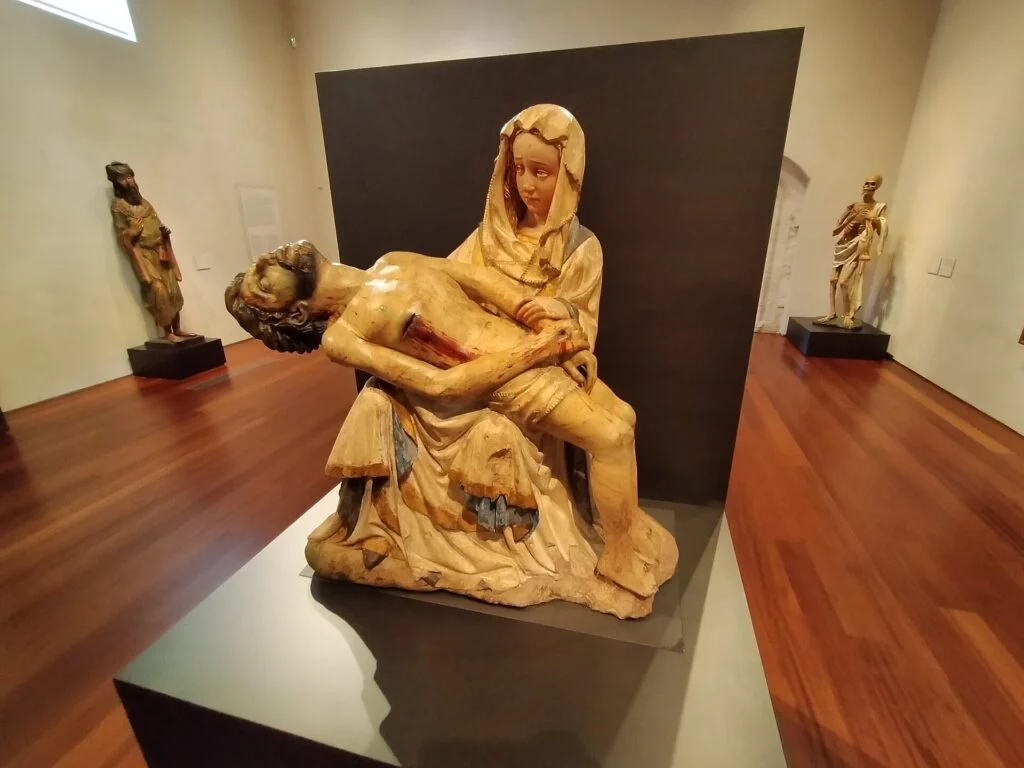
Gregorio Fernández’s expressive polychrome sculptures are also central to the museum and illustrate the intense realism and pathos characteristic of Spanish Baroque religious art. His works, often depicting scenes like the Passion of Christ or the Virgin Mary’s sorrow, are a key reference for understanding the theological and artistic currents of 17th-century Spain.
The museum’s collection extends into later periods as well, featuring Neoclassical and 19th-century sculptures that show changes in style and the shifting tastes of Spanish society. This provides a long view of how the form evolved, moving from medieval religious iconography to increasingly secular and historicist themes, although the focus largely remains on devotional art.
One particular strength is the museum’s preservation of polychromy — the paint and gilding on sculptures — which is often lost in other collections. This attention to original finishes enhances the visual and historical authenticity of the works on display. Visitors gain insight into how these sculptures appeared and were experienced in their original contexts, often in dimly lit churches or outdoor processions.
In addition to standalone sculptures, the museum includes a significant number of retables (altarpieces), which combine sculpture, painting, and architectural elements into cohesive devotional ensembles. These installations provide a deeper understanding of the sculptural role in Spanish religious architecture.
While the museum tends to focus on historic sculptures rather than contemporary art, its collection is wide-ranging enough to reflect diverse material techniques and regional variations. Several pieces highlight local artistic traditions from Valladolid and the surrounding Castilian region, which may be overshadowed in broader national or European narratives.
Visitor Experience
The Museo Nacional de Escultura caters primarily to visitors with an interest in sculpture, art history, or religious art. Its specialization means that some general visitors might find the focus somewhat narrow, particularly given the absence of other art forms like painting or decorative arts in quantity. However, those keen on sculpture and Spanish art will find a well-organized, coherent presentation.
The museum’s setting in a historic palace can influence visitor flow. The building’s corridors and rooms provide an intimate atmosphere, allowing close engagement with the artworks. However, architects historically did not design it as a modern museum space, so circulation can feel compartmentalized or constrained compared to newer institutions with large open-plan galleries.
Interpretive materials are usually clear and detailed, emphasizing the artistic techniques, iconography, and historical significance of the sculptures. Labels tend to explain the religious symbolism and the artists’ intentions, which assists visitors unfamiliar with Christian iconography or Spanish history. This makes the museum more accessible for international audiences, though some background knowledge can deepen appreciation.
The museum’s collection density is balanced: there is enough work to cover a broad range of artistic periods without overwhelming visitors. This allows a measured pace that can accommodate both casual viewers and specialists. Still, the high number of religious sculptures may feel repetitive for some, highlighting a limitation in thematic variety.
Educational programs and accompanying catalogues support deeper engagement, though such offerings can vary and should be checked via the museum’s official channels. The museum’s overall visitor experience rewards those prepared for a focused study of sculpture, its materials, and its religious and cultural roles.
Tickets, Access, and Planning
Details about admission fees, opening hours, guided tours, and special services are subject to change and should be confirmed by consulting the official Museo Nacional de Escultura website before planning a visit. This ensures up-to-date information on pricing, accessibility, discounts, and availability of tours or audio guides.
The museum’s central location in Valladolid allows relatively easy access by public transport or on foot from many parts of the city. Being in a historic district, parking options nearby may be limited, something to consider for those arriving by car.
While the building’s Renaissance architecture contributes to the museum’s atmosphere, it may impose some accessibility challenges for visitors with mobility impairments. For the most current details on physical access and visitor services tailored for different needs, the official site is the best resource.
Visitors who have a particular interest in Spanish Baroque sculpture or religious art might plan additional time since the museum’s collection invites close study. Conversely, those with a more general interest in regional culture can combine a visit here with other Valladolid attractions to gain a complementary perspective on the city’s art and history.
Final Verdict
The Museo Nacional de Escultura in Valladolid is a specialized institution offering one of the most comprehensive collections of Spanish sculptural art, especially from the late Gothic through Baroque periods. Its focus on religious sculpture reveals a vital part of Spain’s cultural and artistic history, providing insights into devotional practices and the technical developments of Spanish sculptors.
The use of a Renaissance palace as its home adds historical resonance and an architectural context that underscores the museum’s cultural importance. However, this setting also brings spatial constraints typical of older buildings adapted for museum use, which can influence the pacing and movement through galleries.
The collection’s strength lies in its concentration on polychrome sculpture and altarpieces, notably by figures such as Juan de Juni and Gregorio Fernández. These works convey a uniquely intense expressiveness rarely matched elsewhere. At the same time, the predominantly religious focus means that visitors seeking a broader range of sculpture from non-ecclesiastical contexts or more contemporary works might find it less diversified.
Interpretive supports generally help make the collection accessible to a wide audience, although familiarity with Christian symbolism will enrich the experience. The museum is suited to visitors who appreciate detailed artistic craftsmanship and historical context over general tourism or broader visual arts surveys.
In sum, the Museo Nacional de Escultura functions as an essential reference point for Spanish sculpture, maintaining its status through careful stewardship of a unique collection and distinctive location. Prospective visitors should prepare by verifying practical details ahead of a visit, but those who engage with its specialized content will find it a substantive resource for understanding an important facet of Spain’s artistic legacy.