Beamish Museum Review
Stanley, United Kingdom. Beamish Museum in Stanley, United Kingdom, presents a distinctively immersive approach to narrating the industrial and social history of North East England. Its purpose is less about displaying isolated artefacts in glass cases and…
Stanley, United Kingdom. Beamish Museum in Stanley, United Kingdom, presents a distinctively immersive approach to narrating the industrial and social history of North East England. Its purpose is less about displaying isolated artefacts in glass cases and…
Best forMuseum lovers, culture travelers, first-time visitors
Review focusCollections, visitor experience, and practical planning
Purpose, Place, and Perspective
Beamish Museum in Stanley, United Kingdom, presents a distinctively immersive approach to narrating the industrial and social history of North East England. Its purpose is less about displaying isolated artefacts in glass cases and more about offering a reconstructed, open-air experience of life in a specific region during the 19th and early 20th centuries. This museum stakes its value on recreating everyday environments—streets, shops, farms, and workplaces—that collectively sketch the evolving social and economic landscape of industrial Britain. Rather than competing with traditional art or history museums that take a broader or more thematic view, Beamish settles firmly on the lived experience in a geographically precise and historically bounded context.
The museum’s perspective privileges a human-scale approach to history, foregrounding ordinary people’s routines alongside the machinery and technology that shaped their world. This focus moves beyond mere nostalgia. It uses carefully researched building reconstructions, period vehicles, and costumed staff to evoke the complexities of work, leisure, and community in a region marked by coal mining, shipbuilding, and rural crafts. Beamish's approach appears to address the gap in public history that static displays often miss: showing how people adapted, struggled, or prospered in relation to industrial change. It centers on the North East’s unique identity, resisting the temptation to universalize the British industrial experience.
By grounding historical interpretation in place-specific detail and reconstruction, Beamish frames history as an environment people inhabited and shaped. This local emphasis delineates its scope tightly, which may alienate visitors looking for a broader sweep of British or industrial history. But it also sharpens Beamish’s authority within a particular niche, allowing a depth of texture and immediacy rare in history museums.
The Core Collection
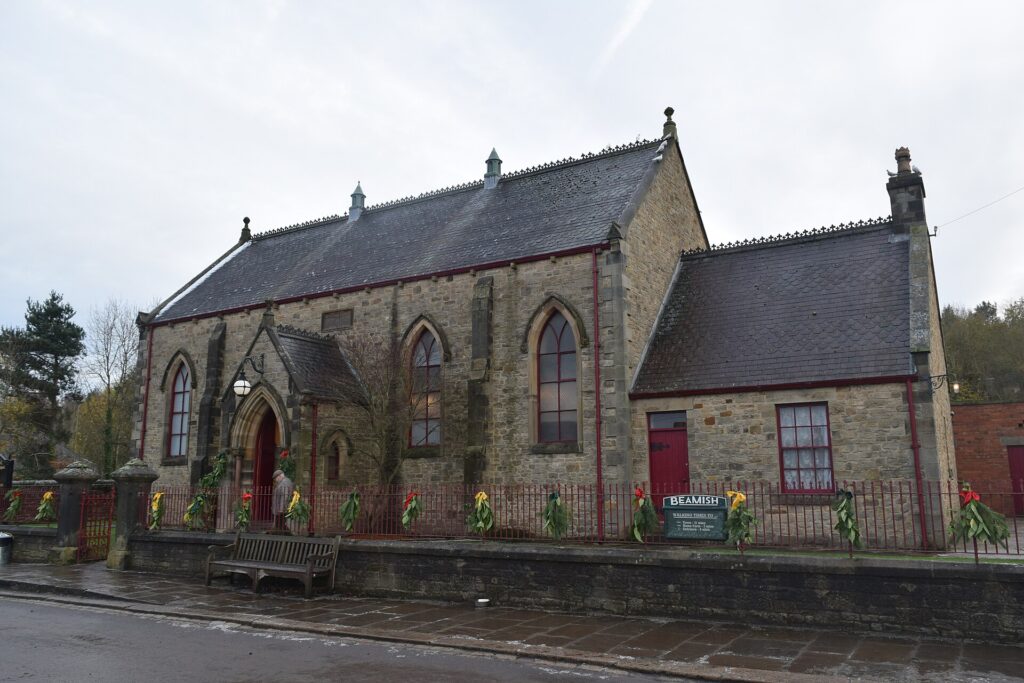
The museum’s core is its extensive collection of buildings and objects that have been dismantled, preserved, or replicated to re-create early 20th-century life. These include actual historic structures transported from the North East and reconstructed on site, such as a 1900s pit village school, a colliery workshop, and a 1900s town street with shops and houses. This tangibility of place constructed through original architecture gives the collection a tactile authenticity that few other museums can replicate.
Beamish also holds a large assemblage of tools, household goods, vehicles, and industrial equipment that contextualize its buildings. The manual machinery of coal mines, factory parts, horse-drawn carts, and period trams are displayed in their active settings rather than as isolated artefacts, which helps convey their utility and significance in everyday life. The inclusion of working transport—the tramway and vintage buses—further integrates these objects into the museum’s reproducible historical world.
Unlike conventional museum collections, the core is dynamic and experiential, committed to demonstrating how objects functioned rather than merely existing as relics. This concentrated effort to preserve industrial and domestic implements provides a multi-layered picture of material culture in a changing society. The collection’s strength lies in the depth of its regional materials and the coherence with which these are arranged to represent a whole community ecosystem—from farm to factory to street.
Exhibitions and Interpretation
Interpretation at Beamish leans heavily on immersive environments supported by live demonstrations and costumed staff embodying trades and roles of the period. Visitors encounter open workshops where blacksmiths or joiners work with period tools, providing direct engagement with industrial skills and crafts. This method offers a tangible connection to history, emphasizing how products were made and how communities functioned. Rather than informative labels alone, the narrative emerges from a combination of verbal explanation, visual cues, and active participation.
Temporary exhibitions and thematic displays appear periodically but tend to complement the core experience rather than divert from it. These exhibitions have explored topics like mining disasters, regional transport, or domestic life within the broader storyline. The interpretative challenge is to balance authenticity with accessibility, as some critics note that the reliance on costumed interpretation can risk a quaint or theatrical tone. However, this presentation generally avoids sentimentality by focusing on labor, social change, and historical complexity rather than simple nostalgia.
The interpretive focus on everyday work, community ties, and social infrastructure remains a consistent thread. By providing contextual background on regional history and industrial processes, Beamish encourages reflection on the human cost and innovation behind industrial progress. The museum’s oral history recordings and archive material further enrich this storytelling, adding real voices and narratives that contrast with the reconstructed settings.
Audience Fit and Visitor Flow
Beamish’s appeal largely rests with audiences fascinated by industrial history, regional heritage, or experiential learning from the early 20th century. Its specificity means it does not cater to all museum-goers; those expecting high art, international history, or contemporary culture will find its collections narrow. However, families, historians, and education groups engaged in social or technological history benefit from its detailed environments and hands-on demonstrations.
The layout follows a loosely chronological and thematic progression around the site, with accessible pathways linking the physical neighborhoods of the pit village, the town, and the farm. This arrangement allows visitors to choose their focus or follow an immersive route through differing aspects of life. Flow is generally manageable due to the large outdoor spaces, though adverse weather could impact comfort and pacing. The extensive grounds encourage a slow, reflective approach rather than a quick tour, demanding several hours or repeated visits for full appreciation.
Visitors interested in specific trades, industrial archaeology, or family history related to the North East will find particular value and relevance here. The museum’s careful curation of regional source material supports this specialist interest, but casual visitors may find aspects too detailed or dense without supplementary guidance. The onsite staff’s role in interpretation and demonstration helps bridge this gap and maintain engagement across diverse visitor backgrounds.
Highlights and Trade-Offs
Among the museum’s highlights is the recreated town street, which assembles a range of original shops, a bank, and a public house, all restored to their period appearance. Walking through this collection of buildings provides an unusually coherent snapshot of early 20th-century commercial and domestic life, supported by authentic shop fittings and archived inventory records.
The pit village school stands out as an educational, social commentary, and architectural asset. It illustrates how industrial communities invested in education and reveals class and gender roles through its arrangement and materials. The colliery engine house and associated mining workshops offer insight into the region’s dominant industry with technical objects displayed in function, connecting machines to miners’ working conditions.
These strengths, however, come with some trade-offs. The immersive, time-specific focus restricts the narrative largely to a few decades at the turn of the century, leaving out broader or more recent industrial developments. The emphasis on physical reconstruction also demands extensive resources and maintenance that may limit interpretive flexibility or expansion into other themes.
Because the museum is largely outdoors and depends on staffed demonstrations, its accessibility can be affected by weather and staffing levels. This practical limitation occasionally restricts visitor experience in ways indoor museums avoid.
Visit Planning
Before planning a visit to Beamish Museum, prospective visitors should check the official website for the latest information on opening hours, admission policies, and any necessary bookings, especially as the museum runs seasonal schedules and could have changes in guided tours or demonstration availability.
Given the size of the site and the density of material presented, allocating several hours is advisable to explore different areas with sufficient time. The outdoor nature of many displays means visitors should prepare for variable weather conditions. Directions to the museum from nearby Stanley and transport options should be verified on official resources, as public transit access may be limited.
The museum caters well to groups interested in educational visits related to industrial history, and academic researchers might find its archival resources worthwhile. Casual or international tourists with a narrow timeframe could find an abbreviated visit challenging.
The Bottom Line
Beamish Museum offers a focused, place-based glimpse into the industrial heritage of the North East of England with an exceptional commitment to environmental reconstruction and functional artefact display. Its strength lies in the depth of its regional material and the way it integrates social and technological history within real historic settings. The choice to recreate not just objects but entire communities narrows the scope but affords a uniquely concrete form of historical engagement.
This approach will satisfy those with a clear interest in British industrial society and regional history, especially educators and history enthusiasts. The museum’s limitations arise from this narrow focus and the dependence on outdoor spaces, which affects accessibility and excludes broader narratives of industrial and post-industrial evolution.
For readers drawn to understanding how communities once lived and labored in the North East, Beamish provides a substantial, well-researched resource that prioritizes human-scale experience over sweeping interpretation. Checking practical details beforehand is wise given its seasonal and outdoor nature. In sharpening its vision on a distinct place and time, Beamish edges away from being a conventional museum and becomes a site where historical life itself is thoughtfully reanimated.