MARQ Archaeological Museum of Alicante Review
Archaeology Museums · Alicante, Spain. The MARQ Archaeological Museum of Alicante (Museo Arqueológico Provincial de Alicante) occupies a pivotal role in preserving and presenting the rich archaeological heritage of the province of Alicante, situated on Spain’s southeastern Medit…
Archaeology Museums · Alicante, Spain. The MARQ Archaeological Museum of Alicante (Museo Arqueológico Provincial de Alicante) occupies a pivotal role in preserving and presenting the rich archaeological heritage of the province of Alicante, situated on Spain’s southeastern Medit…
Best forAncient history, artefacts, cultural heritage
Review focusArchaeological collections, context, and visitor planning
Historical Context
The MARQ Archaeological Museum of Alicante (Museo Arqueológico Provincial de Alicante) occupies a pivotal role in preserving and presenting the rich archaeological heritage of the province of Alicante, situated on Spain’s southeastern Mediterranean coast. The museum is housed in a building originally constructed in the nineteenth century as a prison, converted into a cultural institution in the early twenty-first century. This transition from a carceral facility to a museum reflects broader trends in adaptive reuse of historical buildings for cultural purposes, lending the site a layered historic resonance beyond its collections.
Alicante’s region has long served as a crossroads of Mediterranean civilizations. Its archaeological record spans from Paleolithic sites to Roman colonial settlements, through the influence of Iberian tribes, the Carthaginians, and later medieval societies. The museum opened in this historic city with the mission of showcasing Alicante’s unique prehistoric and historic artifacts and fostering understanding of local and regional cultural developments. In doing so, the MARQ aligns with other provincial museums in Spain tasked with situating local narratives within national and Mediterranean contexts, bridging academic research, public history, and regional identity.
What You See on Arrival
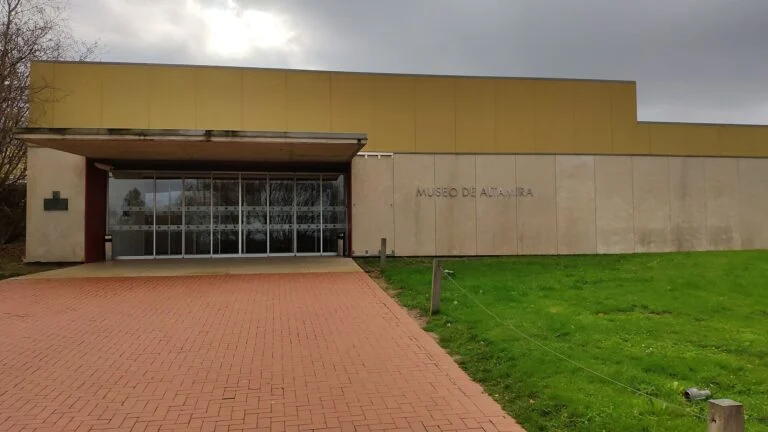
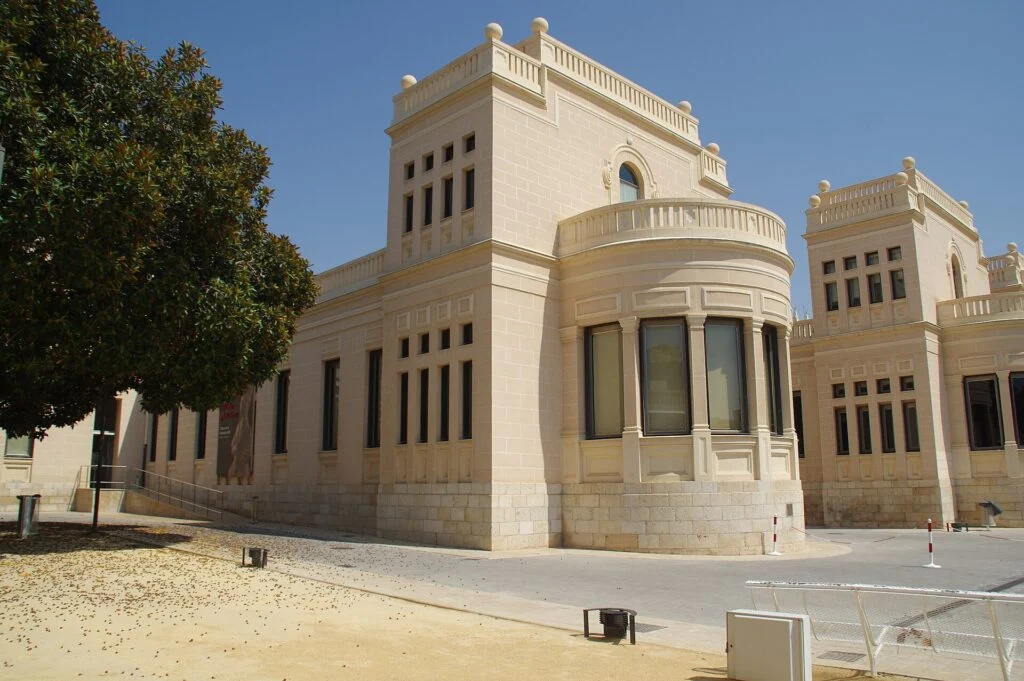
Approaching the MARQ, visitors will encounter a building marked by its substantial grey stone façade and fortress-like appearance, a visual cue to its former role as a prison. The exterior is austere and imposing, a contrast to the traditional image of museums as light-filled and open spaces, which primes visitors for a layered historical experience. The museum clearly identifies itself through signage and regional branding, signaling both its archaeological specialization and its provincial affiliation.
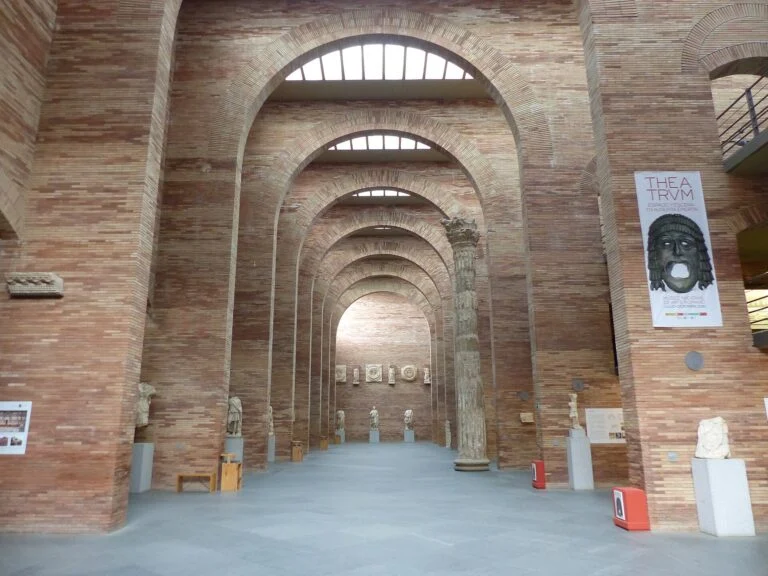
Once indicated by the entrance signage, the public route moves through the original prison interior that has been adapted with modern materials and light fittings that respect the building’s historic fabric. Large windows, high ceilings, and carefully integrated glass partitions contribute to a sense of openness, though the building’s original structural elements remain prominent. This architectural combination serves a dual purpose: preserving historical authenticity while accommodating museum practices.
Inside, the museum frames Alicante’s history as a continuous narrative, guiding visitors into the longstanding human presence in this coastal region. The initial areas introduce the prehistoric and early historic phases, while later sections focus on more recent epochs, including the Roman and medieval periods. On arrival, the visitor is likely to register a tension between the building’s origin and the artifacts on view—this tension creates an evocative environment that complements the regional story without becoming a major distraction.
Highlights and Key Exhibitions
The foundation of the MARQ’s collection lies in its extensive archaeological holdings from Alicante province, which provide a detailed and nuanced view into the area’s prehistoric communities and later cultural groups. Chief among these are the Paleolithic and Neolithic artifacts that document early human habitation, including stone tools, ceramic fragments, and burial items. These materials elucidate the gradual shift from hunter-gatherer societies to settled agricultural communities in the Mediterranean basin.
Of particular note are the Iberian collections, which illuminate the once enigmatic pre-Roman peoples of eastern Spain. Sculptural pieces such as the “Lady of Guardamar” stand out for both their artistic merit and archaeological significance, offering insight into local religious and funerary practices. The museum places these finds in a narrative context that explains broader Iberian cultural traits, including social organization, economic activity, and interactions with neighboring cultures such as the Greeks and Phoenicians.
The Roman period occupies a significant portion of the MARQ’s exhibitions, reflecting Alicante’s integration into the Roman Empire as the city of Lucentum. Roman mosaics, architectural fragments, inscriptions, and everyday objects provide a rich tableau of life during antiquity. These exhibits convey the transformation of the region under Roman rule, from infrastructure and urban planning to shifts in social and economic structures. Finding substantial material from this era is an asset to the museum’s ability to present a well-documented and coherent ethnic and temporal progression.
The museum also addresses later periods, including the Visigothic, Islamic, and Christian medieval eras. While these sections are comparatively smaller, they offer important context by mapping changes in population, governance, and culture that led to the contemporary regional identity. Ceramic, metalwork, and architectural remnants from these phases are often presented with explanatory text that clarifies historical continuity and change.
Importantly, the MARQ organizes its displays around thematic areas, such as funerary practices, domestic life, and trade networks, facilitating a multidimensional understanding of the past. The museum’s use of multimedia—where present—is restrained but informative, focusing on clear reconstructions and factual presentations rather than dramatic visual effects. This approach benefits visitors seeking a serious archaeological perspective rather than entertainment.
Visitor Experience
The MARQ’s layout allows visitors to move through time in a roughly chronological order, which contributes to a coherent narrative flow. The building’s segmented architecture, however, requires navigation through multiple floors and spaces that can feel somewhat constrained in places, given the inherited prison structure. This might pose challenges for seamless visitor movement or those less mobile, though step-free access exists in some parts.
Interpretation is targeted primarily at adults and older children with an interest in archaeology and history. Labeling and explanatory panels are detailed without becoming overly technical. The museum balances academic content with accessibility, though some dense text passages could demand close reading, which may slow the visitor’s pace. For casual tourists, the exhibits engage through the intrinsic interest of the objects and regional story, but the experience is best appreciated with prior curiosity about Iberian archaeology or Mediterranean history.
The museum’s lighting design and exhibition cases present artifacts clearly without excessive glare or crowding, though peak times may reduce the sense of intimacy at key displays. Unlike museums with extensive interactive technology, the MARQ relies on physical exhibits and straightforward interpretation, which some visitors may find refreshingly focused, while others might desire more engagement options.
One limitation to consider is that the MARQ’s scope is provincial and focused. It does not attempt to present a comprehensive Spanish or Mediterranean archaeology survey, and visitors should approach it with that framework. This specialization favors depth over breadth but means that those looking for a broader comparative experience may find it limited. Similarly, visitors with mobility challenges should confirm current access accommodations in advance due to the building constraints.
Tickets, Access, and Planning
Admission procedures and hours may vary over time, so potential visitors should consult the MARQ’s official website or contact the museum directly before planning their visit. The museum is in Alicante, a city with a range of transport options, including regional train and bus connections, though exact details on parking and accessibility should be checked as these facilities can be limited by the historic setting.
Given the museum’s nature and subject matter, the visit duration depends heavily on the visitor’s interests. Casual visitors might spend under an hour, while archaeology enthusiasts may wish to allow significantly longer to absorb the detailed exhibitions. The museum’s layout requires some walking and stair use, so physical preparedness is advised.
Because the MARQ is a provincial institution with a scholarly orientation, it may not offer frequent guided tours or a wide array of visitor services common to larger international museums. Visitors interested in deeper interpretive support should verify the availability of any tours, lectures, or educational programs when planning their visit online.
Final Verdict
The MARQ Archaeological Museum of Alicante offers a focused and well-structured presentation of Alicante’s archaeological heritage. Its strength lies in the quality and coherence of its collections, especially regarding the Iberian and Roman periods, combined with a clear narrative progression that situates regional history within Mediterranean antiquity.
The museum’s setting in a former prison building adds an unexpected architectural dimension, enhancing the visitor’s sense of historical depth without overwhelming the exhibits. However, the adaptation means that spatial flow and accessibility may challenge some visitors, and those expecting modern interactive and multimedia installations will find the approach measured and traditional.
The museum suits visitors with a genuine interest in archaeology, Mediterranean history, or regional Spanish culture. It provides reliable, well-curated exhibitions that privilege authenticity and scholarship over spectacle. On the other hand, it is less accommodating to those seeking broad comparative surveys or high-tech interpretive environments.
In sum, the MARQ offers a substantive experience that makes a conscientious contribution to Spain’s cultural institutions. While some practical planning is advisable, particularly around accessibility and visiting details, the museum stands as a serious resource for understanding Alicante’s past through its archaeological record.