Kon-Tiki Museum Review
Archaeology Museums · Oslo, Norway. The Kon-Tiki Museum in Oslo, Norway, originated from the post-war fascination with Thor Heyerdahl’s 1947 expedition. Heyerdahl, a Norwegian ethnographer and adventurer, set out to demonstrate that people from South America could have settled…
Archaeology Museums · Oslo, Norway. The Kon-Tiki Museum in Oslo, Norway, originated from the post-war fascination with Thor Heyerdahl’s 1947 expedition. Heyerdahl, a Norwegian ethnographer and adventurer, set out to demonstrate that people from South America could have settled…
Best forMuseum lovers, culture travelers, first-time visitors
Review focusCollections, visitor experience, and practical planning
Historical Context
The Kon-Tiki Museum in Oslo, Norway, originated from the post-war fascination with Thor Heyerdahl’s 1947 expedition. Heyerdahl, a Norwegian ethnographer and adventurer, set out to demonstrate that people from South America could have settled in Polynesia during pre-Columbian times by sailing a balsa wood raft across the Pacific Ocean. The successful 101-day journey from Peru to the Tuamotu Islands captured worldwide attention and sparked significant academic and popular interest. The museum was founded in 1957 to preserve and display the expedition’s artifacts and to explore the broader themes of ancient seafaring, cultural contact, and human ingenuity.
The institution reflects a particular moment in mid-20th-century anthropology and exploration, when experimental voyages sought to challenge existing assumptions about prehistoric migration patterns. While the museum’s emphasis remains on the original Kon-Tiki expedition and related sea voyages undertaken by Heyerdahl and his team, it is also a repository for materials documenting early navigation techniques and Polynesian culture. However, its framing has sometimes been a subject of debate, as scientific consensus about the migration of peoples in the Pacific has evolved since the expedition. This historical context provides essential grounding for understanding what the museum attempts to communicate to visitors about human mobility, technology, and the power of determination.
What You See on Arrival
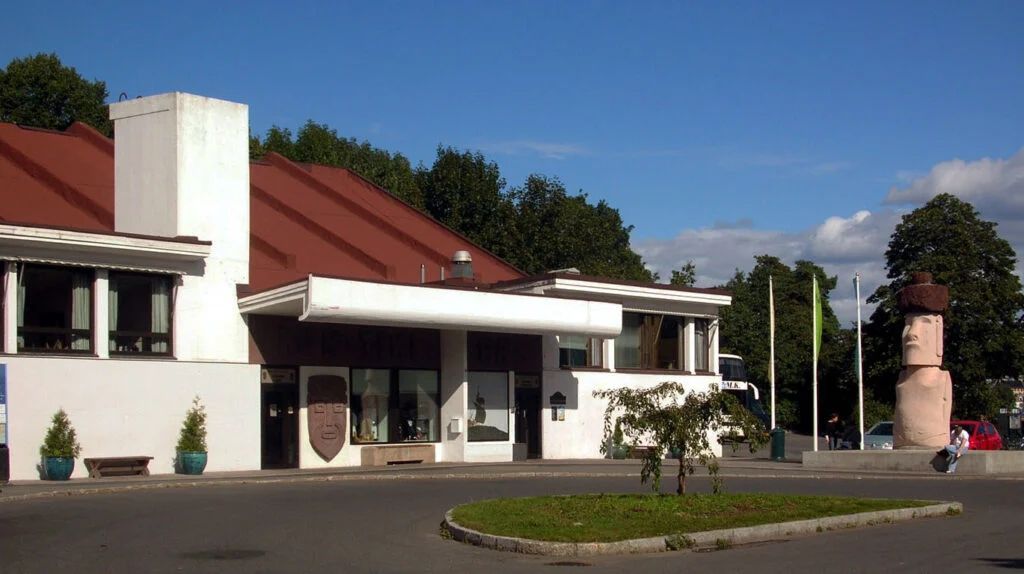
Approaching the Kon-Tiki Museum, visitors encounter a building on the Oslo waterfront that signals its maritime theme through straightforward design rather than elaborate architecture. The museum’s focus is clear before even entering: The iconic Kon-Tiki raft is displayed as the centerpiece, with large windows or open spaces that lend visual prominence to the original craft. This direct presentation frames the visit from the outset, orienting visitors toward the tangible, physical legacy of Heyerdahl’s journey.
Signage and exterior elements establish the museum’s identity as dedicated primarily to the preservation and interpretation of this singular expedition. The entrance experience suggests a mix of maritime heritage and adventurous spirit. Visitors can expect a museum that foregrounds a specific narrative rather than a comprehensive survey of Pacific cultures or maritime history. The framing thus sets expectations for a focused but detailed look at how one man’s hypothesis was tested by undertaking a challenging voyage, rather than a broad ethnographic collection or general seafaring museum.
Highlights and Key Exhibitions
The exhibit centerpiece is undoubtedly the original Kon-Tiki raft, suspended or mounted in a manner that allows visitors a close view of the craft’s construction and scale. This raft, built from balsa wood and other natural materials replicating those available to pre-Columbian peoples, is presented with an emphasis on its simplicity and the challenges it posed at sea. The museum’s interpretation often includes the context of its assembly, the crew’s living conditions, and the uncertain nature of the expedition.
Alongside the Kon-Tiki, the museum houses a range of artifacts from the journey, including navigational instruments, photographs, and personal items belonging to the crew. These items support a narrative that blends adventure with anthropology and maritime technology. The photographic archives, for instance, document the journey’s progression and provide glimpses of island life and oceanic conditions.
Another notable aspect of the collection covers subsequent voyages by Heyerdahl, such as the Ra II expedition, which aimed to demonstrate the possibility of ancient transatlantic crossings from Africa to the Americas using papyrus boats. Wooden boats, reed constructions, and other traditional seafaring crafts are included to illustrate different theories and experimental archaeology approaches advocated by Heyerdahl.
The museum also contains ethnographic objects linked to Pacific Island cultures, showing tools, canoe models, and decorations that provide context for understanding the peoples Heyerdahl studied and whose histories he helped to promote in popular imagination. However, this collection is limited in size and scope and is presented largely from the perspective of Heyerdahl’s interpretations rather than providing a comprehensive survey of the diverse Polynesian cultures.
Interpretive materials, including maps, explanatory panels, and documentary film footage, form an integral part of the exhibitions. These elements aim to convey both the technical challenges of the expeditions and the anthropological questions they sought to explore. The museum has historically presented Heyerdahl’s theories with enthusiasm, though more recent displays may attempt a more measured presentation in light of critiques and subsequent scholarship.
Visitor Experience
The visitor experience at the Kon-Tiki Museum is generally straightforward and centered on appreciating the physical artifacts and the story they tell. The prominence of the actual or replica rafts grants a tangible sense of the scale and texture of early ocean travel, which tends to engage a wide range of visitors from maritime enthusiasts to those interested in adventure narratives.
Visitors can likely expect a linear path through the exhibits, facilitating a clear comprehension of the sequence of voyages and their significance. The pacing of the museum suits those comfortable with a mix of visual artifacts, photographic documentation, and text-based interpretation. The reliance on original equipment and archival material lends authenticity that contrasts with more interactive or hands-on maritime exhibits elsewhere.
The museum’s focus on Heyerdahl’s expeditions means it particularly suits visitors curious about 20th-century exploration history or those intrigued by the experimental testing of historical hypotheses. The displays can be quite detailed, which benefits those with a serious interest but might feel dense to casual visitors expecting broad summaries of Pacific cultures or extensive multimedia engagement.
Interpretation tends to emphasize narrative and adventure, sometimes raising questions about the balance between celebration and critical assessment of Heyerdahl’s theories. For visitors seeking a deeply critical or academic treatment of Polynesian history or migration, the museum may not fully satisfy. However, for those interested in the tangible legacy of a famous voyage and an exploration of human curiosity, it offers a focused and compelling story.
Tickets, Access, and Planning
Practical information on visiting the Kon-Tiki Museum requires cautious preparation. Since details such as opening hours, ticket prices, availability of guided tours, and accessibility provisions can change, prospective visitors should consult the official museum website or contact museum staff directly for the most current information.
The museum’s location on the Oslo waterfront places it within reach of other cultural sites and public transport, which can facilitate combined visits. However, visitors planning to include the Kon-Tiki Museum in their Oslo itinerary should consider how its focused content fits within overall interests and time available. The museum is relatively compact, so planning a visit in conjunction with other nearby attractions may be advisable.
Final Verdict
The Kon-Tiki Museum occupies a particular niche within Oslo’s museum landscape, dedicated to the story of Thor Heyerdahl’s famous 1947 voyage and related expeditions. Its strength lies in the preservation and presentation of original seafaring vessels and expedition artifacts that make the story tangible and vivid.
The museum’s narrative approach, centered on a remarkable chapter in the history of exploration, offers visitors a chance to engage directly with the material legacy of an experimental anthropology project. The careful display of the original raft and complementary artifacts supports an appreciation of the physical challenges and adventurous spirit involved.
At the same time, the museum’s narrower scope and historical framing may not satisfy visitors seeking a comprehensive or critically nuanced overview of Pacific cultures or modern anthropological perspectives. Its interpretive balance leans toward celebration, reflecting the time of its founding and the cultural significance of Heyerdahl’s voyages. This is not a criticism but an important context for setting expectations.
For those interested in maritime exploration, experimental archaeology, or mid-century adventure stories, the Kon-Tiki Museum remains a focused and informative destination. Its strengths lie in clarity of purpose and artifact preservation rather than broad-based ethnography or contemporary museological innovation. Planning a visit with an understanding of these limits will help visitors gain maximum appreciation from what the museum offers.