Galleria dell Accademia Florence Review
Art Museums · Florence, Italy. The Galleria dell'Accademia in Florence, Italy, stands as a vital repository of Renaissance art, markedly significant for its role in preserving and showcasing masterpieces that define this transformative period in European history. Established in…

Art Museums · Florence, Italy. The Galleria dell'Accademia in Florence, Italy, stands as a vital repository of Renaissance art, markedly significant for its role in preserving and showcasing masterpieces that define this transformative period in European history. Established in…
Best forMasterpieces, architecture, cultural history
Review focusCollection highlights, building, visitor flow
Historical Context
The Galleria dell'Accademia in Florence, Italy, stands as a vital repository of Renaissance art, markedly significant for its role in preserving and showcasing masterpieces that define this transformative period in European history. Established in the 18th century, the museum was originally intended to serve as an educational facility for the students of the Accademia di Belle Arti di Firenze, Florence’s prominent academy of fine arts. Over time, it evolved from a teaching collection into a public museum celebrated for its invaluable artworks.
The Galleria dell'Accademia holds a pivotal place in art history chiefly because it houses some of the most iconic sculptures of the Renaissance, a period distinguished by its revival of classical forms and unprecedented artistic innovation. Architecturally, the building reflects neoclassical influences, providing an atmosphere that respects and enhances the art within. Its collections go beyond the renowned sculptures to encompass paintings and musical instruments that enrich its narrative of artistic achievement anchored in Florence’s profound cultural legacy.
What You See on Arrival
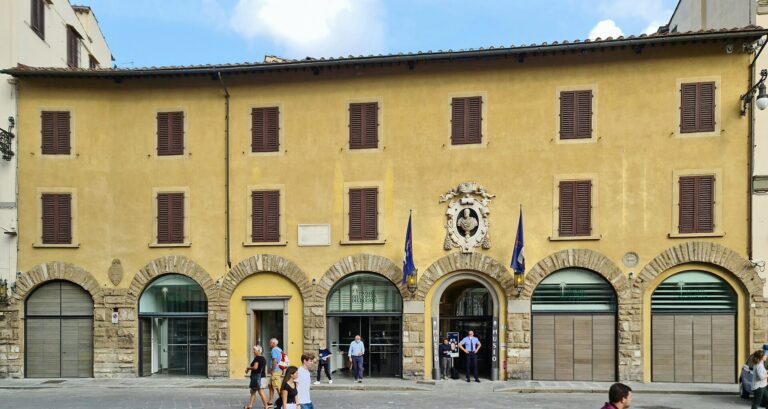
Upon approaching the Galleria dell'Accademia, visitors are immediately greeted by the understated elegance of its façade, which blends seamlessly into the historic streetscape of Florence’s city center. The entrance area is relatively modest compared to the grandeur of the treasures housed inside, creating a sense of anticipation rather than spectacle. Inside the lobby, clear signage provides direction towards exhibition spaces and essential visitor amenities, establishing an environment that is both welcoming and practical.
The museum layout is compact and logical, facilitating a coherent viewing flow that prioritizes its star attractions while allowing visitors to engage with lesser-known works. The initial spaces introduce a collection of early Renaissance paintings and sculptures, setting the stage for the main draw. The design skillfully balances open gallery areas with more intimate rooms, ensuring that visitors can appreciate the detailed craftsmanship of each piece without feeling overwhelmed. This thoughtful spatial arrangement is crucial in a museum that must accommodate art of vastly differing scales and styles.
Highlights and Key Exhibitions
The standout highlight of the Galleria dell'Accademia is undoubtedly Michelangelo’s David. This colossal marble statue, celebrated as a masterpiece of Renaissance sculpture, embodies artistic finesse and symbolic power. Standing over five meters tall, the figure’s intricate anatomical precision and poised expression convey both physical perfection and contemplative strength. Its presence alone justifies a visit, drawing admirers from around the globe to experience firsthand the genius and daring vision embodied in marble.
Beyond David, the museum’s sculpture collection extends to other significant works by Michelangelo, including unfinished pieces known as the “Prisoners” or “Slaves.” These evocative sculptures provide insights into the artist’s process and unfinished intentions, revealing the tension between form and raw material. Equally noteworthy is the museum’s collection of Florentine Gothic and Renaissance paintings, featuring artists such as Botticelli and Ghirlandaio. These works highlight the development of religious and secular themes during the epoch and complement the narrative of artistic innovation.
Additionally, the Galleria dell'Accademia houses an impressive array of historical musical instruments, many crafted by the celebrated luthier family, Stradivari and the Amati. This collection underscores Florence’s broader contribution to the arts, illustrating the interplay between visual and musical culture during the Renaissance.
Visitor Experience
The museum offers a visitor experience that is generally well-regarded for its clarity and focus on art appreciation. The galleries are arranged thoughtfully, allowing visitors to engage deeply with each artwork without distraction. The lighting is carefully calibrated to highlight the sculptures’ three-dimensional qualities and the paintings’ color subtleties while avoiding glare or damage to sensitive works. The museum provides concise and informative descriptions, accessible to both casual visitors and scholars, thus catering to various levels of prior knowledge.
Audio guides and printed materials are available, enhancing understanding of the artworks’ historical and artistic contexts. Though the museum is rich in must-see masterpieces, it remains intimate enough to foster a contemplative atmosphere rather than feeling rushed or overcrowded. However, given the immense popularity of some exhibits, especially the David, peak hours can become congested, slightly detracting from the overall quiet ambiance.
The museum staff are typically noted for their professionalism and readiness to assist, contributing positively to the overall visitor experience. Facilities such as a museum shop and café are present but limited in scale, consistent with the museum’s focus on its collections rather than tourist commercialization.
Tickets, Access, and Planning
Planning a visit to the Galleria dell'Accademia requires some forethought, especially due to its high demand and limited capacity. Tickets should be purchased in advance where possible, either online or through authorized vendors, to avoid long queues and potential disappointment. The museum offers various ticketing options, including concessions for students and seniors, making the collections accessible to a broad audience.
Accessibility is addressed with measures to accommodate visitors with mobility challenges, including ramps and elevators, though some areas retain the character of an older building, which may present minor obstacles. The museum’s central location in Florence is easily reachable by public transportation and is within walking distance of other major cultural sites, facilitating integration into broader sightseeing itineraries.
Opening hours vary seasonally and are subject to change on holidays or special occasions, so checking the official website before planning a visit is advisable. Photography is generally restricted within the museum, a policy designed to preserve artworks and maintain a respectful environment for visitors.
Final Verdict
The Galleria dell'Accademia in Florence is an essential destination for anyone interested in Renaissance art and sculpture. Its compact but impeccably curated collection allows for an intense, focused experience centered around some of the most iconic works in art history. The museum’s principal attraction, Michelangelo’s David, continues to captivate and inspire with its monumental presence and exquisite craftsmanship, while the surrounding collection broadens understanding of the artistic milieu from which it emerged.
While the museum’s popularity can lead to busy conditions, the thoughtful presentation and accessibility measures help maintain a rewarding visit. Whether for dedicated art enthusiasts, history buffs, or casual tourists, the Galleria dell'Accademia offers a culturally enriching experience that underscores Florence’s unparalleled artistic heritage. Its balanced mix of masterpieces, educational resources, and manageable scale render it a must-see institution in the heart of Italy’s Renaissance capital.