Fujian Museum Review
Archaeology Museums · Fuzhou, China. The Fujian Museum, located in Fuzhou, the provincial capital of Fujian in southeastern China, offers insight into the historical and cultural developments of the region, which has long been of strategic importance both economically…
Archaeology Museums · Fuzhou, China. The Fujian Museum, located in Fuzhou, the provincial capital of Fujian in southeastern China, offers insight into the historical and cultural developments of the region, which has long been of strategic importance both economically…
Best forMuseum lovers, culture travelers, first-time visitors
Review focusCollections, visitor experience, and practical planning
Historical Context
The Fujian Museum, located in Fuzhou, the provincial capital of Fujian in southeastern China, offers insight into the historical and cultural developments of the region, which has long been of strategic importance both economically and culturally. Fujian Province’s coastal location positioned it as a key maritime gateway, influencing trade routes, cultural exchange, and military affairs for centuries. The museum’s foundation reflects a wider trend in Chinese cultural policy aimed at preserving regional heritage while providing public education about local history and identity.
Fujian’s history spans from ancient Qi and Min cultures through periods of imperial Chinese dynasties, to its more recent roles in maritime commerce and emigration. The Fujian Museum emerged as an institution designed to collect, curate, and display artifacts illustrating this range of historical phases. It traces Fujian’s development from prehistoric times through dynastic eras and into the modern day. As a provincial museum, its mission includes both scholarly research and regional cultural promotion, balancing academic narrative with public accessibility. The institution also aligns with local efforts to frame Fujian not only as a historic hub but as a dynamic part of China’s evolving social and cultural narrative.
Visitors and researchers interested in the cultural heritage of southeastern China find in the Fujian Museum a concentrated overview that complements broader national museums. It is especially important for those seeking to understand how Fujian’s geography and communities shaped its history differently from inland provinces. However, the museum does not offer an exhaustive national scope; rather, it provides detailed regional context and thematic lenses into local archaeology, traditional art, folk customs, and maritime connections.
What You See on Arrival
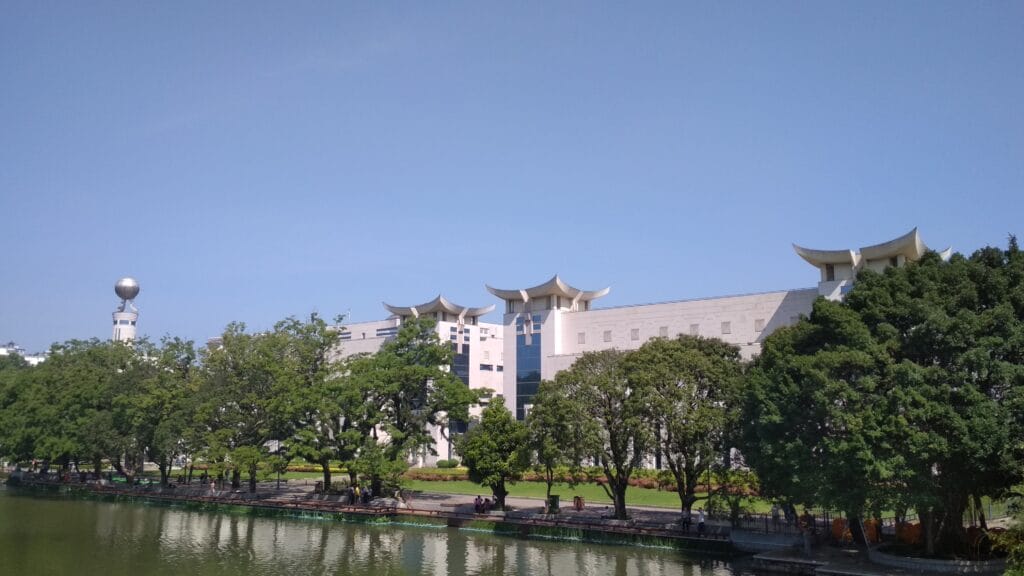
Approaching the Fujian Museum, visitors are met with a building that reflects a blend of modern architectural sensibilities and elements reflective of local cultural motifs. The structure’s design conveys a sense of institutional seriousness without overwhelming visitors through grandiosity. It aims to situate the museum as a civic space for learning and cultural engagement within Fuzhou’s urban fabric.
The entrance area establishes the museum’s identity with clear signage and an introductory hall that typically includes orientation materials—maps, introductory panels, and sometimes multimedia displays—that help frame the Fujian region’s significance before visitors move deeper into the galleries. The lobby and reception are designed to facilitate a smooth entry experience while directing visitors to the main exhibition spaces. The immediate impression is one of a carefully curated institution that prioritizes clarity and coherence in its presentation.
Surrounding landscaping or public spaces leading to the entrance hint at local flora or architectural touches inspired by Fujian’s cultural heritage, creating a subtle thematic introduction before crossing the threshold. Overall, the arrival experience encourages visitors to anticipate a comprehensive, region-focused exploration bridging history, culture, and art. Given the museum’s civic role in Fuzhou, it offers both residents and tourists a starting point for engaging with the diverse layers of the province’s past.
Highlights and Key Exhibitions
The core strength of the Fujian Museum lies in its systematic presentation of the province’s archaeology, history, and culture through permanent collections that span from prehistoric artifacts to contemporary regional crafts. These comprehensive exhibits trace Fujian’s unique identity, geographic realities, and cultural developments in a paced, thematic approach.
One notable section is dedicated to Neolithic and Bronze Age finds, which lay the groundwork for understanding early human settlement and technological advances in the region. Artifacts such as pottery shards, stone tools, and bronze implements are displayed with careful attention to archaeological context, shedding light on Fujian’s ancient communities’ livelihoods and social structures. This archaeological segment serves to place Fujian within the larger matrix of southeastern China’s prehistoric cultures but maintains a local focus on discovery sites within the province.
Another significant area covers the historical dynasties that shaped Fujian’s political and cultural landscape. Exhibits include documents, coins, official seals, and calligraphy that underscore the province’s administrative roles across different regimes. The Qing dynasty, in particular, is well represented, reflecting a period when Fujian’s ports were crucial for trade and external contacts. These objects illustrate both governance and daily life, offering insights into regional variations within China’s imperial framework.
Maritime trade forms a distinctive theme in the exhibitions, emphasizing Fujian’s long history as a coastal province with sea routes spanning East and Southeast Asia. The museum displays ship models, navigation instruments, and imported goods that testify to Fujian’s role in maritime commerce. This section connects with the broader narrative of the Maritime Silk Road but leans heavily on concrete local evidence rather than abstract global history.
Traditional Fujian arts and crafts receive dedicated space as well. Exhibits feature wood carvings, ceramics, lacquerware, and textile works, reflecting both historical techniques and continuing practices. These displays highlight Fujian’s reputed craftsmanship and its integration of natural materials and motifs inspired by regional landscapes and folklore. Such objects appeal to visitors interested in material culture and regional aesthetics.
Ethnographic and folk culture displays complement the museum’s historical narrative by presenting the customs, festivals, and everyday objects of Fujian’s various ethnic and social groups. This includes items connected to religious practices, traditional dress, and music. The presentation provides context for understanding the province’s cultural diversity rather than reducing it to a single narrative. Such ethnographic exhibits make clear that Fujian’s culture is multifaceted and continues to evolve.
Throughout the permanent exhibitions, interpretive panels combine historical facts with localized stories, offering a balance of academic detail and accessible storytelling. The curatorial approach emphasizes Fujian’s continuity and change over time, avoiding overly grand claims or isolated artifacts disconnected from their broader meaning.
Visitor Experience
For visitors engaging with the Fujian Museum, the experience is shaped primarily by the clarity and progression of its exhibits. The museum’s layout encourages a chronological and thematic flow that allows visitors to build an understanding step-by-step, starting with early history and advancing through subsequent periods and themes.
Interpretive materials are generally clear, with bilingual signage where possible, though language support may vary, affecting accessibility for non-Chinese speakers. The museum’s text tends to favor concise explanations paired with visual display, suitable for both casual visitors and those with a deeper interest in regional history. As a provincial museum, it strikes a balance between specialist content and general readability.
The installation often accommodates different learning styles, offering a variety of media formats including object displays, dioramas, maps, and occasionally multimedia screens to complement traditional exhibits. This allows visitors to engage with the material at different depths depending on their interest.
Visitor flow within the museum is usually logical, avoiding overcrowding in key sections due to its size and layout. The absence of excessive multimedia or interactive elements may be a limitation for those seeking more technologically enhanced experiences, but it also reduces sensory overload and preserves focus on objects and narratives.
The museum’s target audience encompasses local residents, students, and tourists interested in Chinese regional history, archaeology, and folk culture. It may be less suitable for visitors looking for a broader national overview of China or those expecting a large-scale institution with extensive international loans or famous masterpieces.
Educational groups likely benefit from the museum’s thorough presentation of Fujian-specific content. However, visitors should be prepared to invest time reading and reflecting on exhibits as the museum relies more on traditional display methods than on guided tours or extensive hands-on activities.
Tickets, Access, and Planning
Information on ticketing, opening hours, discounts, and accessibility should be verified directly through the Fujian Museum’s official channels, as these details can change and are not uniformly reported across public sources. Potential visitors are advised to consult the museum’s website or contact the institution to ensure they have the latest information about admission policies, special access provisions, or service offerings.
As a major cultural institution in Fuzhou, the museum is likely to be reachable by public transport and located within the city’s main cultural or administrative district. However, precise details on public amenities such as parking, dining, or onsite facilities are not comprehensively documented in available resources. Visitors who have specific needs related to mobility or other accessibility considerations should check official information prior to planning a visit.
The museum does not typically emphasize short-term or temporary exhibitions in its public profile, focusing instead on its core collection. Visitors should manage expectations accordingly and focus on the permanent exhibition content.
Final Verdict
The Fujian Museum stands as a solid provincial institution offering a focused examination of Fujian’s history, culture, and environment. For those interested in the archaeology of southeastern China, regional dynastic history, maritime trade, and traditional arts, it provides a detailed and carefully curated overview. Its collections are well presented with an emphasis on educational clarity and narrative coherence.
The museum’s strengths lie in its clear regional focus, archaeological groundwork, and presentation of Fujian’s material culture. It offers a valuable resource for understanding a part of China that has historically been somewhat overshadowed in national narratives by other regions. Its approach is grounded in tangible objects and locally relevant stories rather than grandiose framing or superficial engagement.
At the same time, the institution maintains a provincial scale and atmosphere, which means that visitors seeking broad, high-profile national collections or high-tech exhibition design might find it more restrained. Language accessibility and digital enhancement may present minor limitations for foreign visitors or those with unconventional learning preferences.
In sum, the Fujian Museum is a worthwhile destination for those looking to deepen their knowledge of Fujian Province’s unique place in Chinese history and culture. It complements larger museums in Beijing or Shanghai by focusing tightly on the region’s archaeological and cultural records. Prospective visitors should prepare with current practical information gained through official sources to ensure a smooth visit experience. The museum’s sustained effort to document and showcase Fujian’s heritage makes it a significant cultural institution within its provincial context.