Danubiana Meulensteen Art Museum Review
Art Museums · Bratislava, Slovakia. The Danubiana Meulensteen Art Museum in Bratislava is a distinctive institution defined not by size or grand historical sweep, but by a clear and focused mission: to present modern and contemporary art with a…
Art Museums · Bratislava, Slovakia. The Danubiana Meulensteen Art Museum in Bratislava is a distinctive institution defined not by size or grand historical sweep, but by a clear and focused mission: to present modern and contemporary art with a…
Best forArt lovers, visual culture, architecture
Review focusCollections, curatorial focus, and visitor planning
Purpose, Place, and Perspective
The Danubiana Meulensteen Art Museum in Bratislava is a distinctive institution defined not by size or grand historical sweep, but by a clear and focused mission: to present modern and contemporary art with a particular geographical and cultural lens on Central Europe along the Danube River. Founded with the private support of the Dutch businessman and art collector Derk Meulensteen, the museum anchors its identity in an ambitious dialogue between local artistic expression and broader European modernism.
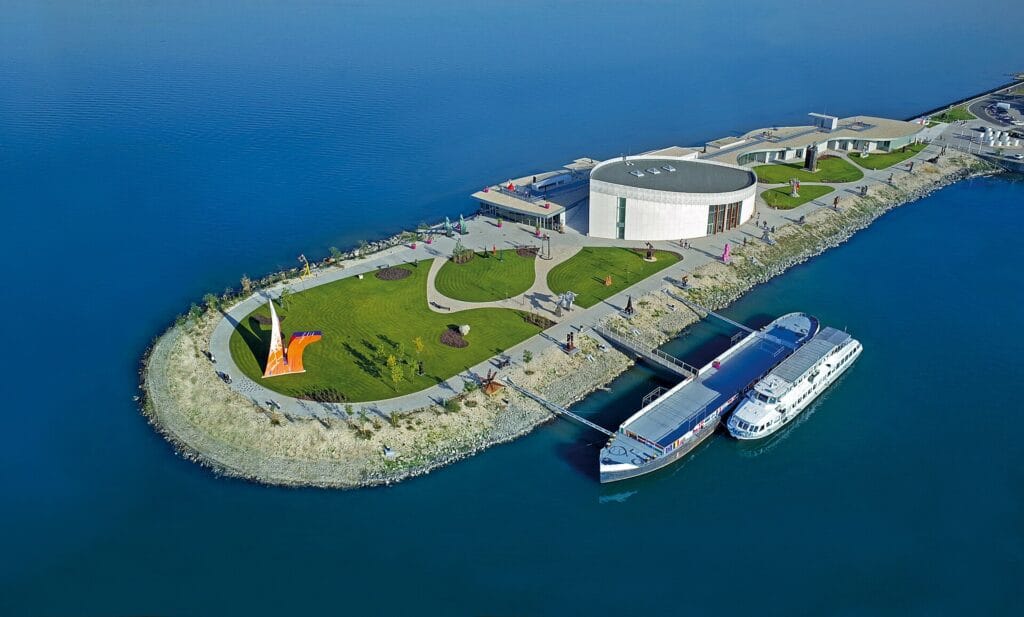
Its location, on a peninsula jutting into the Danube just outside Bratislava’s urban center, serves as more than an unusual setting. The site itself imposes a contemplative distance from the city’s bustle, inviting visitors to consider the Danube not only as a physical presence but as a historical and cultural artery shaping the art and identities of the region. The museum’s perspective is therefore entwined with an understanding of place—both geographical and cultural—that resists generic or purely commercial approaches. The Danubiana seeks to offer a platform where art interacts with the river’s legacy as a zone of exchange, movement, and hybridity.
The Core Collection
The museum’s collection is genuine in its geographic ambition, primarily representing contemporary artists from Slovakia, the Czech Republic, Hungary, Austria, and other countries bordering the Danube, as well as from Western Europe. This regional inclusiveness is not a random assemblage but a precisely mainstay criterion that distances the collection from more traditional modern art institutions focusing solely on canonical Western figures.
Most prominent among the collection are works spanning movements from post-war modernism through to works created in the 21st century. The strength lies in the number and quality of Slovak and Czech artists whose international profiles might otherwise be underrecognized beyond the region, such as Ján Mančuška or Roman Ondák. These artists resonate within a milieu shaped by the political upheavals of the 20th century, particularly socialism and post-socialism, and this historical subtext enriches the collection’s narrative.
Internationally recognized artists like Joseph Beuys and Andy Warhol are also present but do not dominate. Their inclusion supports a comparative view rather than an encyclopedic one, illuminating how Central European art converses with international trends. However, the collection’s size is relatively moderate, and the concentration on this regional field leaves out wider narratives in global contemporary art, which may limit appeal for visitors interested in a more comprehensive art historical sweep.
Exhibitions and Interpretation
Temporary exhibitions rotate between retrospective showcases of singular artists and thematic group shows that explore issues relevant both locally and internationally, such as identity, migration, and the environment. The museum has hosted projects addressing political art and the legacy of totalitarianism, connecting present-day debates with historic legacies in the region.
Interpretation within the galleries is factual and succinct, designed not to overwhelm or dictate but to encourage visitors to make their own connections with the artworks and contexts. The wall texts and catalogues often provide socio-political background, which is crucial to understanding much of the art given the region’s complex 20th-century history. While this approach suits an audience already interested in contemporary and Central European art, those seeking more immersive or multimedia-led engagement may find the presentation somewhat austere.
Critically, the museum’s architectural setting—a building with a geometric, minimalist form designed by Boris Podrecca—complements the art’s modernist leanings and reinforces the museum’s ethos of clarity and focus. However, the formal setting might feel less inviting to visitors looking for informal spaces or experiential variety within the museum environment.
Audience Fit and Visitor Flow
The museum is clearly aimed at visitors with a particular interest in modern and contemporary art from the Danubian region and neighboring countries. Collectors, scholars, and students specializing in these geographic and artistic domains will find the collection and exhibitions well tailored to their pursuits.
Bratislava’s positioning as a cultural gateway between Western Europe and Eastern Europe means the museum occupies a unique niche for international visitors wanting to deepen their understanding of Central European contemporary culture beyond capitals like Vienna or Budapest. Its attendance and profile, however, remain modest compared to larger national institutions.
The visitor flow benefits from the compact size of the museum and its manageable collection scale, allowing focused engagement without fatigue. The layout facilitates an accessible route between the core presentation and temporary exhibitions, although limited exhibition space restricts how many projects can be on view simultaneously.
Highlights and Trade-Offs
Perhaps the most striking element is the museum’s commitment to regional artists who are included alongside established Western figures. This approach challenges typical art historical hierarchies and adds a critical complexity to contemporary art discussions in Europe. The acquisition and presentation of works connected to post-socialist histories, such as those by Jiří Kovanda or Krištof Kintera, help anchor the narrative in the often overlooked cultural production of countries undergoing significant social transformations.
This focused remit brings trade-offs. The relatively narrow geographical scope and moderate collection size mean visitors will not encounter broader global contemporary art phenomena or large-scale installations common in bigger museums. Those seeking blockbuster showpieces or comprehensive overviews might find the museum’s display lean. Additionally, interpretation remains relatively straightforward, with little deployment of technology or layered multimedia, which might be surprising given the contemporary orientation of the collection.
Visit Planning
The museum is located about 12 kilometers from Bratislava’s city center, accessible by car or public transport, though the exact connection details are best confirmed via the museum’s official website. Its riverside setting offers a unique side trip outside the more touristic urban core but does require some travel planning for visitors unfamiliar with the area.
Visitors should check the museum’s website prior to visiting to confirm opening hours, admission fees, available tours, and any discount options, as this information is subject to change. The museum does not appear to have extensive amenities on site, so arranging transportation and timing accordingly is advised.
The Bottom Line
The Danubiana Meulensteen Art Museum defines itself through a focused and thoughtful engagement with modern and contemporary art in the Danube region, an often neglected but historically rich segment of European culture. It provides an invaluable window into Central European artistic production, bridging local and international currents with an emphasis on historical context.
Its collection and programming are meaningful for audiences invested in regional contemporary art and for those interested in understanding art’s role in societies with complex political pasts. The museum’s compact scale and coherent curation make for a focused experience, but it is not suited for visitors expecting broad survey exhibitions or high-tech, experiential display.
This institution occupies a niche rather than a mainstream position. It trades quantity for depth, and regional specificity for global breadth. For anyone drawn to contemporary art as a serious regional study, this museum’s clarity of vision and distinctive focus mark it as a noteworthy, specialized venue.