CaixaForum Madrid Review
Art Museums · Madrid, Spain. Situated in the heart of Madrid, CaixaForum Madrid is an institution that enriches the city’s vibrant cultural landscape. It is part of a broader network of cultural centres funded by “la Caixa” Foundation, dedicated…
Art Museums · Madrid, Spain. Situated in the heart of Madrid, CaixaForum Madrid is an institution that enriches the city’s vibrant cultural landscape. It is part of a broader network of cultural centres funded by “la Caixa” Foundation, dedicated…
Best forMasterpieces, architecture, cultural history
Review focusCollection highlights, building, visitor flow
Historical Context
Situated in the heart of Madrid, CaixaForum Madrid is an institution that enriches the city’s vibrant cultural landscape. It is part of a broader network of cultural centres funded by “la Caixa” Foundation, dedicated to the promotion of arts, education, and community engagement. Opened in 2008, CaixaForum Madrid represents a contemporary approach to museum and gallery design, housed in a former power station that breathes new life into industrial architecture. This transformation not only preserves a historical edifice but also symbolizes the intersection of history and modernity, reflecting Madrid’s dynamic cultural evolution. The institution’s mission extends beyond mere exhibition, emphasizing accessibility to contemporary art, interdisciplinary dialogue, and public enrichment. As a cultural hub, it attracts a diverse array of visitors, from art enthusiasts to families, and serves as a platform for innovative artistic expressions and intellectual exchange. Its role in projecting both local and international artistic endeavors makes it a noteworthy asset in Spain’s museum scene.
What You See on Arrival
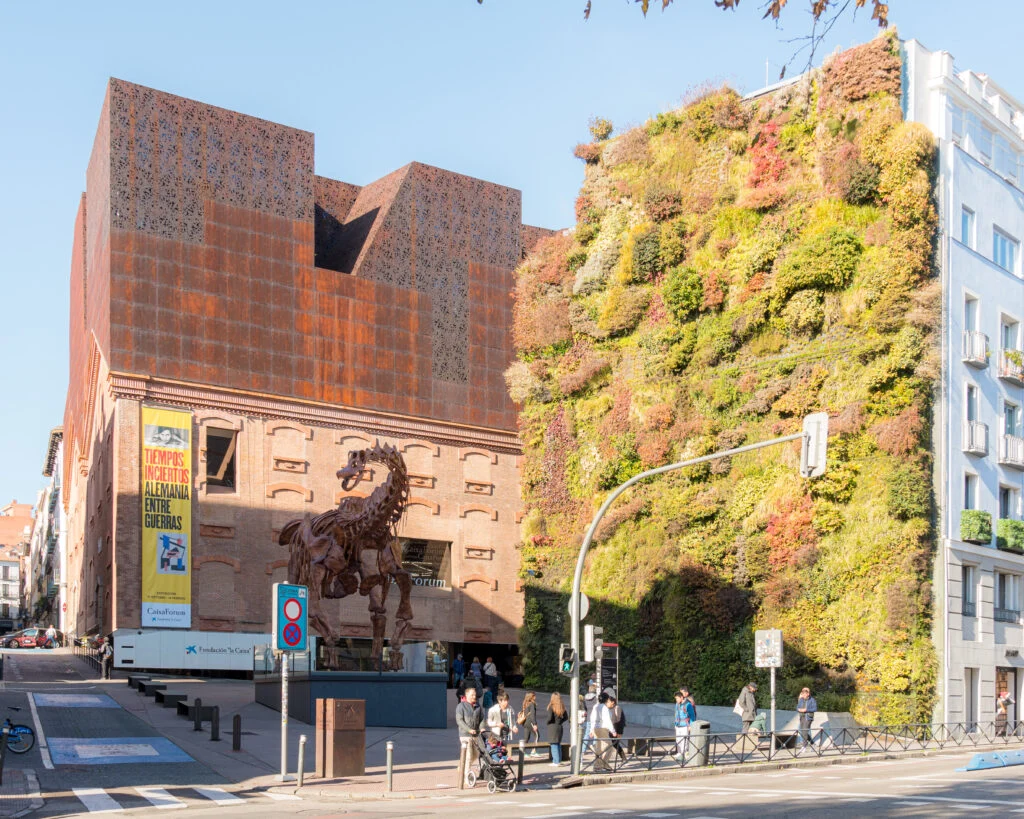
CaixaForum Madrid’s striking architectural presence is immediately apparent upon arrival. The building’s design features a distinctive vertical garden that adorns one side of the façade, offering a vivid contrast to the industrial, brick exteriors and the sleek modern interventions. This lush green wall is not just visually impressive but indicative of the museum’s commitment to sustainability and environmental awareness. Situated near the Paseo del Prado, its location is central and well connected to Madrid’s main cultural axis, close to other iconic institutions. Entering the museum, visitors encounter a spacious lobby characterized by minimalist design and natural light filtering through large windows, creating an inviting atmosphere. The fusion of industrial elements with contemporary interior décor sets the tone for an experience where art and architecture interact seamlessly. The lobby also functions as a social space, with a café and bookshop available, fostering a welcoming environment for visitors to gather before or after exhibitions.
Highlights and Key Exhibitions
This cultural centre’s exhibition programme is diverse, embracing modern and contemporary art alongside historical and multidisciplinary exhibitions. Permanent exhibitions are complemented by a dynamic schedule of temporary shows that draw from the foundation’s extensive art collection as well as loans from international institutions. One of the standout features of CaixaForum Madrid is its commitment to showcasing a wide range of artistic disciplines, including painting, sculpture, photography, and multimedia installations. The exhibitions often aim to spark dialogue around contemporary social, political, and environmental issues, providing depth and relevance beyond aesthetics alone.
Key exhibitions presented here tend to focus on both renowned artists and emerging talents, ensuring that the programme is both prestigious and forward-thinking. Additionally, the centre hosts thematic exhibitions that explore cross-disciplinary concepts, blending art with science, technology, and social concerns. This approach broadens the scope of visitor engagement and encourages critical thinking. Although the exhibition line-up is subject to change, visitors can consistently expect an intellectually stimulating and visually varied experience, enriched by well-researched curatorial narratives.
Visitor Experience
The visitor experience at CaixaForum Madrid is designed with comfort and education in mind. Signage and exhibition guides are clear and available in several languages, catering to international visitors. The galleries are arranged in a manner that allows for an intuitive flow, enhancing the ability to absorb the artworks without feeling rushed. Seating areas are thoughtfully positioned throughout the museum, inviting visitors to pause and reflect or simply rest amid their exploration.
Museum staff are generally well-informed and approachable, providing assistance and additional insights when needed. For those wanting a deeper understanding, guided tours and audio guides are often offered, adding valuable context to the exhibitions. Besides the visual art displays, the centre frequently hosts lectures, workshops, and educational activities designed for various age groups, which are effective in fostering community participation and learning.
The museum’s café provides a pleasant setting for refreshments, with a menu reflecting local flavors, and the bookshop offers a curated collection of exhibition catalogues, art books, and related merchandise. The overall ambiance promotes a relaxed yet intellectually stimulating atmosphere, making CaixaForum Madrid not just a place to see art but to experience it in a complete cultural setting.
Tickets, Access, and Planning
Entry policies for CaixaForum Madrid are designed to be visitor-friendly, with a straightforward ticketing system. General admission is reasonably priced, making it accessible to a broad public. There are often reduced rates available for students, seniors, and groups, and special arrangements exist for educational visits. It is advisable to check the official website for the most current details regarding opening hours and ticket purchases, especially in light of any seasonal or pandemic-related changes.
Accessibility is a strong focus of the institution. The building is equipped with ramps, elevators, and facilities to accommodate visitors with mobility impairments. Additionally, services such as tactile tours and materials for visually impaired guests may be available, reflecting the museum’s dedication to inclusivity. Public transportation options are plentiful, with several bus lines and metro stations in close proximity, easing the logistics of visiting. Parking is limited but available nearby, which is a consideration for those arriving by car.
Planning a visit benefits from taking into account the museum’s event calendar, as temporary exhibitions often have limited runs. Booking tickets online in advance can prevent queues, especially during weekends or holiday periods. The museum’s website also provides practical information on current exhibitions, visitor services, and any special programming that may otherwise influence the schedule.
Final Verdict
CaixaForum Madrid represents a significant cultural venue that adeptly balances the preservation of historical architecture with the presentation of contemporary creativity. Its programmatic breadth, from modern art to socially engaged exhibitions, ensures there is something to provoke thought and appeal to a wide audience. The building itself, enhanced by the iconic vertical garden, is an architectural highlight that enriches the overall experience. Visitor amenities are well-conceived, contributing to a comfortable and educational visit, while the centre’s commitment to accessibility and community involvement stands out positively.
While the museum’s focus on contemporary and multidisciplinary exhibitions may not align with every visitor’s preferences—particularly those seeking more traditional or classical art—the quality and insightfulness of its offerings compensate by providing fresh perspectives and relevance. For those interested in exploring a cultural institution that reflects Madrid’s dynamic and innovative art scene, CaixaForum Madrid is an essential destination. Its integration with the city’s broader museum district also allows for complementary visits to nearby institutions, rounding out a day of cultural enrichment in Spain’s capital.