Bata Shoe Museum Review
Architecture Museums · Toronto, Canada. The Bata Shoe Museum in Toronto, Canada, stands as a unique cultural institution dedicated to the exploration of footwear and its significance across civilizations and epochs. Established in 1995, the museum grew from the…
Architecture Museums · Toronto, Canada. The Bata Shoe Museum in Toronto, Canada, stands as a unique cultural institution dedicated to the exploration of footwear and its significance across civilizations and epochs. Established in 1995, the museum grew from the…
Best forMasterpieces, architecture, cultural history
Review focusCollection highlights, building, visitor flow
Historical Context
The Bata Shoe Museum in Toronto, Canada, stands as a unique cultural institution dedicated to the exploration of footwear and its significance across civilizations and epochs. Established in 1995, the museum grew from the personal collection of Sonja Bata, an avid shoe enthusiast whose passion evolved into a scholarly endeavor to examine shoes as both functional objects and cultural symbols. The museum’s foundation reflects a broader academic interest in material culture and fashion history, recognizing shoes as a lens through which to understand societal values, technological advances, and human ingenuity. Over the years, the institution has expanded its holdings to include over 13,000 objects, spanning 4,500 years of history and representing footwear from diverse regions of the world. The museum’s commitment to scholarly research, conservation, and public education has positioned it at the intersection of anthropology, design, and history, making it a distinctive cultural landmark within Toronto and an important resource for global visitors intrigued by the intersection of fashion and heritage.
What You See on Arrival
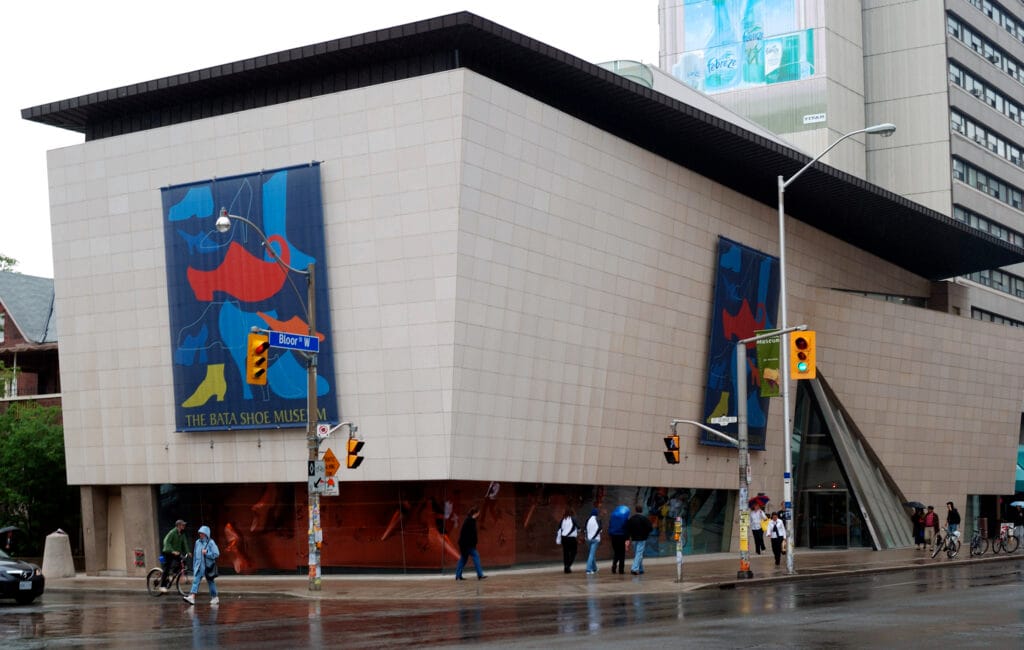
Upon approaching the Bata Shoe Museum, visitors are greeted by a striking modern exterior, designed by the Toronto-based architectural firm Moriyama & Teshima. The building features a unique cantilevered cube that boldly extends over the street, creating an eye-catching presence in the urban environment. This geometric design choice reflects the museum’s contemporary approach to an ancient subject matter. The facade is clad in aluminum panels with subtle perforations, which add a dynamic visual texture while harmonizing with the surrounding cityscape. At ground level, large glass windows provide glimpses into the museum’s interior, offering an immediate sense of transparency and invitation. The entrance leads into a compact yet thoughtfully organized lobby space, where clear signage and a friendly reception desk orient visitors toward the main galleries. Overall, the building’s exterior and entryway project an image of modernity and accessibility, effectively setting the tone for the museum experience ahead.
Highlights and Key Exhibitions
The Bata Shoe Museum’s permanent collection is the heart of the visitor experience, presenting footwear from ancient civilizations through to contemporary designers. A particular highlight is the archaeological section, where visitors can encounter sandals from Egypt, intricately crafted Roman footwear, and elaborately decorated shoes from medieval Europe. These items not only illustrate the evolution of shoe technology and style but also provide insights into the social status, rituals, and daily lives of their wearers.
Another standout gallery offers a fascinating look at ceremonial and religious footwear from numerous cultures. Examples include Tibetan boots adorned with symbolic motifs, Japanese geta sandals, and Navajo moccasins, which speak to the diverse relationship between footwear and cultural expression. Complementing these are showcases dedicated to more recent centuries, featuring a broad spectrum from Victorian-era women’s shoes to pioneering athletic shoes of the 20th century.
The museum also houses thoughtfully curated displays about the science of shoe production, including traditional manufacturing techniques and innovations in materials that have influenced shoe design. This section educates visitors on the intersection of craftsmanship and industrial advancement without overwhelming technical jargon.
Throughout its permanent exhibitions, the Bata Shoe Museum integrates artifact labels, multimedia presentations, and interpretive texts that emphasize historical context and cultural significance. The balance between scholarly depth and accessibility makes the exhibitions engaging for a wide range of audiences, from casual visitors to researchers.
Visitor Experience
The layout of the Bata Shoe Museum, though compact, is efficiently designed to facilitate a smooth visitor flow. The galleries are arranged thematically and chronologically, allowing visitors to easily follow the narrative of footwear development across time and geography. The lighting is carefully controlled to protect delicate artifacts while highlighting intricate details on display shoes, which enhances the overall visual experience.
Educational materials are abundant and thoughtfully crafted. Wall texts and interactive screens provide layered information, accommodating different levels of interest and background knowledge. The museum staff is known for being approachable and knowledgeable, often providing additional insights upon request, which greatly enriches the visitor experience.
The museum shop and café, though modest in size, offer well-curated selections of books, souvenirs, and refreshments, making them convenient stops for visitors who wish to extend their engagement beyond the galleries. Seating areas are available throughout the building, offering space to rest or reflect.
While the museum’s scale means that visits can often be completed in under two hours, the depth of collections encourages repeat visits, especially for those interested in fashion history or cultural studies. However, some larger group visits may find the available space somewhat limited during peak times, so timing visits carefully is recommended.
Tickets, Access, and Planning
Ticket pricing at the Bata Shoe Museum is reasonable and competitive compared to similar specialty museums. The institution offers discounts for students, seniors, children, and families, as well as membership programs that provide unlimited access and other perks. Group bookings and school visits can be arranged with advance notice, and there are occasions for free entry or special pricing, particularly on designated cultural days, which supports community engagement.
Accessibility is a priority for the museum, which provides wheelchair access and amenities such as accessible washrooms and elevators. The museum also offers resources and support for visitors with visual or hearing impairments, reflecting its commitment to inclusive design.
Located conveniently near the University of Toronto’s St. George campus and accessible by several public transit routes, the museum can be integrated effectively into a day’s itinerary within Toronto. There is some on-site parking, though visitors are encouraged to use public transportation or nearby commercial lots due to limited availability.
Planning a visit benefits from consulting the museum’s official website for current opening hours, health and safety protocols, and any necessary advance booking requirements. While the museum does not regularly host blockbuster temporary exhibitions, its well-maintained permanent collections continue to provide rich content year-round.
Final Verdict
The Bata Shoe Museum is a distinctive cultural institution that succeeds by illuminating an often-overlooked aspect of human history and creativity. Its comprehensive collections and thematic exhibitions offer visitors an enlightening journey through the evolution and cultural significance of footwear around the world. The museum’s architectural presence is both modern and inviting, complementing the historical narratives contained within.
While not a sprawling museum in terms of size, its thoughtfully curated displays, informative labels, and engaging multimedia components make it an enriching experience for a diverse audience. The museum effectively balances scholarly depth with visitor accessibility, making complex historical and cultural topics approachable and engaging.
For visitors to Toronto with interests in fashion, anthropology, or cultural heritage, the Bata Shoe Museum provides a unique and visually captivating experience. It stands as a testament to the power of a single, ordinary object to tell extraordinary stories about humanity’s past and present. Whether for a brief visit or a more focused study, the museum is a valuable and memorable addition to the city’s vibrant museum landscape.