Tate Modern
About: Don’t skip the building views. The Turbine Hall is a mood-setter; afterward, choose one floor and go deep.What to see: Start with the signature.

Best forMasterpieces, architecture, cultural history
Setting / nearbyEurope
Overview
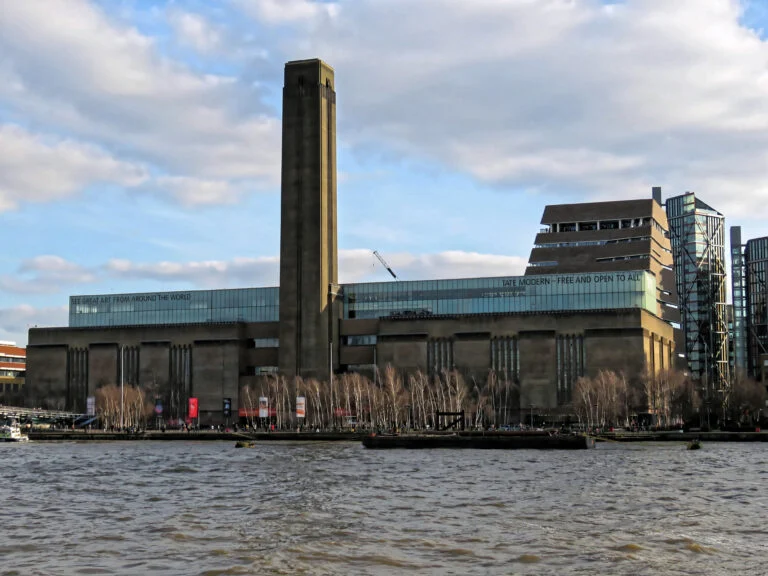
Tate Modern is one of the most important modern and contemporary art museums in Europe and one of London’s strongest cultural institutions for anyone interested in twentieth- and twenty-first-century art. Unlike older museums built around royal collections or more traditional national narratives, Tate Modern feels distinctly urban, modern, and public in its identity. Housed in the former Bankside Power Station on the south bank of the Thames, it combines major international art with one of the most memorable museum buildings in the city. For many visitors, that combination is central to its appeal. Tate Modern is not only a place to see modern art. It is a place where architecture, scale, city views, and the experience of contemporary public culture all form part of the visit.
What makes Tate Modern especially effective is that it does not rely on one single route or one single type of visitor. It works for people with deep knowledge of modern art and for first-time visitors who simply want to understand why the museum matters. The collection is broad enough to introduce the major movements, concerns, and personalities of modern and contemporary art, but the museum also makes room for surprise, experimentation, and change. This is important because modern art museums can easily feel either too academic or too vague. Tate Modern often avoids both extremes. It gives visitors enough structure to navigate the collection while still preserving the sense that modern and contemporary art are open, unsettled, and sometimes difficult.
The museum is especially strong as a place to encounter shifts in artistic language. Painting, sculpture, installation, film, photography, and more conceptual approaches all appear in ways that show how art changed over the last century. Visitors are not only looking at objects. They are often being asked to think about how art moved away from traditional representation and toward abstraction, experiment, social engagement, and large-scale installation. This makes Tate Modern a museum that can feel energising as well as demanding. It is not always calm in the way a more classical painting museum can be. Instead, it often asks the visitor to move between very different kinds of attention.
Because of this, Tate Modern works best when approached with some selectivity. The building is large, the collection spans many different approaches, and temporary exhibitions can add another layer of complexity. A very successful visit often comes not from trying to see everything, but from choosing one or two areas and spending real time there. In that sense, Tate Modern rewards curiosity more than checklist behavior. It is a place to look, question, compare, and occasionally disagree, and that open-ended quality is one of the reasons it remains so important.
Collection Highlights
One of the museum’s strongest highlights is the way it presents major artists and movements of modern art within a broader international framework. Visitors will often encounter works associated with Picasso, Matisse, Rothko, Warhol, Dalí, Pollock, and many others, but the museum’s strength lies not only in these famous names. It lies in the way they are placed within larger conversations about abstraction, political change, social transformation, and new forms of artistic practice. This helps the collection feel more alive than a simple parade of masterpieces.
The Rothko works are often among the museum’s most memorable painting experiences. These rooms can provide a striking contrast to the museum’s larger, louder spaces because they ask for quiet, slow attention. At the other end of the spectrum, the museum’s more installation-based and large-scale works often provide some of its most dramatic moments. Tate Modern is particularly strong when it allows visitors to experience changes in scale, mood, and medium across a single visit. One room might depend on subtle shifts of color and surface, while the next may involve film, sound, or sculptural environments that occupy an entire space.
The collection’s broader approach to international modernism is also important. Tate Modern is not confined to one national school, and that helps it avoid the narrower feel that some major museums of modern art can have. Visitors are encouraged to see modern art not only as a European story, or only as a sequence of individual geniuses, but as a larger and more varied field. This makes the museum especially useful for first-time visitors trying to understand the modern period in broader terms.
Temporary exhibitions are another major part of the museum’s appeal. Depending on when you visit, these can become one of the strongest parts of the experience, especially when they offer a deeper look at a single artist, movement, or theme than the permanent displays can provide. The museum’s changing programme helps keep Tate Modern dynamic and gives repeat visitors a reason to return.
And then there is the Turbine Hall, which is not a collection highlight in the conventional sense, but one of the defining experiences of the museum. It works as a threshold, a statement, and often a mood-setter for the whole visit. Its scale immediately establishes that Tate Modern is not a museum of small, quiet domestic rooms. It is a museum willing to think at urban and industrial scale, and that changes the visitor’s expectations from the moment they enter.
Building and Setting
The building is one of Tate Modern’s greatest strengths. The conversion of a former power station into a major art museum gives the institution a presence unlike almost any other in London. The architecture retains a sense of industrial force, and that makes the museum feel different from more polished or classically monumental institutions. It is a building with weight and character, and it gives modern and contemporary art a setting that often feels exactly right.
The Turbine Hall is the most obvious example of this. Its scale is both architectural and psychological. Even before looking at a single artwork, visitors are made aware that this is a museum shaped by volume, height, and public energy. That opening experience can be one of the reasons people remember Tate Modern so vividly. It immediately separates the museum from more traditional gallery experiences.
The upper levels and viewing points are also important. The building offers some of the best internal and external views in a major London museum, and these are not secondary pleasures. They help give the visit rhythm and relief. Modern and contemporary art can demand a lot from the eye and mind, and the chance to look out across London or to pause within the building’s architecture helps keep the experience fresh.
Its location on Bankside adds even more to its appeal. Tate Modern sits within a part of London that connects river, city, and cultural life in a particularly effective way. The approach across the Millennium Bridge or along the Thames contributes to the experience, and the museum feels fully part of the city rather than tucked away from it. That urban integration suits the institution’s public identity.
Practical Information
Tate Modern is best visited with some choice and focus. The museum is too large and too varied to absorb properly in one undifferentiated walk. A good approach is to begin with the Turbine Hall, take in the building, and then choose one floor or one area to explore more deeply before adding other sections as energy allows. This usually leads to a better visit than trying to race through everything.
Because the museum can be visually and conceptually demanding, breaks are useful. The building itself helps with this by offering views, seating areas, and shifts in scale. This is especially valuable for visitors who may be very comfortable with some forms of modern art but less engaged by others. The museum improves when it is allowed to breathe a little.
For first-time visitors, it is often helpful to mix the better-known names with one quieter or less familiar section. That balance gives a stronger sense of the museum’s range and prevents the visit from becoming either too predictable or too abstract. Tate Modern rewards openness, but it also rewards pacing.
Why Visit
Tate Modern is best for modern and contemporary art lovers, first-time visitors to London looking for a major public museum experience, and anyone who values museums where the building and the city play a major role in the overall effect. Its greatest strength is that it combines serious art with strong public energy. It feels both major and accessible, which is not easy to achieve in a museum of this scale.
What makes it worth prioritising is that Tate Modern does not present modern and contemporary art as something closed, specialist, or socially distant. It presents it as part of public life, part of urban experience, and part of an ongoing conversation about what art can be. Some visitors will be drawn most strongly to the famous works, others to the architecture, others to the temporary exhibitions, but the institution is large enough and confident enough to support all of those experiences at once.
For anyone building a cultural itinerary in London, Tate Modern remains one of the city’s most rewarding museum visits. It offers not just important art, but a powerful sense of how modern art can inhabit a public building and a modern city with real force.