National Museum Prague
About: Start in the natural history and archaeology sections, then move into the cultural and political history galleries. The building itself is part of.
Best forMasterpieces, architecture, cultural history
Setting / nearbyEurope
Overview
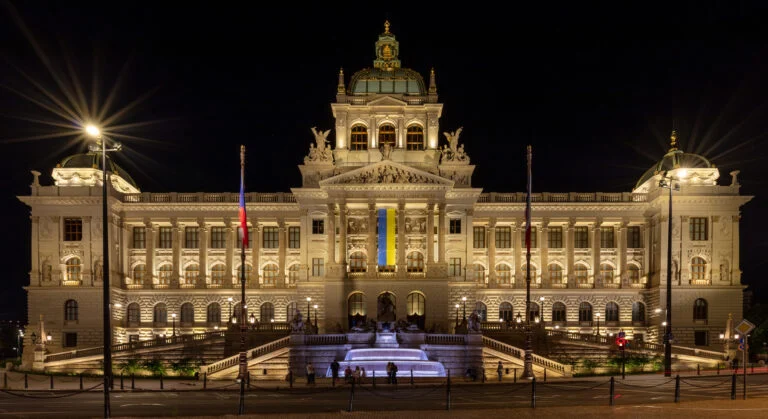
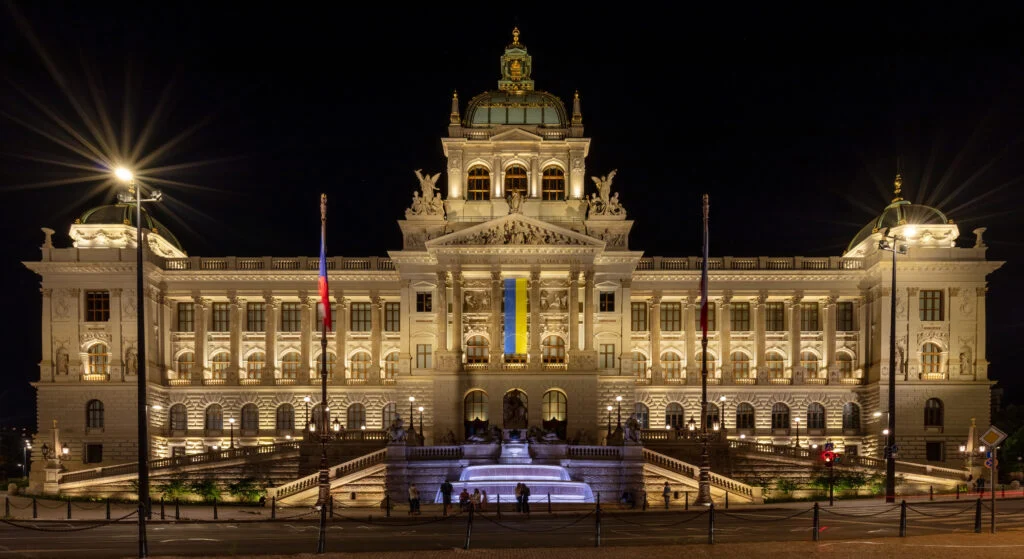
The National Museum in Prague is one of the Czech Republic’s most important cultural institutions and one of the clearest places to understand how natural history, archaeology, national memory, and state identity can be brought together under one monumental roof. Standing at the top of Wenceslas Square, it is more than a museum filled with objects. It is also a landmark building that carries symbolic weight in the life of Prague. That dual role is one of its greatest strengths. Visitors do not enter only a museum of collections. They enter a building that has witnessed political change, national aspiration, and public memory in one of Central Europe’s most important urban settings.
What makes the museum especially rewarding is that it joins different types of knowledge in a way that feels historically appropriate. Natural history, archaeology, and cultural history are not presented as unrelated departments. Instead, they help explain the longer story of the Czech lands and of the broader human and environmental world in which that story took shape. This gives the institution a larger perspective than a purely national-history museum might offer. It is not only about modern politics or state identity. It is also about prehistoric life, ancient settlement, geology, and the long background against which later Czech history emerged.
The museum is also especially important because of its architecture. Many major museums contain strong collections but are housed in relatively neutral structures. That is not the case here. The building itself is part of the experience, and visitors feel this almost immediately in the monumental entrance spaces, grand stairways, decorative surfaces, and elevated views. The museum therefore works on two levels at once. It offers collections to study, but it also offers a powerful sense of civic and cultural grandeur. This is one reason the visit often remains memorable even for people who may not recall every gallery in detail.
Another strength is that the museum gives Prague a broader historical frame. Visitors often encounter the city through Gothic churches, Baroque façades, imperial architecture, and political history, but the National Museum widens that picture. It connects Prague to deep time, to prehistoric Europe, to scientific collecting, and to the formation of modern national consciousness. That makes it one of the most useful museums in the city for people who want orientation as well as visual richness.
Collection Highlights
The natural history sections are among the museum’s most accessible and important highlights. These galleries help establish the larger environmental and geological framework in which the human story later unfolds. Fossils, minerals, zoological displays, and other scientific material give the museum a wider intellectual range than a strictly political or art-historical institution would have. This is one of the museum’s strengths: it starts the story long before modern nationhood and reminds visitors that natural history is part of understanding place.
Archaeology is another major highlight and one of the most rewarding parts of the museum. These galleries help bridge the distance between the natural world and later historical society. Prehistoric objects, early tools, ritual materials, and artefacts from ancient settlement make visible the long human presence in the region. These sections are especially valuable because they prevent the Czech story from being understood only through medieval or modern lenses. Instead, they root it in much deeper continuity. For many visitors, this becomes one of the museum’s most satisfying qualities. The nation appears not only as a political project, but as part of a long inhabited landscape.
The cultural and political history galleries add another essential layer. These sections often matter most once the earlier natural history and archaeology have already set the stage. Here the museum begins to show more directly how Czech identity, public life, memory, and historical change developed through later periods. This is where the institution most clearly functions as a national museum in the modern sense. Depending on the exhibition focus, visitors encounter social history, political narratives, and objects that help define public memory. These galleries may feel more familiar in museum terms than the natural history sections, but they gain depth because of everything that has already come before.
One of the most memorable “highlights” is also not a single object but the monumental entrance hall and major interior spaces. This matters because the museum’s architecture does not merely frame the collection. It participates in it. Visitors often remember the dome views, grand halls, and decorative interiors as vividly as the displayed objects. In a museum like this, that should not be seen as a distraction. It is part of the institution’s identity and one of the reasons it feels more than just instructive. It feels ceremonial.
The museum’s ability to move between scientific, archaeological, and national-historical material is itself a major highlight. The institution is strongest when visitors experience those departments in sequence, because then the museum’s broader idea becomes clear. It is presenting not only the Czech nation, but a larger story of life, settlement, culture, and memory.
Building and Setting
The building is central to the museum’s importance. Rising above Wenceslas Square, it is one of Prague’s most visible civic monuments and immediately signals that this is an institution of public significance. The architecture creates a sense of national seriousness before the visitor even enters. Once inside, the monumental entrance hall, broad stairways, decorative interiors, and elevated viewpoints continue that effect. This is one of those museums where the building itself is part of what people come to experience.
Its urban setting also matters greatly. Wenceslas Square is one of the most historically charged places in Prague, associated with public life, protest, national memory, and modern transformation. The museum’s position at the top of that space gives it unusual symbolic force. It is not tucked away in a quiet quarter. It stands in direct relationship to the city’s civic history. That makes the visit feel more anchored in Prague itself.
Inside, the architecture supports the museum’s broad subject matter by giving the institution a strong common identity. Natural history, archaeology, and political history might feel disconnected in a weaker building, but here the grand interior framework helps bind them together. The visitor remains aware that all of this belongs to one public institution charged with representing knowledge and memory at a national scale.
The dome views are another important part of the building experience. They help connect the museum back to the city outside and remind visitors that the institution is not isolated from Prague, but in conversation with it. This outward perspective strengthens the visit and makes the museum feel spatially and civically complete.
Practical Information
A good route is to begin with the natural history and archaeology sections, then move into the cultural and political history galleries. This progression works well because it lets the museum’s story build from deep time toward more recent national and civic history. It creates a stronger experience than jumping immediately into later political material without the larger context.
The building should be given real time. This is especially important at the National Museum because the grand interiors are not incidental decoration. They are part of what makes the institution memorable. Visitors who rush only from gallery to gallery often miss one of the museum’s defining pleasures.
Breaks are useful here, especially if you want to absorb both the collection and the architecture. The museum’s scale is not as overwhelming as the very largest encyclopedic institutions, but it is broad enough in subject matter that a slower pace almost always improves the visit.
Why Visit
The National Museum in Prague is best for visitors interested in Czech history, archaeology, natural history, and museums where the building itself carries major cultural meaning. Its greatest strength is that it offers more than one kind of understanding at once. It shows the Czech lands through nature, ancient settlement, historical change, and national memory, all within one of Prague’s most symbolic public buildings.
What makes it worth prioritising is that it gives the city a deeper frame. Prague can easily be experienced through architecture and atmosphere alone, but the National Museum helps visitors understand the longer story beneath that beauty. It connects the city to deep time, to scientific collecting, and to the formation of modern identity.
For many visitors, it becomes one of Prague’s essential museum experiences because it combines strong collections with a building of real civic grandeur. It is informative, visually impressive, and historically grounding at the same time. That combination makes it one of the Czech Republic’s key cultural institutions and one of the most rewarding museum visits in Prague.