National Museum of Denmark
About: Start with prehistoric Denmark, then move into the Viking galleries before continuing into the medieval and modern sections. The museum is best.
Best forArchitecture, royal history, heritage
Setting / nearbyEurope
Overview
The National Museum of Denmark is one of the country’s most important cultural institutions and the clearest place to understand Danish history as a long, continuous story rather than a set of isolated periods. Located in Copenhagen, the museum brings together prehistoric material, Viking artefacts, medieval religious works, royal objects, ethnographic holdings, and later social history in a way that gives visitors a real sense of historical development. That is one of its greatest strengths. It does not simply present famous things in separate rooms. It lets Denmark unfold across time.
What makes the museum especially rewarding is that it works best as a chronological journey. Many visitors come in expecting only Viking material, and that section is naturally one of the strongest draws, but the museum is much richer than a Viking museum alone. Its real value lies in how it shows the long build-up to the Viking Age, what came after it, and how Danish society changed through religion, monarchy, trade, craft, and everyday life. This wider perspective gives the visit more depth and prevents the museum from becoming a single-era attraction.
The museum is also particularly strong because Danish history here is not reduced only to kings, wars, and official institutions. Domestic life, burial practices, belief, agriculture, craftsmanship, and ordinary objects all play a role. This helps the museum feel grounded. Visitors are not just following abstract national milestones; they are seeing how people lived, dressed, worked, worshipped, and buried their dead. That gives the museum a human scale beneath its national ambition.
Another important strength is that the museum can appeal to very different types of visitors. Someone interested mainly in archaeology can find an extraordinary amount here. Someone interested in Vikings can enter through that route and still leave with a much broader picture of Denmark. Someone more drawn to medieval art or later royal culture can also find major rewards. Because of this, the National Museum of Denmark works well both as a first museum for understanding the country and as a deeper destination for visitors who already know some Danish history.
Collection Highlights
The prehistoric galleries are among the museum’s most important sections because they establish the deep foundations of Danish history. These rooms reveal how far back organized life, ritual, craft, and burial practice reach in the Danish landscape. They also help visitors understand that the story of Denmark is not something that begins suddenly with Vikings or medieval kings. It begins much earlier, through objects that show changing technologies, materials, and ideas of life and death. These galleries are essential because they give the whole museum its depth.
The bog bodies are among the museum’s most unforgettable objects and one of the clearest reasons the institution is internationally significant. These human remains have an extraordinary force because they collapse the distance between prehistory and the present. Instead of vague imagining, visitors confront preserved individuals whose bodies still carry the marks of age, ritual, death, and environment. They are powerful not simply because they are rare, but because they make prehistoric life and death feel unsettlingly close. Few museum experiences create that kind of immediacy. For many visitors, these displays remain the emotional center of the entire museum.
The Viking galleries are naturally another major highlight. Weapons, jewellery, tools, trade goods, and everyday artefacts help move the Viking Age beyond stereotype. Rather than presenting only raiding and warfare, the museum shows a fuller world of mobility, craft, exchange, belief, and social structure. This is one of the museum’s real strengths. It lets the Viking period appear as a complex historical society rather than a simplified legend. Visitors interested in Danish identity often find these rooms especially rewarding because they connect one of the country’s most famous historical periods to a more grounded and material understanding.
Medieval religious objects add another important layer. These works are essential because they show the transformation of Denmark through Christianity and changing institutional life. Altarpieces, carvings, liturgical objects, and sacred material reveal a very different visual and spiritual culture from the prehistoric and Viking sections. This contrast is one of the museum’s most valuable teaching tools. It lets visitors feel historical change not only through dates, but through shifts in imagery, craft, and belief.
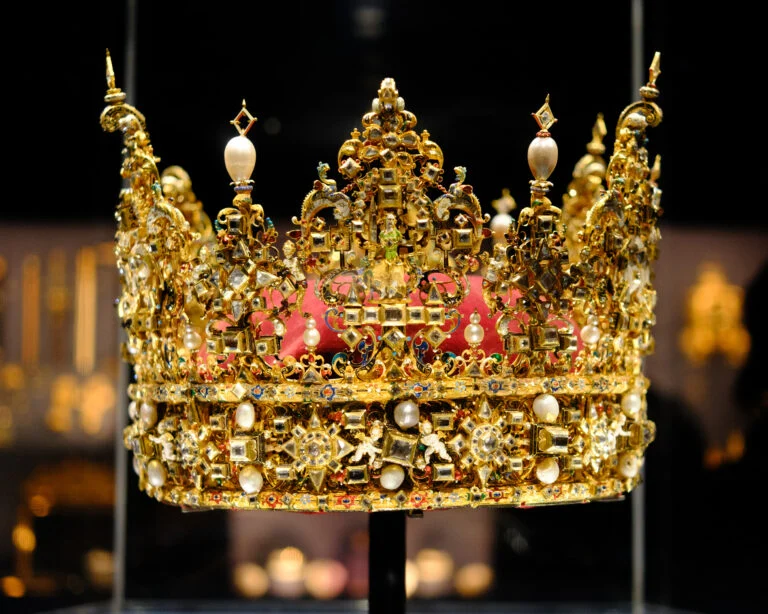
Royal collections and later historical objects help extend the story into state formation, court culture, and the shaping of Denmark as a kingdom with broader European connections. These sections can be especially rewarding because they widen the museum’s identity beyond archaeology alone. The museum becomes not just a place of ancient artefacts, but a place where national history continues through material symbols of power, status, and political culture.
Building and Setting
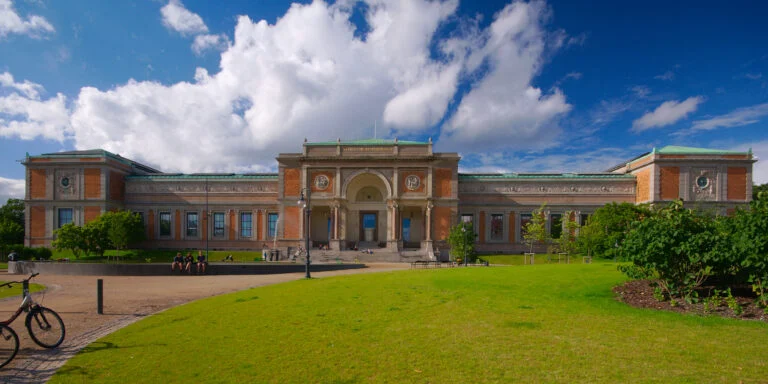
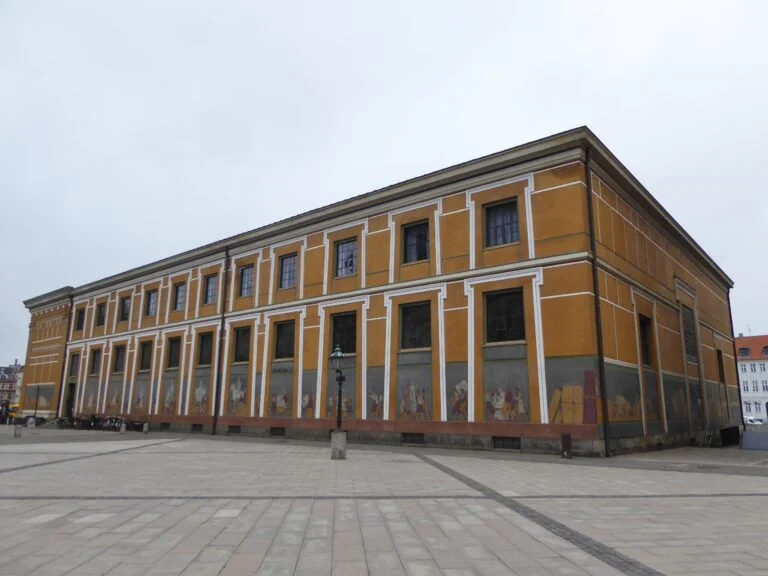
The museum’s setting supports its role as a major national institution. It has the seriousness expected of a museum carrying the country’s historical memory, but it does not feel excessively ceremonial or remote. This balance works well. The collections themselves are rich and weighty enough that the building does not need to overwhelm them with monumental drama. Instead, it provides a clear and substantial framework that helps visitors move through very different historical periods with some continuity.
Inside, the museum’s biggest strength is that it encourages progression. The experience is at its best when visitors allow the galleries to build on one another chronologically. This makes the institution feel more coherent than if it were approached as a random series of highlights. In a museum covering so much time, that structural clarity is important.
Its location in Copenhagen also matters. As the national museum in the capital, it provides a central cultural frame for the country as a whole. For visitors spending time in the city, it offers context that can deepen the rest of a trip. Castles, churches, Viking sites, and later historical places all become more meaningful once the museum has provided the broader background.
Practical Information
The best approach is to begin with prehistoric Denmark, continue into the Viking galleries, and then move forward into the medieval and later sections. This chronological route gives the museum its full force. It helps visitors see development rather than simply collecting highlights. The museum becomes much more satisfying when treated as a long narrative rather than a quick stop for only the most famous objects.
A slower pace is particularly worthwhile in the prehistoric and Viking sections, where objects may seem modest in size but carry enormous historical significance. The bog bodies in particular deserve real time. They are not displays to glance at quickly and move past. Likewise, the medieval rooms become more rewarding when visitors allow themselves to register how different they feel from what came before.
Because the museum is broad in subject matter, visual and mental fatigue can set in if you try to absorb everything too quickly. Breaks help, and so does choosing one or two quieter sections to look at more deeply rather than hurrying through the entire museum at the same speed.
Why Visit
The National Museum of Denmark is best for history lovers, first-time visitors to Copenhagen, and anyone who wants a serious introduction to the country beyond postcard images and isolated Viking mythology. Its greatest strength is that it gives Denmark historical depth. The museum shows how the country was shaped through prehistory, ritual, settlement, seafaring, religion, monarchy, and everyday life across many centuries.
What makes it worth prioritising is that it balances famous material with a strong larger narrative. The bog bodies, Viking artefacts, medieval religious works, and royal collections are all compelling on their own, but the real achievement of the museum is how they work together. They make Danish history feel continuous, layered, and human.
For many visitors, it becomes one of the most useful museums in Copenhagen because it offers both highlights and structure. It is not just a place to see remarkable things. It is a place to understand how those things belong to one long national story. That makes it one of Denmark’s essential museum visits.