National Corvette Museum
Automobile Museums · Bowling Green, United States. The National Corvette Museum, located in Bowling Green, Kentucky, is a specialized automotive museum dedicated entirely to the Chevrolet Corvette. As a museum focused on one of America’s most enduring sports cars, it offers…
Best forMuseum lovers, culture travelers, first-time visitors
Setting / nearbyBowling Green, United States
Overview
The National Corvette Museum, located in Bowling Green, Kentucky, is a specialized automotive museum dedicated entirely to the Chevrolet Corvette. As a museum focused on one of America’s most enduring sports cars, it offers visitors an in-depth look at the Corvette’s design, history, and cultural significance from its introduction in the 1950s up to recent years. The museum appeals mainly to automotive enthusiasts, sports car fans, and those interested in post-war American automotive history. It also serves as a gathering point for Corvette owners and collectors.
Though centered on a single vehicle model, the museum presents the Corvette not just as a car but as a symbol of American engineering and design innovation. Its narrative covers the evolution of performance technology, stylistic trends, and the Corvette’s role in motorsports and popular culture. This specific focus makes it distinct from broader automotive museums, narrowing its story but deepening detail in the Corvette’s journey.
Collection Highlights
The museum’s core collection includes dozens of Chevrolet Corvette models spanning multiple generations. Visitors can expect to see early convertibles from the 1950s alongside sleek muscle and high-performance variants from later decades. Each car is exhibited with contextual information about its development, technical specifications, and place within Corvette’s lineage. This detailed approach helps illuminate how the car’s engineering and appearance changed over time.
Among the collection, notable vehicles often highlighted include prototype models and rare editions that showcase innovation in design or performance. Cars involved in motorsport history or those that represent significant milestones in the model’s life may also feature prominently. Beyond complete vehicles, the museum typically displays an array of Corvette-related memorabilia, like concept sketches, promotional materials, and engine components, contributing further layers to the story.
One important aspect of the museum is its attention to restoration and preservation. Displaying vehicles in top condition allows visitors to appreciate the craftsmanship and technology of each period. The museum’s approach tends to balance the celebratory aspects of the Corvette’s legacy with a clear-eyed presentation of its technical progress and challenges over seven decades.
Visitors have reported that the exhibition design encourages close viewing of the cars, with informative placards and some interactive elements that explain features or historical context. However, it should be noted that the museum will primarily focus on Corvette’s domestic and cultural impact, meaning it may not cover broader themes in automotive history in depth.
Building and Setting
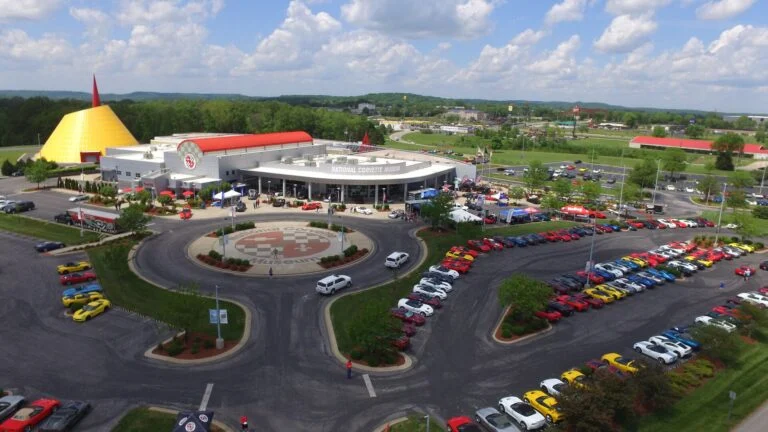
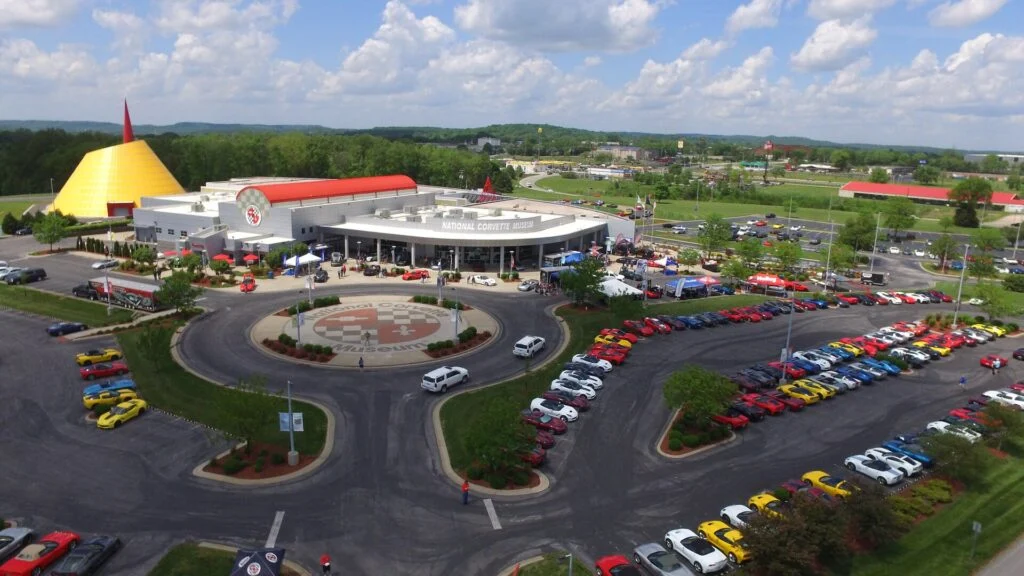
The National Corvette Museum building is modern and functional, situated close to the General Motors Bowling Green Assembly Plant where Corvettes have been produced for many years. This proximity provides a natural link between the museum’s exhibits and the ongoing manufacturing story. Its location is accessible from local highways and is somewhat outside the center of Bowling Green, allowing enough space for the sizable building and outdoor features.
The structure is designed to accommodate the display of vehicles with large, open gallery spaces and well-lit interiors aiming to highlight the cars’ lines and details. Adjacent outdoor areas sometimes feature driving lanes or spaces used for events connected to the museum’s mission. On site, visitors may find additional attractions such as a visitor center and interpretative installations explaining Corvette craftsmanship or model changes.
While the site caters well to fans of the automobile, those looking for a more varied cultural or historical setting might find it less diverse in atmosphere. Its Broadway, Kentucky location offers typical small-city surroundings rather than historic districts or extensive urban culture, reflecting its role as a specialist museum focused on a specific subject rather than a general tourist destination.
Practical Information
Before planning a visit, it is advisable to check the official website for the most current information on opening hours, admission fees, visitor services, and any special access considerations. Details about guided tours, educational programs, or special exhibits might also be available and vary by season or event schedule.
Parking facilities are generally provided on site, suitable for private vehicles and larger groups. Information on on-site amenities like gift shops or restaurants should also be verified in advance. Accessibility accommodations may be listed online, but confirming ahead of time can help visitors ensure a smooth experience.
Since the museum focuses on Corvette and related subjects, those seeking a broader automotive history museum might want to consider how this focus meets their interests. Likewise, visitor traffic can fluctuate depending on Corvette-related events and community gatherings, so advance checking can help avoid busy periods or plan for special activities.
Why Visit
The National Corvette Museum offers a concentrated encounter with one of the United States' most famous performance cars, making it a place where enthusiasts can deepen their understanding of the Corvette’s history, design, and technical development. For those interested in American automotive culture, the museum provides clear narratives and tangible examples that reveal the changes in engineering and style over time.
The collection’s specificity can also be a strength for visitors who appreciate a detailed, focused perspective rather than a broad overview. It allows for closer attention to subtle design features and historical context tied directly to the Corvette, rather than general automotive themes. The museum’s connection with the GM assembly plant nearby adds a useful layer of authenticity and real-world relevance.
That said, the museum’s intense focus might be limiting for casual visitors or those less familiar with car culture who may find the subject narrower than other automotive or transportation museums. It does not extensively cover other makes or the full scope of automotive history and innovation. Visitors who enjoy learning through seeing physical examples of design evolution and technological progress will find the displays rewarding.
In short, the National Corvette Museum serves a specific audience well—those with an interest in the Corvette as a technological and cultural artifact of post-war America. It offers a detailed, concrete presentation without excessive embellishment, making it a valuable resource and exhibition space for people captivated by this particular chapter of automotive history.
For up-to-date information about visiting, including official policies and events, prospective visitors should consult the museum’s official website directly. This will provide the most reliable guidance for planning a visit that suits individual interests and practical needs.