Museo del Oro
About: Museo del Oro is built around a clear idea: gold is meaning before it is material. Instead of presenting metalwork as “treasure,” the museum.

Best forAncient history, archaeology, cultural heritage
Setting / nearbySouth America
Overview
Museo del Oro in Bogotá is one of the most important museums in Latin America and one of the most intellectually coherent museum experiences anywhere devoted to pre-Columbian material culture. At first glance, its reputation rests on gold, and that is understandable. The museum holds one of the finest collections of pre-Hispanic goldwork in the world. Yet what makes Museo del Oro exceptional is that it does not present gold simply as treasure or spectacle. Instead, it insists that gold must be understood through meaning, ritual, cosmology, status, and technique. That decision gives the museum unusual seriousness. Visitors are not asked only to admire rare objects. They are asked to understand what those objects meant within the societies that made and used them.
This is one of the museum’s greatest strengths. Many museums built around precious materials fall too easily into awe at surface alone. Museo del Oro works differently. It frames metalwork as part of larger systems of belief, exchange, ceremony, and social order across pre-Columbian societies in what is now Colombia. This broader interpretive approach makes the visit more rewarding because the objects gradually become richer rather than flatter the longer one looks at them. They stop being simply “beautiful ancient gold” and become evidence of highly sophisticated worlds.
The museum also succeeds because of its structure. The route is paced so that visitors are given context before being overwhelmed by brilliance. Landscapes, lifeways, beliefs, and technologies are introduced in ways that prepare the eye and mind for the metal objects themselves. This means the museum is not experienced as one dazzling room after another with little understanding in between. Instead, it feels controlled, cumulative, and deliberate. The result is one of the clearest examples of a museum that uses design and sequence to deepen understanding rather than simply decorate a collection.
For visitors, this makes Museo del Oro far more than a “must-see treasure museum” in Bogotá. It is one of the strongest museums in the city because it combines beauty with explanation, and atmosphere with discipline. It can work for first-time visitors with limited prior knowledge, because the museum is well structured and legible, but it also rewards close and repeat attention. The more time one gives it, the clearer it becomes that its strength lies not just in famous pieces but in the quality of the whole argument it makes about material culture, ritual life, and pre-Columbian societies.
Collection Highlights
The goldwork is naturally the museum’s central highlight, but its real power lies in variety rather than a single defining object. Visitors encounter ornaments, ritual figures, body adornments, vessels, and ceremonial pieces that show how metal was used across different contexts and cultures. What makes these galleries so strong is that they reveal gold as a material shaped by belief and social meaning rather than simply by display value. Many objects were created not to impress in a modern museum sense, but to act within rituals, transformations, and systems of identity. This interpretive framework gives the collection far more weight than it would have as a simple parade of precious objects.
One of the most memorable qualities of the museum is the way it reveals technical mastery. The precision, variation, and invention visible in the goldwork demonstrate not just wealth but a high level of metallurgical intelligence. Visitors who look closely will notice that the collection is not repetitive. Different regions and societies used form, surface, symbolism, and function in highly varied ways. This makes the museum much more dynamic than one might expect from a collection defined in popular imagination by a single material.
The museum is also strong because it does not isolate gold from other materials. Ceramics, stone, shell, textile-related context, and interpretive displays help place the metalwork back into broader cultural worlds. This balance matters. It prevents the museum from becoming visually narrow and helps visitors understand the relationship between precious metal and everyday or ritual life. The result is a fuller picture of pre-Columbian societies than a gold-only display would allow.
Among the museum’s most famous and affecting experiences is the room that builds toward a more immersive presentation of ritual and symbolic meaning. Without reducing the visit to spectacle, the museum understands the emotional power of staging. At certain moments it allows the visitor to feel something of the cosmological and ceremonial force that these objects once carried. This is done with restraint, which is one reason it works so well. The museum uses atmosphere in service of interpretation rather than letting it replace explanation.
Another major strength is the way the collection is divided across cultural and regional contexts. Visitors are not left with the impression that “pre-Columbian Colombia” was one uniform civilisation. Instead, the museum gradually makes difference visible: different traditions, techniques, scales, and meanings appear across the collection. This makes the visit more historically responsible and more interesting. The museum’s excellence lies partly in how it resists flattening complexity for easy visual effect.
Building and Setting
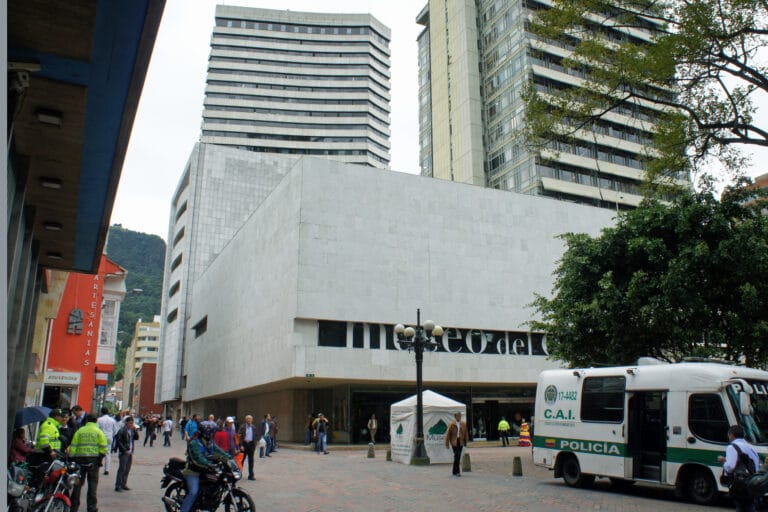
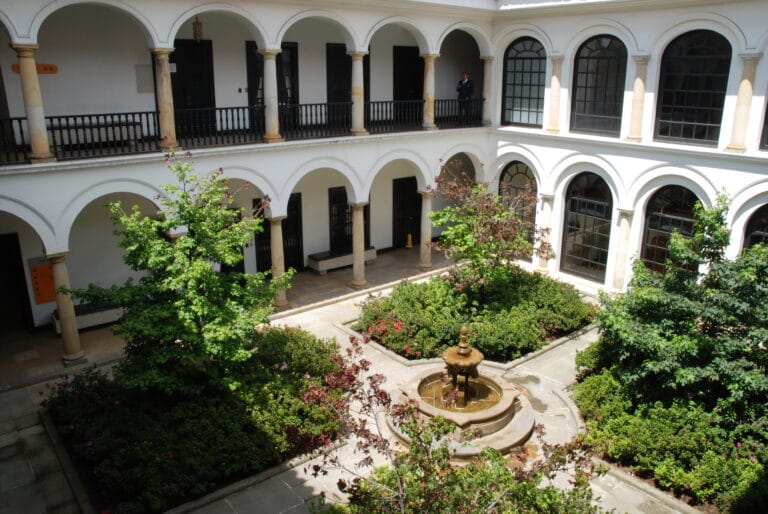
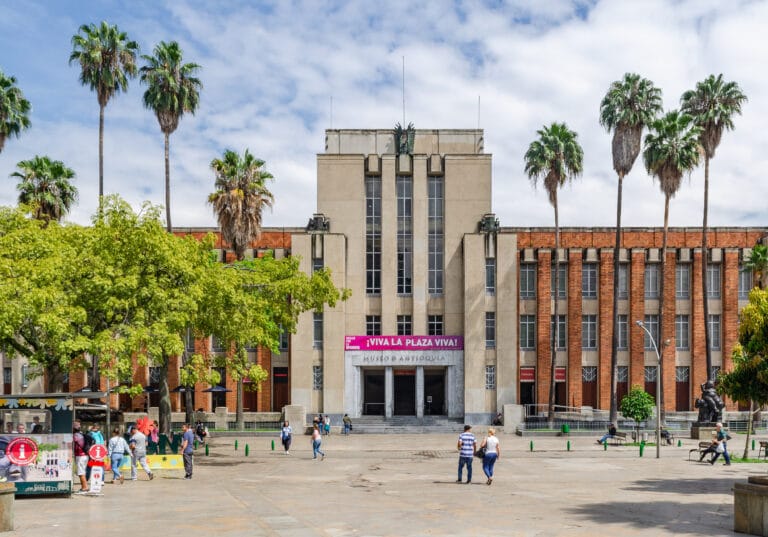
The building supports the collection with a striking sense of control. Museo del Oro is not defined by flamboyant exterior architecture or theatrical spectacle. Instead, it relies on quiet modernist discipline: subdued light, carefully paced circulation, and room-by-room progression that helps visitors stay focused. This is exactly the right architectural approach for the collection. Gold can easily become visually exhausting or too decorative if displayed carelessly. Here, the building prevents that. It gives the objects darkness, emphasis, and rhythm.
Inside, the museum often feels calm, concentrated, and clear. This is one of its greatest virtues. Visitors are not pushed through overwhelming density. Instead, the architecture and exhibition design create a sense of measured discovery. The museum knows when to narrow attention and when to open it out. This means that by the time the most memorable rooms are reached, the visitor has been prepared rather than overloaded.
Its setting in Bogotá also matters. Museo del Oro sits as one of the city’s major cultural institutions and is often an essential stop for visitors trying to understand Colombia beyond modern political narratives or urban first impressions. The museum’s presence in the city gives it a civic importance beyond the collection itself. It acts as a place where deep historical time enters the experience of contemporary Bogotá. That connection is one reason the museum feels so necessary. It does not simply display objects from a remote past; it gives them an active place in the cultural self-understanding of the present.
Practical Information
Museo del Oro is best visited with enough time to follow the route properly. The museum is not enormous by world standards, but it is conceptually rich, and rushing through it weakens the experience. A good visit depends on allowing the interpretive sequence to work. The museum has been designed to build understanding step by step, so it is better to let that progression happen than to jump only to the brightest rooms.
The collection benefits from close looking. Many objects are small or finely worked, and their impact increases with attention rather than quick movement. This is not a museum where the most rewarding visit comes from ticking off a list of highlights. Instead, it is a place where one gains more by slowing down and letting the framing, labels, and atmosphere work together.
Because the museum is so controlled in design, it can work well even for visitors who do not normally feel at ease in archaeological or material-culture museums. The route helps guide attention, and the spaces are calm enough that the visit rarely becomes chaotic. That said, the museum is richest when approached with curiosity and patience rather than treated as a quick stop between other Bogotá landmarks.
Why Visit
Museo del Oro is best for visitors interested in pre-Columbian cultures, material history, ritual objects, and museums that combine beauty with serious interpretation. It is especially rewarding for first-time visitors to Bogotá who want a museum that offers both international significance and a deeper understanding of Colombia’s historical and cultural foundations. Its greatest strength is that it takes a collection that could easily have been reduced to mere brilliance and instead turns it into a rich account of meaning, belief, technique, and society.
What makes the museum worth prioritising is the way it frames gold as something far more than material wealth. The collection becomes a way of understanding worldviews, bodies, landscapes, and ceremonial life across pre-Columbian societies. Few museums do this kind of interpretive work so well while still remaining visually compelling from start to finish. For many visitors, Museo del Oro is not only one of the best museums in Bogotá, but one of the most complete and intelligent museum experiences in Latin America.