Mauritshuis
The Mauritshuis in The Hague, Netherlands, is one of Europe’s most concentrated painting museums and one of the clearest demonstrations that a.
Best forMasterpieces, architecture, cultural history
Setting / nearbyEurope
Overview
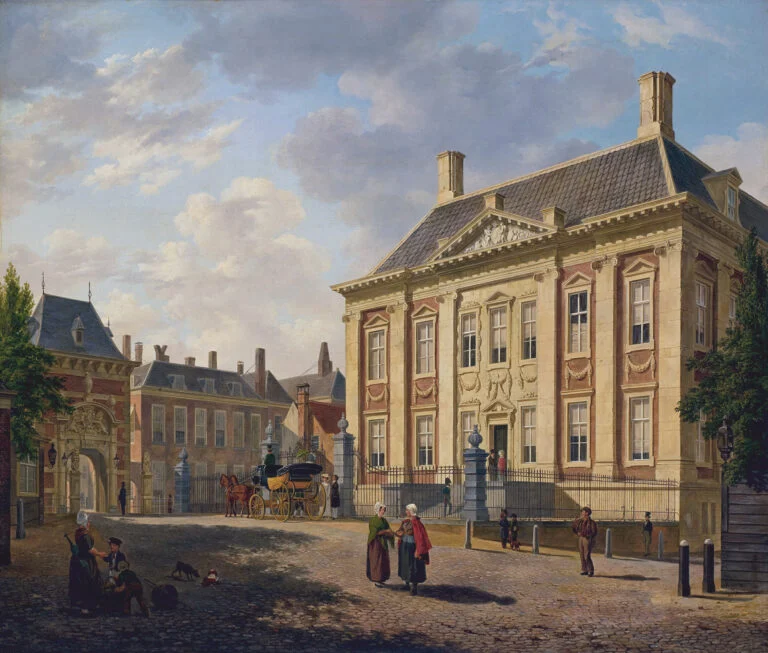
The Mauritshuis in The Hague is one of Europe’s most refined painting museums and one of the clearest examples of how a relatively small institution can hold exceptional artistic importance. Housed in a seventeenth-century city palace, the museum is best known for Dutch and Flemish paintings from the age of Rembrandt and Vermeer. Its reputation does not come from encyclopedic scale, but from the extraordinary concentration of quality found in its rooms. For many visitors, that is exactly what makes it so memorable. Instead of moving through endless galleries, you experience a tightly focused collection in which major works appear with remarkable consistency.
What makes the Mauritshuis especially compelling is the intimacy of the encounter. Large museums can impress through abundance, but the Mauritshuis works through precision, atmosphere, and closeness. Paintings are not swallowed by overwhelming scale or monumental gallery planning. They appear in rooms that still preserve a sense of domestic elegance, and this makes the viewing experience feel unusually personal. The museum allows visitors to see some of the greatest achievements of Dutch Golden Age painting in a setting that encourages attention rather than haste.
The museum also has a special place in the cultural life of the Netherlands. It presents art from a period when Dutch painting reached extraordinary levels of technical skill, observation, and psychological subtlety. Portraits, genre scenes, still lifes, landscapes, and history paintings all play a part, but what matters most is the way the collection reveals the richness of seventeenth-century visual culture. This is a museum where visitors can move from public grandeur to quiet domestic interior, from glittering surfaces to moral ambiguity, and from civic pride to intimate human presence.
For travelers, the Mauritshuis often becomes one of the highlights of a visit to The Hague. It is manageable in scale but immense in artistic reward. That combination makes it especially attractive to visitors who want a museum of real depth without the exhaustion that sometimes comes with larger institutions. It is one of those rare museums where almost every room offers something of lasting importance.
Collection Highlights
The most famous works in the museum naturally attract a great deal of attention, and with good reason. Johannes Vermeer’s *Girl with a Pearl Earring* is the most widely recognized image associated with the Mauritshuis, and seeing it in person explains why it has such a hold on the public imagination. The painting is small, quiet, and technically refined, yet it has an extraordinary intensity. It is exactly the kind of work that benefits from the Mauritshuis setting, where visitors can encounter it in a room-sized context rather than in a museum environment that feels too vast.
But the real strength of the Mauritshuis is that it is not dependent on one painting alone. Rembrandt is another central presence, and works such as *The Anatomy Lesson of Dr Nicolaes Tulp* give the museum major historical and artistic weight. In a painting like this, visitors encounter not only technical mastery, but also the Dutch Golden Age fascination with civic life, scientific inquiry, group identity, and public performance. Rembrandt’s presence helps anchor the collection and reminds visitors that this museum stands at the center of one of Europe’s greatest artistic periods.
The collection is also rich in other Dutch and Flemish masters, and this range is one of its greatest pleasures. Frans Hals, Jan Steen, Carel Fabritius, Paulus Potter, Jacob van Ruisdael, and others help broaden the visit beyond the most famous names. This matters because the Dutch Golden Age was not defined only by a few towering figures. It was an entire visual culture of remarkable variety. Genre scenes, landscapes, still lifes, animal paintings, portraits, and biblical works all contribute to the character of the collection.
One of the most rewarding aspects of the Mauritshuis is this balance between iconic masterpieces and surrounding excellence. Visitors may arrive wanting to see Vermeer or Rembrandt, but they often leave remembering the richness of the whole. A small still life, a winter landscape, or an interior scene can suddenly become just as memorable as the internationally famous works. That is usually the sign of a truly strong museum: it teaches you to look beyond the headline masterpieces.
Building and Setting
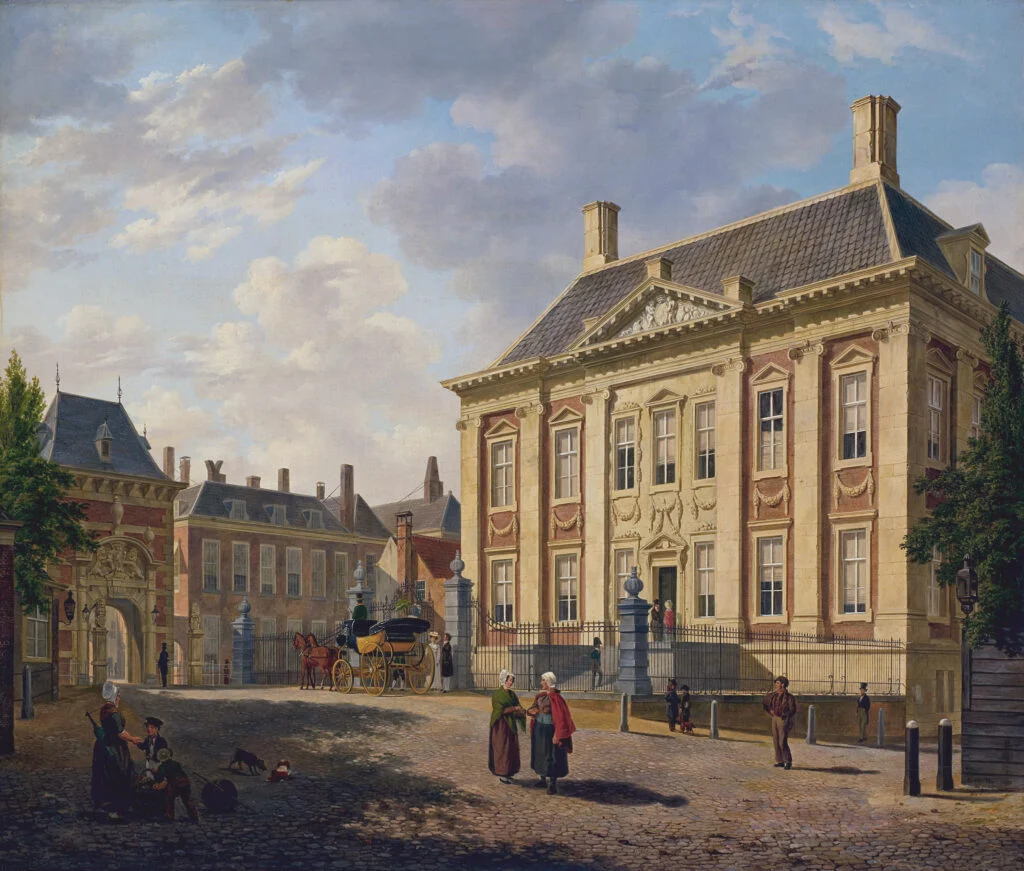
The setting of the Mauritshuis is central to its identity. Because the museum occupies a historic city palace, the experience is shaped as much by proportion and atmosphere as by collection strength. This is not a neutral white-box museum. The rooms retain an elegance that fits the paintings extremely well, and that relationship between architecture and art is one of the institution’s greatest assets. The collection feels at home here.
This domestic-palatial setting matters especially for Dutch painting. Much of the art in the museum depends on close looking, quiet observation, and nuanced attention to surface, light, and gesture. In an overly grand setting, such works can lose some of their power. At the Mauritshuis, by contrast, the rooms help preserve a human scale. Paintings remain close enough to feel immediate, and the visitor is constantly aware of being in a building with its own seventeenth-century character.
Its location in The Hague also strengthens the experience. The museum sits within a city associated with government, diplomacy, and Dutch public life, and this gives it an added civic resonance. It feels like part of the historic and cultural center of the Netherlands rather than a museum standing apart from the life of the city. That sense of placement adds to the authority of the institution.
The atmosphere inside the museum is one of concentration rather than spectacle. Even when the galleries are busy, the Mauritshuis often retains a sense of calm. This is important, because its paintings reward stillness. Visitors need time to look properly, and the building helps create that condition. The result is a museum visit that feels focused, elegant, and unusually complete.
Practical Information
The Mauritshuis is best visited at a slower pace than its size might suggest. Because it is not an enormous museum, some visitors may assume it can be seen very quickly. That would be a mistake. The collection is compact, but the paintings deserve time. This is especially true for visitors who want to appreciate the subtleties of Dutch painting rather than simply checking off famous names.
It works well both for first-time visitors and for experienced museumgoers. Those with a broad interest in art history will appreciate the concentration of masterpieces, while more casual travelers often find it approachable precisely because it is so manageable. The museum offers enough depth for serious looking without becoming exhausting.
It also works especially well as part of a broader visit to The Hague, but it is strong enough to justify a dedicated stop on its own. For many travelers, it becomes the main artistic reason to visit the city. Because temporary exhibitions and visitor arrangements can vary, it is always sensible to check current official information before going.
Why Visit
The Mauritshuis is worth visiting because it offers one of the most satisfying painting experiences in Europe. It combines collection quality, architectural character, and a scale that encourages real looking. Few museums manage this balance so well. It is neither overwhelming nor slight. Instead, it feels concentrated in the best possible sense.
It is also valuable because it presents the Dutch Golden Age at an unusually high level. Visitors do not only see famous images; they encounter a whole artistic world shaped by light, observation, technical brilliance, and cultural confidence. That makes the museum rewarding even beyond its best-known masterpieces.
If you want a museum that combines intimacy with greatness, the Mauritshuis is one of the clearest choices. It is elegant, focused, and full of paintings that stay in the mind long after the visit ends.