Hungarian National Gallery
Art Museums · Budapest, Hungary. The Hungarian National Gallery is the principal museum of fine arts dedicated to Hungarian art, located in the capital city of Budapest. It serves as a key institution for understanding Hungary’s artistic heritage, presenting…
Best forMasterpieces, architecture, cultural history
Setting / nearbyThe capital city of Budapest
Overview
The Hungarian National Gallery is the principal museum of fine arts dedicated to Hungarian art, located in the capital city of Budapest. It serves as a key institution for understanding Hungary’s artistic heritage, presenting works from medieval times through the 20th century. Positioned within the historic Buda Castle complex, the museum offers visitors not only art but also a sense of place tied to Hungary’s cultural and political history. It functions as a national art museum, focusing primarily on Hungarian painting, sculpture, and graphic arts, helping to define and showcase the country’s artistic identity.
Unlike general or encyclopedic art museums with international collections, the Hungarian National Gallery concentrates chiefly on artists and movements connected to Hungary. This focuses the visitor experience on regional art developments and how Hungarian visual culture fits within broader European patterns without diluting the narrative with unrelated foreign works. As such, this museum appeals to visitors interested in Eastern and Central European art history, those with a particular interest in Hungary, and anyone aiming to explore national narratives through visual art.
Collection Highlights
The museum’s collection traces Hungarian art history from medieval religious icons and altarpieces to modern and contemporary paintings and sculptures. One notable strength is its assemblage of works from the 19th and early 20th centuries, a period marked by Hungary’s cultural awakening and modernization. These paintings reveal a range of styles from academic realism to impressionism and early modernist experiments.
Medieval art in the collection includes religious panel paintings, sculptures, and decorative arts related to church commissions, reflecting the Christian heritage of the region. Visitors will find examples of Renaissance and Baroque art as well, demonstrating Hungary’s artistic connections to Western Europe during those periods.
The 19th century sections include portraits, landscapes, and genre scenes that capture Hungarian society and urban life during periods of political upheaval and reform. Some well-known Hungarian painters represented may include Mihály Munkácsy and Károly Ferenczy, whose works offer insight into the country’s adaptation of European art currents.
Twentieth-century art is well represented from early modernists through mid-century avant-garde artists, national romanticism, and Socialist realism. The collection here offers an overview of how Hungarian artists responded to international trends as well as the constraints imposed by historical circumstances, including the two World Wars and the Communist period.
Sculpture and graphic works are also important components. The museum holds examples of public monuments, busts, and smaller bronzes that document the evolution of Hungarian three-dimensional art. Graphic arts—etchings, lithographs, and drawings—enable a closer look at the preparatory techniques and less formalized practices of prominent artists.
The museum does not generally focus on extensive collections of international art outside Hungary, so visitors looking for broad European or global surveys may find the scope limited. However, the collection’s depth in Hungarian art compensates by offering detailed insight into a national visual culture that is often underrepresented in larger international museums.
Building and Setting
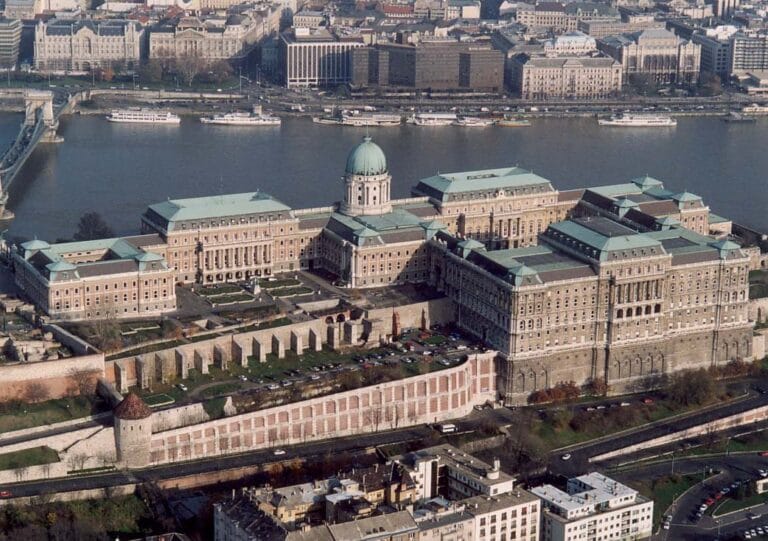
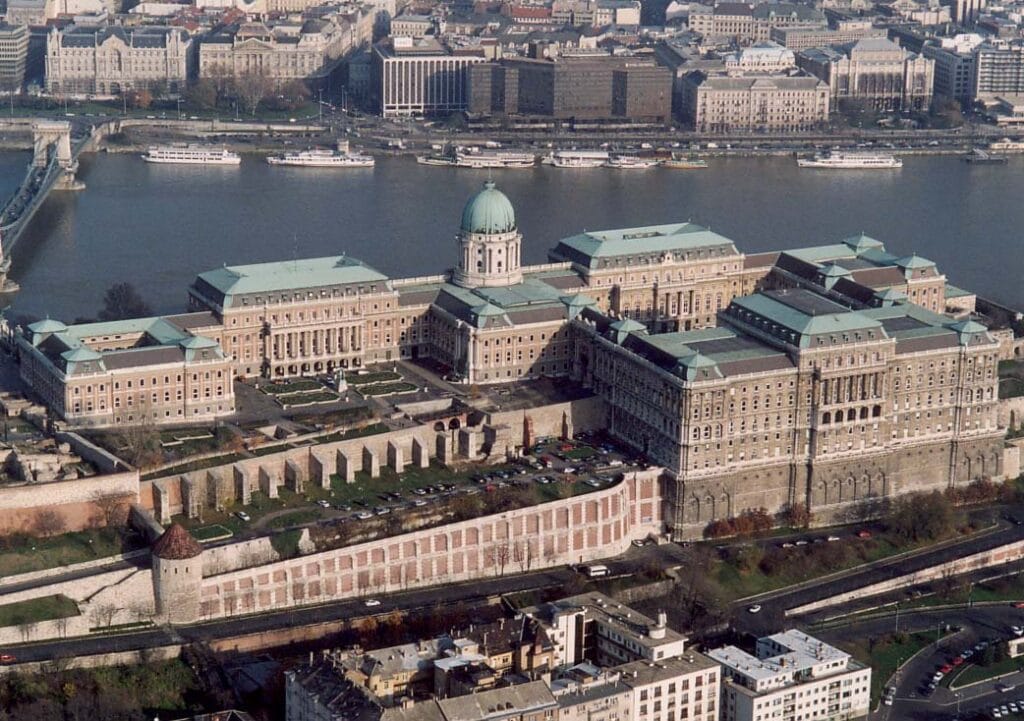
The Hungarian National Gallery is housed within the Buda Castle, a historic palace complex on Castle Hill overlooking the Danube River and the Pest side of Budapest. This location situates the museum within a landmark setting that connects the exhibition spaces directly to Hungarian history and national identity.
The castle itself is a large Baroque structure with multiple wings; the museum occupies part of this complex. The architecture provides high ceilings and spacious rooms typical of palace buildings adapted for exhibitions. The setting may feel formal and grand, reflecting the importance of the art and the institution’s role in Hungarian culture.
This historic environment adds context to the art, as visitors move through rooms that may once have been royal apartments or official halls. The location offers views over the city and the river, framing the museum visit with scenic outlooks tied to Budapest’s urban landscape.
Visitors should note that navigating the castle complex can involve stairs and various levels. This may affect those with mobility issues, so checking accessibility information via the official channels before visiting is advisable. The castle area also includes other cultural attractions, inviting a broader exploration of the site.
Practical Information
Current details concerning the Hungarian National Gallery’s opening hours, admission fees, guided tours, audio guides, and accessibility should be verified on the museum’s official website before planning a visit. Policies may change, and special exhibitions or events can affect opening times and availability of services.
Ticket purchase procedures and discount availability are best confirmed directly with the museum to avoid assumptions or outdated information. This is particularly relevant in museum settings where offerings can vary seasonally or due to public health guidelines.
Visitors planning to spend time in the Buda Castle district might consider nearby public transport options and look for updated information on parking and visitor amenities, as such practical matters can influence the overall experience.
Why Visit
For visitors interested in Hungarian cultural history or Eastern European art, the Hungarian National Gallery offers a valuable opportunity. It provides a focused presentation on Hungarian artists and periods that might not be as prominent in larger, more internationally oriented institutions. The chronological range—from medieval art to modernism—and the variety of media present a layered understanding of the country’s artistic developments.
The museum is particularly suitable for those who appreciate in-depth cultural narratives grounded in specific national contexts. It invites reflection on how Hungarian art has both absorbed and reinterpreted European artistic movements. Visitors with limited exposure to Central European art will likely gain new insights and discover artists whose works have been overshadowed outside Hungary.
On the other hand, visitors with a primary interest in wide international art surveys, or contemporary global art trends, might find the scope narrower than other museums dedicated to broader collections. The focus here remains on Hungarian art, which means the museum is less about comparative art histories and more about national identity through art.
The location inside the historic Buda Castle complex adds an important dimension. The setting itself embodies layers of Hungary’s royal and national history, making the museum visit a combined experience of place and art. For those who appreciate historic buildings and scenic urban views, this enhances the visit beyond the galleries.
In summary, the Hungarian National Gallery is a dedicated national art museum that balances historic and modern artworks connected to Hungary’s cultural legacy. It is well suited for visitors who seek to understand Hungarian visual culture within both its local and European contexts. Planning ahead by consulting the museum’s current visitor information will support a smoother and more informed visit to this distinctive Budapest institution.