Dunhuang Museum
Archaeology Museums · Dunhuang, China. The Dunhuang Museum is a regional archaeological and cultural museum located in the city of Dunhuang, in northwestern China’s Gansu province. This museum focuses on the unique heritage of the area surrounding the ancient…
Best forMuseum lovers, culture travelers, first-time visitors
Setting / nearbyDunhuang, China
Overview
The Dunhuang Museum is a regional archaeological and cultural museum located in the city of Dunhuang, in northwestern China’s Gansu province. This museum focuses on the unique heritage of the area surrounding the ancient Silk Road, presenting material evidence connected to Dunhuang’s role as a major crossroads for trade, culture, and religion over several centuries. It is particularly associated with the legacy of the nearby Mogao Caves, a significant site of Buddhist art and manuscripts, and serves as a center for understanding the broader historical and artistic developments tied to the region.
As a museum, it documents the historical interactions between various ethnic groups, religious traditions, and artistic movements that converged along this important route. While the museum covers a wide chronological span, including archaeological finds from prehistory to more recent times, much of its emphasis is on objects and art relating to Dunhuang’s status as a Silk Road hub during the first millennium CE. Visitors can expect a blend of archaeological artifacts, ancient art objects, and other materials that help illuminate the complex cultural exchanges that shaped this frontier zone of Chinese history.
Collection Highlights
The heart of the Dunhuang Museum’s displays lies in its collection of artifacts linked to the Silk Road and Buddhist culture. Although it does not hold the original Mogao Cave frescos, the museum presents many facsimiles, photographs, and related cultural relics that illustrate the artistic and religious milieu of the caves. These include painted murals, sculptures, and religious artifacts that shed light on the devotional practices and artistic styles developed in Dunhuang from the Tang dynasty (7th–10th centuries) onward.
Archaeological finds recovered from the region are another highlight. These might include items such as pottery, tools, textiles, coins, and fragments of manuscripts—all reflecting the material culture of the local populations as well as their trade connections with Central Asia and beyond. Some exhibits focus specifically on Buddhist scriptures and iconography, while others document the secular and everyday life of Dunhuang’s inhabitants through the centuries.
The museum also places some emphasis on Dunhuang’s role in intercultural contact. Key exhibits might explore how Persian, Indian, and Tibetan influences merged with Chinese traditions. Some displays show the movement of goods and ideas through Dunhuang, underscoring the area’s historical position as a meeting point of East and West. While individual pieces in the collection vary in condition and completeness, they collectively provide an informative overview of the region’s archaeological and cultural record.
Building and Setting
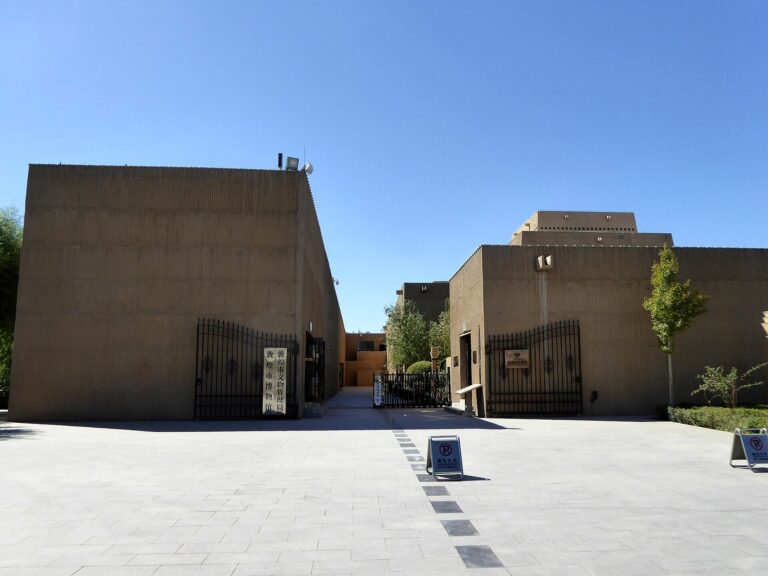
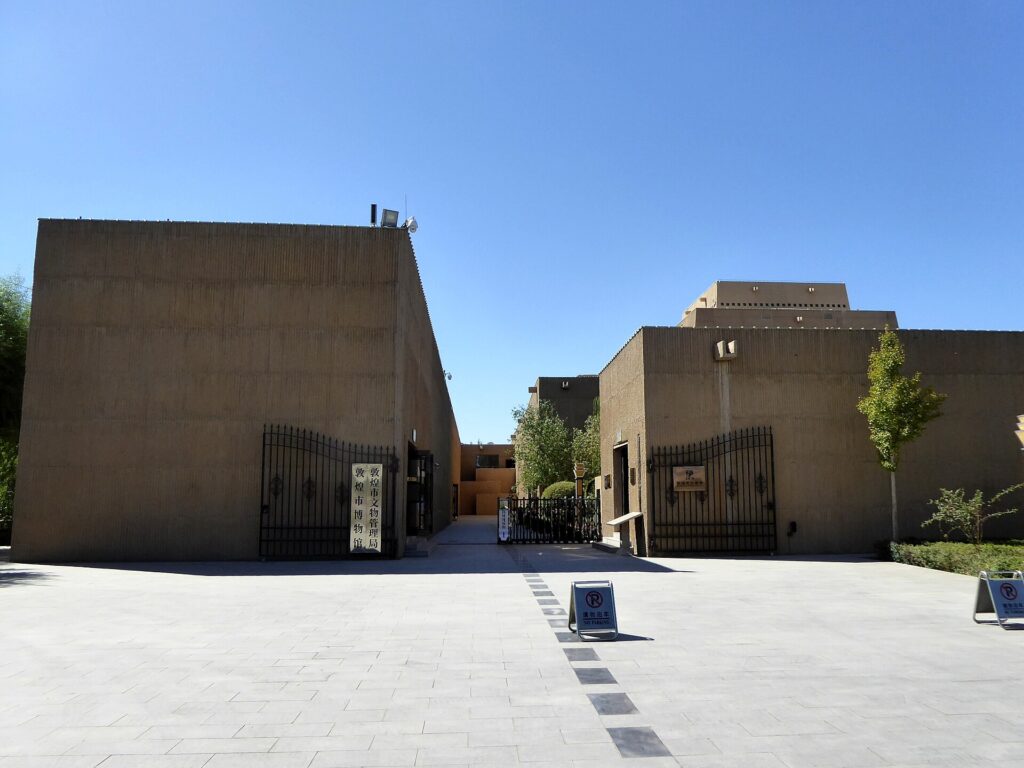
The Dunhuang Museum is situated in the city of Dunhuang itself, not far from the famous Mogao Caves which lie outside the urban center in a desert setting. The city acts as the natural base for visitors exploring the Silk Road’s historical sites in this part of China. The museum building is modern and designed with enough space to accommodate both permanent exhibitions and temporary displays related to archaeological and cultural themes.
Its location within the city makes it accessible for visitors who are already planning to see the caves and other nearby heritage points. The museum’s site does not occupy a historic structure but functions as a public cultural facility. The surrounding environment reflects the arid landscape of the Hexi Corridor region, lending a sense of the geographical context behind the museum’s collections. While the museum itself may not have extensive outdoor features, its proximity to key archaeological sites adds to the overall visitor experience.
Practical Information
Visitors intending to explore the Dunhuang Museum should consult the museum’s official website or contact local tourism offices to check up-to-date details such as opening hours, ticketing policies, and available visitor services. Admission policies, including prices and discounts, are not consistently documented in English-language sources, so it is recommended that travelers verify this information ahead of their visit. It is also advisable to confirm whether guided tours or audio guides are offered, as these can significantly enhance the understanding of the material on display.
Information about access for visitors with mobility challenges is not always clearly stated. Those with special requirements should inquire directly before visiting. Because the museum is located in a relatively arid and remote part of China, arranging transportation and accommodation in Dunhuang should be planned in advance. The local climate and time of year might impact comfort levels during the visit, especially since many Silk Road related sites are outdoors or in desert conditions. It makes practical sense to consider the best season for travel based on weather and local conditions.
Why Visit
The Dunhuang Museum serves as a key institution for those interested in the archaeology and cultural history of one of the most historically significant regions along the Silk Road. Compared to the massive archaeological site of the Mogao Caves, the museum offers a more structured and accessible presentation of the region’s broad cultural and material history. It provides context and interpretation helpful for understanding why Dunhuang was so important as a hub of religious, artistic, and commercial exchange.
For visitors keen on Buddhist art, Silk Road trade, or Chinese frontier history, the museum’s collections provide a useful complement to the nearby caves and desert archaeological sites. It is also suitable for academics or students seeking a focused introduction to Dunhuang’s diverse cultural heritage, particularly when combined with visits to the actual cave complexes and archaeological digs elsewhere in the region.
On the other hand, those expecting a large number of original cave paintings inside the museum may be disappointed; the originals remain primarily in the Mogao Caves and international collections. The museum’s displays are often more archaeological and object-based, requiring a level of patience and interest in historical context to fully appreciate.
In sum, the Dunhuang Museum offers a grounded, concrete presentation of the archaeological and cultural significance of this crossroad on the Silk Road. Its role as a repository of local heritage and an interpretive center makes it a worthwhile stop when exploring Dunhuang and the wider Gansu region, especially for visitors eager to deepen their understanding of how global exchanges took shape in this part of China over the centuries.
Readers should verify the latest visitor information through official channels before planning a visit, as details may change.