Australian Museum
The Australian Museum in Sydney, Australia, is the country’s first museum and one of the most important institutions for understanding the.

Best forMaritime history, ships, harbour heritage
Setting / nearbyOceania
Overview
The Australian Museum in Sydney is one of the country’s most important museums and one of the clearest places to encounter the breadth of Australia’s natural and cultural history in a single institution. It has long held a central position in the city’s public life, and for many visitors it serves as both an introduction to Australia and a deeper exploration of the continent’s environments, species, histories, and First Nations cultures. That broad scope is one of its greatest strengths. Rather than narrowing itself to one specialist field, the museum presents Australia as a place shaped by deep time, biodiversity, scientific inquiry, and human experience across many generations.
What makes the Australian Museum especially compelling is the way it brings together science and culture without making them feel separate. In weaker museums, natural history and human history can seem disconnected, as though they belong to two unrelated institutions. Here, the most rewarding experience comes from seeing how landscape, species, climate, Indigenous knowledge, exploration, collecting, and public science all intersect. That wider frame gives the museum more depth than a simple survey of specimens or artifacts would provide.
The museum also holds a special place within Sydney itself. In a city often defined internationally by its harbor, beaches, and major landmarks, the Australian Museum offers a different kind of encounter: one based on knowledge, preservation, and interpretation. It is a museum that works equally well for tourists seeking context, families looking for an engaging public institution, and visitors with a serious interest in science, anthropology, and museum culture. That flexibility is part of what makes it so enduringly valuable.
For travelers, the Australian Museum often works best as more than just an indoor stop on a rainy day. It can be a framework for understanding Australia more broadly. After visiting, landscapes, wildlife, and historical references outside the museum often feel sharper and more meaningful. That ability to deepen everything around it is one of the marks of a strong museum, and it is something the Australian Museum does particularly well.
Collection Highlights
One of the Australian Museum’s major strengths is the range of its collections. Natural history is central, and that gives the institution much of its immediate visual and intellectual appeal. Museums of this type are often at their best when they show not only individual specimens, but the larger systems that connect them: evolution, classification, adaptation, extinction, biodiversity, and environmental change. The Australian Museum is well suited to this because Australia itself offers such distinctive natural material. The continent’s wildlife, geological history, and ecological diversity create a foundation rich enough to support a major museum in its own right.
Dinosaurs, minerals, and zoological collections are often among the most memorable parts of a visit to a museum like this. These displays attract broad audiences because they combine visual impact with scientific interest. Large skeletons, unusual species, and geological specimens provide that immediate sense of wonder that natural history museums do so well. Yet the best aspect of these collections is not only their spectacle. It is the way they help visitors understand how life and landscape developed over immense spans of time. That deeper context turns fascination into knowledge.
Another important part of the museum experience lies in its cultural collections and interpretation. In Australia, this is especially significant. A museum of national importance cannot responsibly present the country without serious attention to Aboriginal and Torres Strait Islander cultures, histories, and knowledge systems. This dimension gives the museum moral and historical weight. It reminds visitors that Australia’s history does not begin with colonial settlement and that cultural interpretation is as central to the institution as scientific display.
The museum is also strong because it presents collecting itself as part of history. Natural history museums are not neutral storehouses. They are shaped by expeditions, research, taxonomies, changing ethics, and shifting ideas about the world. The Australian Museum becomes more interesting when visitors recognize that the objects and specimens on view are also part of the story of science, empire, public education, and museum practice. That layered quality makes the institution more than a set of displays. It becomes a record of how knowledge has been gathered and organized.
Building and Setting
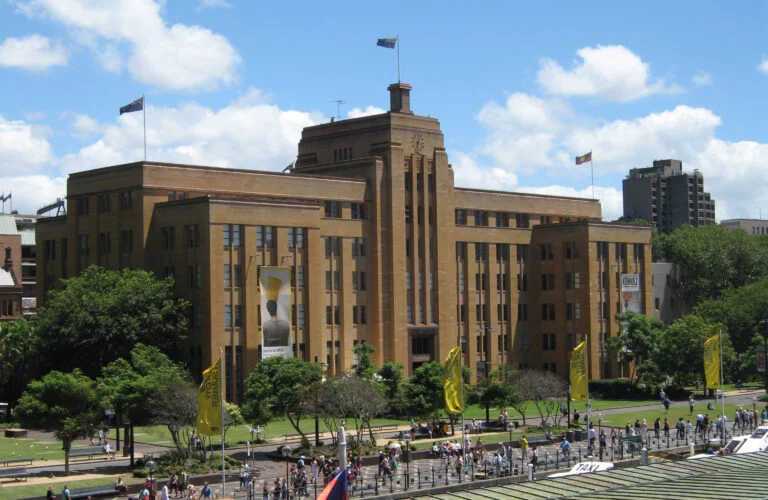
The building and setting contribute greatly to the museum’s identity. A major museum in central Sydney carries a civic presence, and the Australian Museum benefits from that. It feels like part of the public structure of the city rather than an attraction set apart from everyday life. That civic quality matters because museums like this are not only for specialists or tourists. They are also public institutions meant to serve education, curiosity, and shared cultural understanding.
Architecturally, museums with collections this broad need spaces that can handle variety without becoming fragmented. The Australian Museum is strongest when it allows visitors to move between science, history, and cultural interpretation without feeling that they have entered entirely separate worlds. A good museum building supports that movement, helping visitors experience continuity across different kinds of material. That is especially important in a museum where the relationship between nature and human history is one of the central themes.
Its Sydney location also gives the museum a special role for visitors. Many travelers arrive in the city with a strong image of modern Sydney, but the museum introduces a much longer and wider frame. It shifts attention from the instantly recognizable skyline to the deeper histories of land, life, and people. That contrast makes the visit particularly rewarding. The museum does not compete with the city’s famous visual appeal; it complements it by giving it context.
Practical Information
The Australian Museum is best visited with enough time to move through more than one major area. Because it combines natural history, cultural history, and science, it rewards visitors who allow themselves time to explore rather than rushing straight to the most famous displays. A shorter visit can still be enjoyable, especially for those drawn to a few major galleries, but a fuller visit is much more likely to reveal the institution’s real strength.
It works well for a wide range of audiences. Families often appreciate the visual and scientific appeal of the collections, while adult visitors may find the broader historical and cultural interpretation just as rewarding. Travelers who want one museum in Sydney that offers a broad introduction to Australia will likely find it especially useful. This is not a museum with only one kind of visitor in mind, and that flexibility is one of its practical advantages.
Because exhibitions, programming, and visitor arrangements can change, it is sensible to check current official information before going. But in general terms, the museum is best approached as a substantial visit rather than a quick addition to a busy schedule.
Why Visit
The Australian Museum is worth visiting because it offers one of the broadest and most meaningful museum experiences in Sydney. It combines natural history, science, and cultural interpretation in a way that makes Australia feel larger, deeper, and more complex. Instead of reducing the country to a few familiar symbols, it presents it as a place of extraordinary biodiversity, long human history, and ongoing scientific discovery.
It is also valuable because it works on several levels at once. Some visitors will come for dinosaurs, minerals, and wildlife. Others will come for the cultural collections and the wider historical perspective. The museum’s real strength is that these elements reinforce each other. That creates a richer experience than a more narrowly focused institution might offer.
If you want a Sydney museum that combines knowledge, scale, and a strong sense of place, the Australian Museum is one of the clearest choices. It is informative, varied, and one of the most rewarding cultural visits in the city.