Apartheid Museum
Art Museums · Johannesburg, South Africa. The Apartheid Museum in Johannesburg, South Africa, is a profound and deeply moving institution dedicated to chronicling the history and legacy of apartheid. This local history museum offers an immersive journey through one of…
Best forMemory, history, reflective visits
Setting / nearbyJohannesburg, a city that was at the heart of apartheid-era policies and resistance, the m
Overview
The Apartheid Museum in Johannesburg, South Africa, is a profound and deeply moving institution dedicated to chronicling the history and legacy of apartheid. This local history museum offers an immersive journey through one of the most pivotal periods of South African and global history—the decades-long system of racial segregation and its eventual dismantling. Established to educate and remind visitors about the realities of apartheid, the museum serves as a powerful testament to human rights struggles and the enduring quest for equality. Its exhibitions combine compelling storytelling with impactful visuals and archival materials, making it an essential destination for those seeking a deeper understanding of South Africa’s complex social and political heritage.
Collection Highlights
The heart of the Apartheid Museum lies in its carefully curated collection that explores the rise, enforcement, and ultimate fall of apartheid in South Africa. Exhibits are arranged chronologically and thematically, guiding visitors through the legal frameworks that introduced apartheid policies, such as the Population Registration Act and the Group Areas Act. The museum presents documents, photographs, newspapers, and personal artifacts that illuminate how these laws affected millions of lives.
One of the striking elements is the use of multimedia and recreated environments that transport visitors into the segregated spaces of the past, such as homes, schools, and public facilities designated by race. These reconstructed settings foster a visceral understanding of the segregation experience. Additionally, the museum pays homage to the heroes and heroines of the anti-apartheid struggle, including notable figures such as Nelson Mandela and Desmond Tutu, with dedicated exhibits illustrating their roles and sacrifices.
Visitors will also find poignant displays featuring protest art, posters, and memorabilia that reflect the cultural resistance and international solidarity movements. The narrative does not shy away from the brutal realities of repression, detention, and state violence but balances this with stories of resilience and reconciliation that led to South Africa’s transition to democracy.
Building and Setting
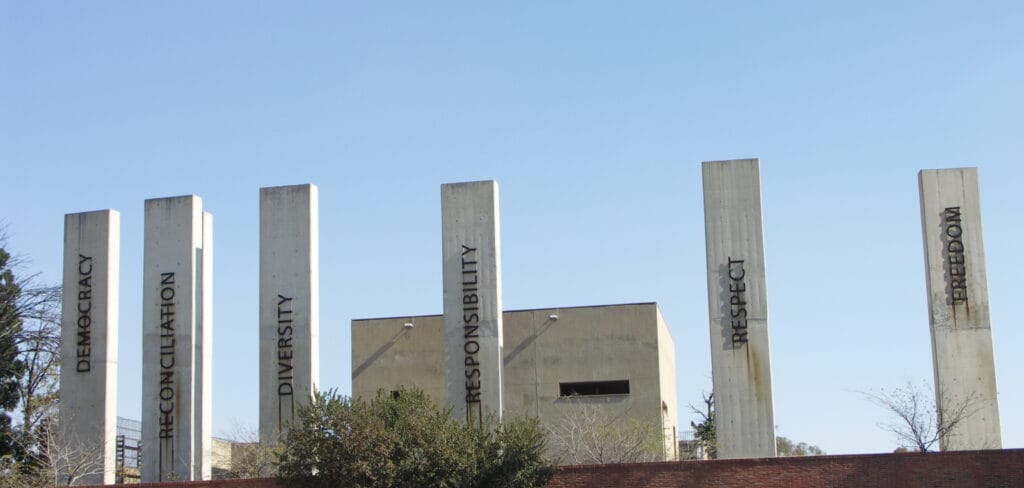
The Apartheid Museum’s building itself is an architectural statement designed to evoke reflection and solemnity. The structure and its surrounding spaces are crafted to complement the storytelling, employing stark contrasts and symbols that convey themes of division and unity. The entrance often features imposing gates, reminiscent of checkpoints or barriers, setting the tone for the experience ahead.
Located in Johannesburg, a city that was at the heart of apartheid-era policies and resistance, the museum’s setting adds another layer of context. Johannesburg’s historical significance and urban landscape offer visitors a broader sense of place. The museum is often surrounded by thoughtfully designed gardens and memorial spaces, inviting contemplation before and after tours. Its proximity to other cultural and historical landmarks makes it accessible for those interested in South Africa’s broader heritage and contemporary social dynamics.
Practical Information
The Apartheid Museum welcomes visitors daily, but hours of operation can vary due to special events or public holidays. It is strongly advised that visitors check the official website before planning a visit to confirm current opening times and ticketing information. The museum offers a range of tickets including general admission, guided tours, and group rates. Some exhibitions may have additional access guidelines or restrictions.
Facilities at the museum include a bookstore stocked with relevant literature, a café offering refreshments, and accessible restrooms. The museum is designed to accommodate visitors of all ages and mobility levels, with care taken to provide clear signage, comfortable pathways, and educational materials. Audio guides and multilingual information may also be available, enhancing the experience for a diverse audience.
Visitors are encouraged to allow at least two to three hours to fully engage with the exhibits. Photography policies should be consulted on arrival if visitors wish to take pictures, as certain areas may have restrictions to protect sensitive materials. The museum also hosts temporary exhibitions and special events which can enrich the visit.
Why Visit
Visiting the Apartheid Museum is an opportunity to engage deeply with a defining chapter of not only South Africa’s history but the broader global struggle for justice and human dignity. It offers a uniquely comprehensive and accessible approach to understanding apartheid’s systemic impact and the courageous efforts that led to its end.
The museum does not merely present facts; it invites visitors to reflect on ongoing themes of division, tolerance, and reconciliation. Its emotional and educational power makes it a meaningful experience for scholars, students, tourists, and local communities alike. It helps foster awareness and empathy, encouraging dialogue about the past and its implications for the present and future.
For anyone interested in social justice, modern history, or cultural transformation, this museum is indispensable. It allows for an informed appreciation of the challenges overcome and the work still required to build inclusive societies. The Apartheid Museum stands as both a memorial and an educational beacon—a place where history comes alive, and where visitors leave with a renewed sense of purpose and hope.