Viking Ship Museum Roskilde
About: The Viking Ship Museum in Roskilde centres on five original 11th-century ships recovered from Roskilde Fjord. A glass-fronted hall keeps the.
Best forMaritime history, ships, harbour heritage
Setting / nearbyEurope
Overview
The Viking Ship Museum in Roskilde is one of Denmark’s most distinctive museums and one of the most rewarding places in Europe to understand the Viking Age through real ships, maritime archaeology, and practical reconstruction. Unlike museums that present Viking history mainly through weapons, jewellery, and isolated artefacts in glass cases, this museum is built around vessels, seafaring, and the wider world of movement, trade, warfare, and craftsmanship that made Viking society possible. That gives the visit a very clear identity from the beginning. The museum is not only about “Vikings” in the popular sense. It is about ships as technology, as status, as instruments of travel, and as the foundation of a maritime culture.
What makes the museum especially strong is the way it combines archaeology with physical understanding. The preserved ships are important enough on their own, but the museum becomes much richer because it also explains how they were found, how they were interpreted, and how knowledge has been expanded through reconstruction and sailing. This creates a museum experience that feels unusually alive. The Viking Ship Museum is not only preserving the past. It is actively testing and exploring it. For visitors, that makes a real difference. The ships do not feel like dead remains from a distant age. They feel like objects that still have practical meaning and structural logic.
The museum is also deeply tied to place. Roskilde Fjord is not a neutral backdrop. The waters, shoreline, and open setting make the museum’s subject feel grounded in the landscape rather than extracted from it. This matters because Viking seafaring cannot be understood only in abstract historical terms. It was always about water, weather, construction, risk, and movement. The museum’s setting keeps those realities visible throughout the visit, which gives it a stronger sense of authenticity than many indoor-only historical museums.
Another reason the museum works so well is that it appeals to different kinds of visitors at once. Families can enjoy the immediate drama of real ships and outdoor activity. History enthusiasts can engage with the archaeological and historical interpretation. Visitors interested in craftsmanship, engineering, and experimental archaeology will find even more to absorb. This broad appeal is one of the museum’s great strengths. It is specialised, but never narrow in a way that feels closed off.
Collection Highlights
The central highlights are the five Viking ships recovered from the fjord and displayed in the main museum building. These vessels are the heart of the institution, and everything else grows outward from them. What makes them so compelling is not only their age or rarity, but their difference from one another. Together, they show that Viking ships were not one uniform type. They were built for different purposes, and that variety helps visitors understand how flexible and sophisticated Viking maritime culture really was.
The longship material is especially important because it gives visitors a direct sense of speed, prestige, and warfare. These vessels are often what most people imagine first when they think of Viking ships, but seeing the remains in person makes the subject feel less mythical and more technical. You begin to notice design, proportion, and the specific choices that shaped the vessel. The museum is strong because it helps visitors see the ships not simply as symbols, but as engineered solutions.
The cargo and utility vessels are just as important, even if they are less dramatic at first glance. They broaden the museum’s story beyond raiding and warfare and make clear that Viking society depended on transport, trade, fishing, and everyday movement as much as on military power. These ships help correct the overly narrow popular image of the Viking Age. They show a world of economic and practical life, not only a world of attack and conquest.
One of the museum’s great strengths is the reconstruction and boat-building side of the experience. The museum is unusually effective at showing how archaeological interpretation becomes practical knowledge. Reconstructions, working boats, and demonstrations of traditional techniques help make the collection feel active rather than frozen. Visitors can see not only what was found, but how scholars and craftspeople have tried to understand sailing characteristics, building methods, and the physical demands of life at sea. This is where the museum becomes more than a display of important remains. It becomes a place of research and living experimentation.
The outdoor boatyard and maritime activity areas are also major highlights. These spaces often leave a strong impression because they connect the museum to real craft, timber, rope, tools, and labor. They remind visitors that Viking ships were not abstract masterpieces but working constructions built by skilled hands. This practical side of the museum is crucial to its identity. It turns archaeological history into something tangible and material.
Building and Setting
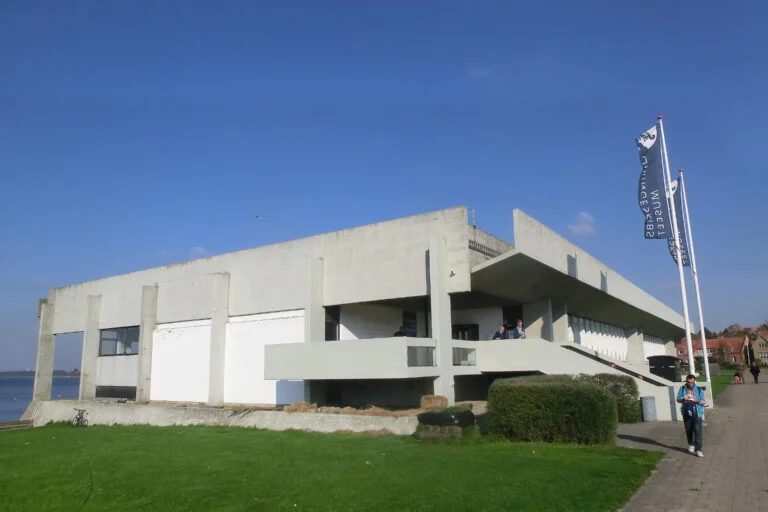
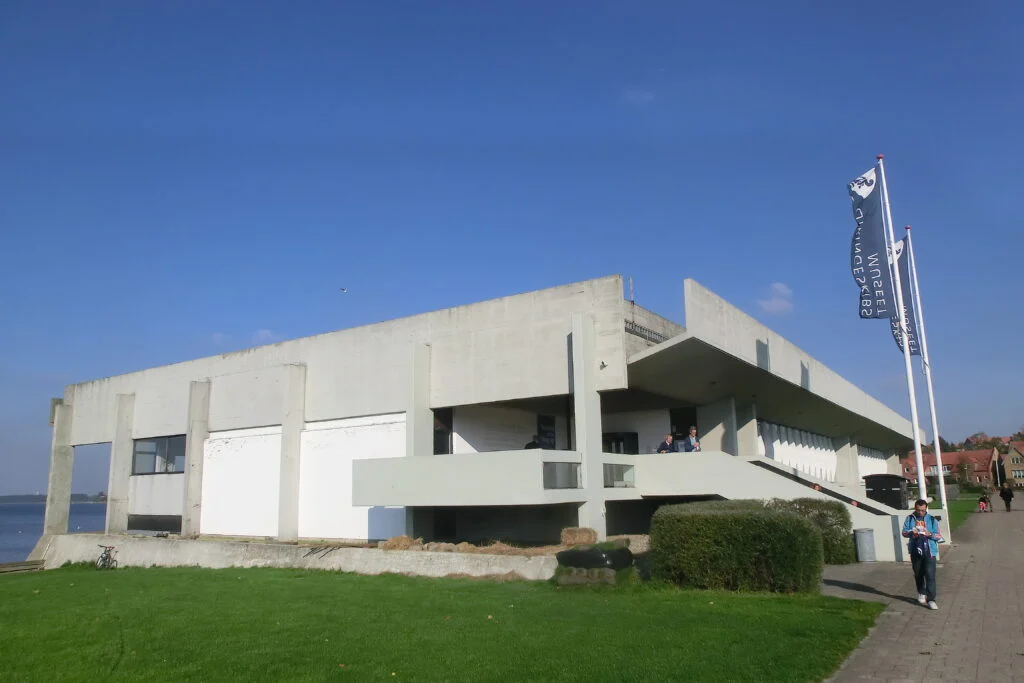
The museum’s setting on the waterfront is one of its most valuable strengths. Roskilde Fjord is not simply scenic background. It is part of the museum’s logic. The relationship between the ships inside and the water outside gives the visit a rare sense of place. Visitors are constantly reminded that these vessels belonged to a maritime environment and to a society shaped by coasts, crossings, and navigation.
The main museum building is effective because it gives the ships space and clarity without distracting from them. The structure feels open enough that the vessels can be read as forms, not only as archaeological fragments. Light and sightlines are handled well, and the museum avoids making the ships feel trapped or over-staged. That restraint is important. The objects are strong enough to carry the experience.
Outside, the boatyard and harbor-related spaces widen the visit beyond gallery interpretation. This shift from indoor archaeology to outdoor craft and environment is one of the museum’s best qualities. It gives rhythm to the day and prevents the experience from becoming too static. Few museums move so naturally between preserved remains and living craft traditions.
The setting in Roskilde also helps. The museum does not feel detached from Denmark’s maritime history. It feels embedded in it. That makes it more memorable than a similar collection shown far from water would be.
Practical Information
The museum works best when visited slowly enough to include both the indoor ship hall and the outdoor areas. A quick visit can still be rewarding because the central vessels are so important, but the museum becomes much richer when you allow time for the reconstructions, the boatyard, and the waterfront setting.
A good approach is to begin with the original Viking ships in the main galleries, since they give the museum its historical core. After that, move outward into the reconstruction and working-boat areas, where the broader meaning of the collection becomes clearer. This sequence works well because it starts with the archaeology and ends with the practical life of ships and craft.
Weather matters more here than in many museums, since part of the experience is outdoors. That is not a drawback. In many ways it suits the subject. But it does mean visitors should allow for conditions and dress accordingly if they want the full experience rather than only the indoor galleries.
Families, history lovers, and general visitors can all enjoy the museum, but those most interested in ships, craftsmanship, and maritime history will find that it rewards extra time and close attention.
Why Visit
The Viking Ship Museum in Roskilde is best for visitors interested in Viking history, maritime archaeology, experimental reconstruction, and museums with a very strong sense of place. Its greatest strength is that it explains the Viking Age through ships, and that makes the period feel more real, more practical, and more coherent than many broader Viking displays elsewhere.
What makes it worth prioritising is the combination of real archaeological importance and living craft knowledge. The preserved vessels are major historical objects, but the museum does not stop there. It shows how those ships were built, how they worked, and why they mattered. That turns the visit into something deeper than simple admiration.
For anyone in Denmark who wants a museum experience with clarity, atmosphere, and real substance, the Viking Ship Museum is one of the strongest choices in the country. It is not only one of the best places to learn about the Viking Age, but one of the clearest examples of how a museum can turn archaeology into something active, legible, and memorable.