Louvre Abu Dhabi
Louvre Abu Dhabi is one of the Middle East’s most significant modern museums—built not only to display objects, but to set a cultural tone for the.
Best forMasterpieces, architecture, cultural history
Setting / nearbyMiddle East
Overview
Louvre Abu Dhabi is one of the most significant museum projects in the Middle East and one of the clearest examples of a museum built to do more than display important objects. It is a museum designed to shape cultural identity, public space, and international conversation at the same time. For visitors, that means the institution works on several levels at once. It is a museum of art and civilisation, a major architectural landmark, and a statement about how Abu Dhabi wishes to position itself within a wider global cultural landscape.
What makes Louvre Abu Dhabi especially distinctive is its curatorial idea. Rather than organising the collection only by region or by national school, the museum often emphasizes connections across civilisations, periods, and geographies. This gives the visit a different rhythm from more traditional encyclopedic museums. Instead of moving through isolated national stories, visitors are encouraged to compare objects and ideas across cultures. In practice, that means the museum can feel more thematic and more comparative than institutions built around one country’s heritage alone. For some visitors, this makes the collection feel more modern and more accessible. For others, it gives the museum a thoughtful intellectual identity that goes beyond prestige.
The museum is also remarkable because of the way it balances scale with calm. Many large cultural institutions try to impress through size alone, but Louvre Abu Dhabi is more controlled than that. The arrival experience, the movement between galleries, the filtered light, and the relationship to water all help slow the pace of the visit. This is one of its biggest strengths. The museum feels monumental, but it rarely feels aggressive. It gives visitors space to think, look, and reorient themselves, which is particularly valuable in a museum that covers broad historical and civilisational themes.
Another reason the museum works so well is that it can serve very different audiences at once. First-time visitors to Abu Dhabi may be drawn by the building and the landmark status of the institution. Art lovers may come for the collection and the exhibitions. Others may be more interested in the museum as a cultural symbol of the region. Louvre Abu Dhabi supports all of these readings. It is serious without being narrow, international without feeling rootless, and visually striking without losing control of the museum experience itself.
Collection Highlights
The museum’s greatest strength is not one single object but the way it brings together works from different parts of the world into a shared narrative. This means the visit is often less about chasing one universally famous masterpiece and more about seeing how objects speak to one another across time and geography. Sculptures, paintings, manuscripts, decorative arts, religious objects, archaeological pieces, and later modern works can all appear within this broader comparative framework. That gives the collection a different kind of force. It is cumulative and conceptual rather than simply iconic.
The early civilisational material is often one of the strongest starting points. These galleries help establish the museum’s wider ambition by showing that the story here is not confined to one region or tradition. Instead, the museum invites visitors to consider common human themes such as belief, rulership, trade, representation, and exchange. This can make the early rooms especially rewarding, because the museum’s identity becomes visible very quickly there.
Religious and devotional objects from different traditions are also particularly important in the collection. When shown in relation rather than isolation, these works can reveal both difference and shared human concerns. This is one of the museum’s more thoughtful achievements. It avoids flattening civilizations into sameness, but it also resists keeping them in entirely separate compartments. The effect is often strongest when visitors allow time to compare works across galleries instead of moving too quickly from label to label.
Paintings and decorative arts from later periods add another layer to the visit. These galleries can be especially satisfying because they show how the museum moves from archaeological and civilisational material toward more familiar art-historical forms without losing the comparative structure established earlier. The collection’s later works often benefit from the same curatorial method: not just presenting isolated achievements, but placing them in wider conversations about taste, exchange, luxury, empire, and modernity.
Temporary exhibitions are also important at Louvre Abu Dhabi. Because the permanent collection is built around broad civilisational connections, changing exhibitions can give extra focus and energy to a visit. They often add depth to a particular theme, region, or period and can make the museum feel more dynamic than a purely fixed display. For repeat visitors, these exhibitions are often a major reason to return.
Building and Setting
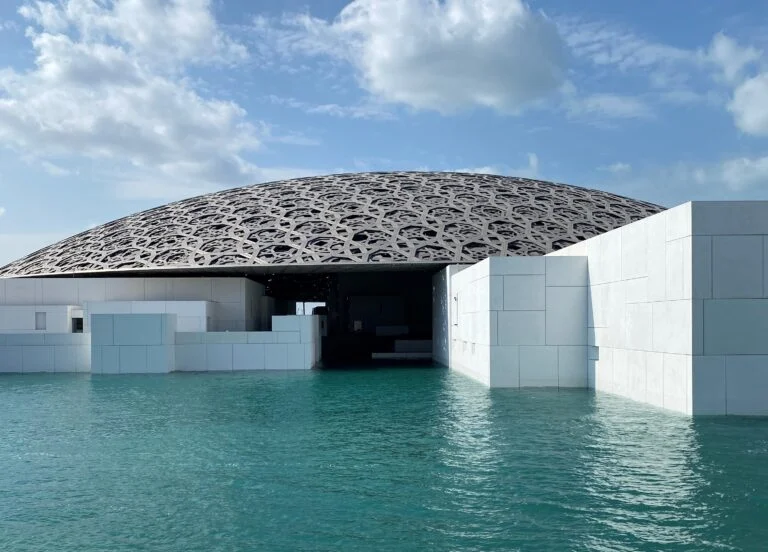
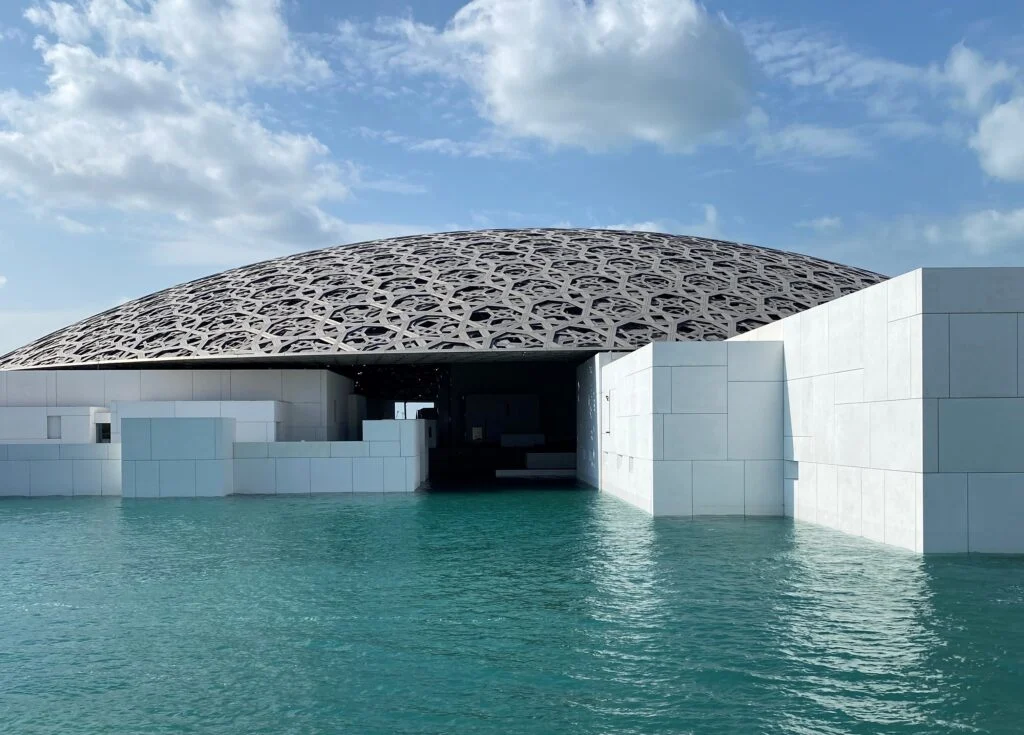
The building is one of Louvre Abu Dhabi’s defining achievements. Designed as a museum city beneath a vast dome, it creates one of the most memorable museum settings in the world. The dome’s filtered light, often described through the effect of a “rain of light,” gives the museum a very particular atmosphere. This is not a neutral architectural shell. It shapes how visitors feel and move. The play of shade, geometry, water, and open passageways turns the museum visit into a spatial experience as much as an art-historical one.
What makes the architecture so successful is that it is monumental without feeling heavy. The museum has strong visual identity, but it does not crush the visitor beneath spectacle. Instead, the spaces remain navigable and calm. Water, sky, and light all remain present, and this gives the museum a meditative quality that is quite rare in large international institutions.
Its island setting is also central to the experience. Louvre Abu Dhabi does not feel buried within dense urban fabric. It feels set apart, and that separation gives the visit a ceremonial quality. Approaching the museum already feels like entering a designed cultural space rather than just another city building. This helps explain why the museum works so well as a landmark. It is not only a place that contains art. It is a destination shaped around the idea of arrival, transition, and contemplation.
Inside, the sequence of galleries is generally clear and well controlled. Visitors are given enough architectural relief between rooms that the collection remains absorbable. That is important in a museum with such broad thematic ambitions. The building helps carry the intellectual structure of the museum by preventing visual and mental overload.
Practical Information
Louvre Abu Dhabi is best visited at a measured pace. This is not a museum that rewards rushing, because so much of its value lies in atmosphere, comparison, and transition. A good visit often begins with taking in the architecture first: the dome, the relationship to water, and the movement through the exterior and semi-exterior spaces. Only then does the collection fully settle into place.
A sensible route is to follow the main chronological and thematic progression rather than jumping immediately to whichever works seem most familiar. The museum’s larger idea becomes clearer when the galleries are experienced in sequence. At the same time, it is worth allowing flexibility for temporary exhibitions or for slower time in the sections that feel especially strong to you.
Breaks matter here, and the museum is well suited to them. Because the architecture provides calm transition spaces, visitors can reset without losing the thread of the visit. This makes the museum particularly enjoyable even for people who usually find large museums tiring.
Why Visit
Louvre Abu Dhabi is best for visitors interested in world cultures, cross-civilisational art history, museum architecture, and modern cultural institutions that try to say something larger than “here is a collection.” Its greatest strength is the way it combines a major architectural statement with a curatorial idea that encourages comparison, reflection, and a broader view of human history.
What makes it worth prioritising is not simply prestige or branding. It is the fact that the museum genuinely offers a distinct experience. The building is extraordinary, the setting is memorable, and the collection is presented with a seriousness and calm that give the visit real depth. Few museums balance visual beauty, intellectual coherence, and public accessibility so effectively.
For visitors to Abu Dhabi, it is one of the city’s essential cultural experiences. More than that, it is one of the most successful museum projects of its generation: a place where architecture, art, and cultural ambition have been brought together with unusual care and real force.