Louvre Abu Dhabi Review
Louvre Abu Dhabi Art & Civilizations - Abu Dhabi , United Arab Emirates Some museums impress you the moment you arrive. Others earn it slowly, room.
Louvre Abu Dhabi Art & Civilizations - Abu Dhabi , United Arab Emirates Some museums impress you the moment you arrive. Others earn it slowly, room.
Best forMasterpieces, architecture, cultural history
Review focusCollection highlights, building, visitor flow
Historical Context
Louvre Abu Dhabi opened in 2017 as part of a cultural partnership between the United Arab Emirates and France, marking a significant moment in the development of global museum collaborations. The institution was conceived as a universal museum, aiming to present human creativity and cultural exchange across civilizations rather than focusing on a single national narrative.
Located on Saadiyat Island, the museum forms part of a broader cultural district intended to position Abu Dhabi as a major international center for art and culture. Its creation reflects both regional ambitions and global connections, bringing together works from different periods and geographies under a shared curatorial vision.
The museum’s collection is supported by loans from major French institutions, including the Louvre in Paris, alongside its own growing permanent holdings. This combination allows it to present a wide-ranging and evolving selection of artworks.
Since its opening, Louvre Abu Dhabi has established itself as a key institution in the Middle East, offering a distinct perspective on world history through art.
What You See on Arrival
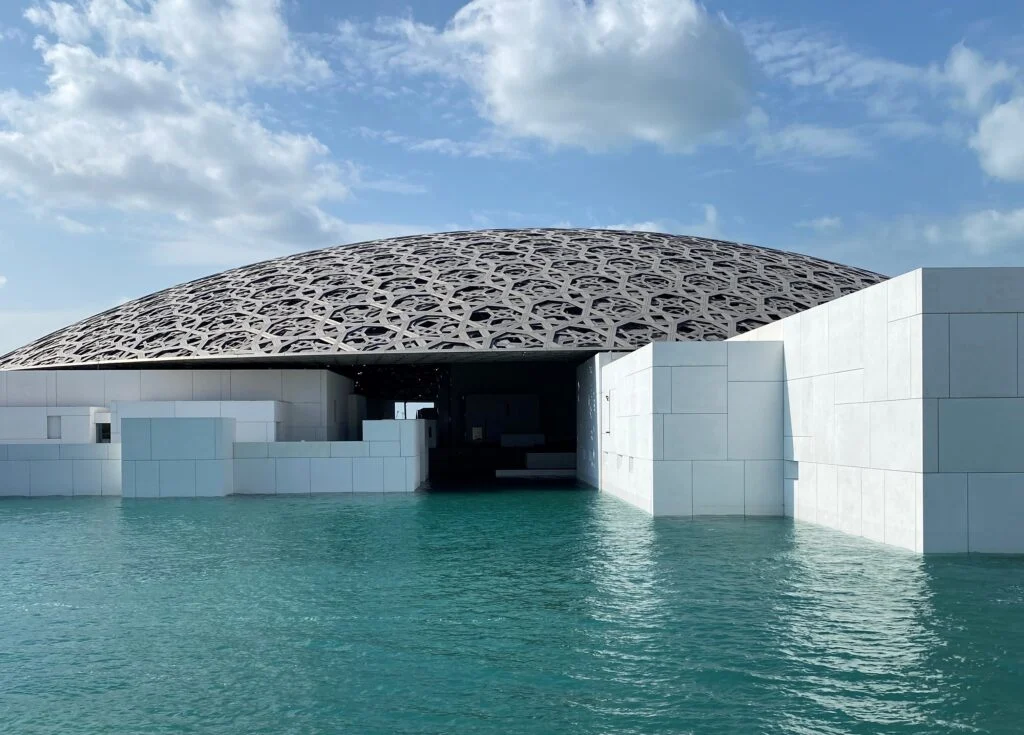
Approaching Louvre Abu Dhabi, the building itself becomes the primary visual focus. Designed by architect Jean Nouvel, the structure is defined by its large dome, which appears to float above the complex of galleries below.
The museum is surrounded by water, creating the impression of a series of interconnected buildings emerging from the sea. Walkways and open spaces guide visitors toward the entrance, offering views of both the architecture and the surrounding landscape.
Inside, the atmosphere shifts between open, light-filled areas and more enclosed gallery spaces. The dome allows filtered sunlight to enter, creating a pattern often described as a “rain of light,” which adds a dynamic quality to the environment.
The layout is designed as a sequence of galleries connected by pathways, encouraging exploration while maintaining a clear sense of direction.
Highlights and Key Exhibitions
The museum’s galleries are organized chronologically and thematically, presenting works from different cultures side by side to highlight connections and shared developments.
Artifacts from ancient civilizations, including Mesopotamia, Egypt, and Asia, provide an early foundation. These are followed by works from classical antiquity, medieval periods, and the Renaissance, illustrating the progression of artistic expression.
Paintings and sculptures from European masters appear alongside objects from other regions, creating dialogues between cultures. This approach distinguishes Louvre Abu Dhabi from more traditional museums.
Contemporary works are also included, offering perspectives on modern artistic practices and global themes.
Temporary exhibitions, often developed in collaboration with international institutions, add further depth and variety to the museum’s program.
Visitor Experience
The visitor experience at Louvre Abu Dhabi is shaped by both the architecture and the curatorial approach. The movement between indoor galleries and outdoor spaces creates a varied rhythm, allowing visitors to alternate between focused viewing and open-air exploration.
Signage is clear, and the thematic organization helps visitors understand the connections between different works. The atmosphere is generally calm, though popular exhibitions may attract larger crowds.
The museum encourages a reflective pace, with seating areas and viewpoints integrated throughout the space. The presence of water and natural light contributes to a sense of openness that is uncommon in many traditional museums.
Because of the layout, visitors can choose their own path through the galleries, making the experience flexible and adaptable to different interests.
Tickets, Access, and Planning
Louvre Abu Dhabi operates with a standard ticketing system, with admission fees for adults and reduced rates for certain groups. Tickets can be purchased in advance or on-site.
The museum is located on Saadiyat Island and is accessible by car, taxi, or organized transport services. Parking facilities are available nearby.
Opening hours are consistent but may vary depending on the day and special events, so checking official information in advance is recommended.
Visitors should plan to spend several hours exploring the museum, with additional time for temporary exhibitions and outdoor areas.
Facilities include restaurants, cafés, and a museum shop, supporting a full-day visit if desired.
Final Verdict
Louvre Abu Dhabi offers a distinctive and well-curated museum experience that emphasizes connections across cultures.
Who should visit? It is particularly suited to visitors interested in global history, cross-cultural dialogue, and contemporary museum design.
Why visit? Because it combines an innovative architectural setting with a collection that presents art as a shared human experience.
As part of Abu Dhabi’s growing cultural landscape, the museum represents a significant and memorable destination.