Museum of Applied Arts Vienna Review
Art Museums · Vienna, Austria. The Museum of Applied Arts Vienna carves a distinct niche among European art institutions by concentrating on the intersection of design, craft, and everyday objects. Unlike traditional fine art museums that focus predominantly on…
Art Museums · Vienna, Austria. The Museum of Applied Arts Vienna carves a distinct niche among European art institutions by concentrating on the intersection of design, craft, and everyday objects. Unlike traditional fine art museums that focus predominantly on…
Best forArt lovers, visual culture, architecture
Review focusCollections, curatorial focus, and visitor planning
What Sets It Apart
The Museum of Applied Arts Vienna carves a distinct niche among European art institutions by concentrating on the intersection of design, craft, and everyday objects. Unlike traditional fine art museums that focus predominantly on painting and sculpture, this museum explores how utility and aesthetics merge in materials, techniques, and forms that shape daily life. Its identity hinges on applied arts, decorative arts, and design through several centuries, threading a line from historic craftsmanship to contemporary innovation. This enables it to function as a bridge between artisan heritage and modern design culture.
The museum’s focus on applied arts sets it apart from larger, more encyclopedic institutions. It does not simply collect art objects for their visual or cultural fame; instead, it collects to illustrate the evolution of design thinking and productive skills as they relate to the physical environment people inhabit. It addresses design’s role beyond style, emphasizing practical invention and the material quality of objects. This concentration gives the institution a specialized authority on Viennese and European decorative traditions as well as evolving global design dialogues.
This specialization is not limited to high-end design but includes everyday objects and materials used in homes, workplaces, and industrial contexts. It places Vienna within a broader European and international history of design, notably including movements such as the Wiener Werkstätte and early 20th-century craft revival, while also showing contemporary responses. By holding this focus, the museum becomes a key site for understanding how design influences both culture and technology through form and function.
Collection Depth and Significance
The collection holds over 130,000 items extending across furniture, textiles, ceramics, glass, metalwork, fashion, graphic design, and contemporary industrial design. The sheer scale is impressive, yet what matters most is how this breadth gains depth in certain key areas that mark Vienna’s cultural and design heritage. For example, the extensive holdings of the Wiener Werkstätte offer a detailed window into early Modernist applied art, featuring works by Josef Hoffmann, Koloman Moser, and Dagobert Peche. These objects do not merely illustrate style but reveal the movement’s philosophy of unity across disciplines—where architecture met interior design and crafts.
Additionally, the museum’s collection of historic furniture and silver from the Baroque and Rococo eras demonstrates craftsmanship at its technical peak, with pieces by notable Viennese and Central European workshops. The textiles collection spans several centuries and shows the evolution of production techniques and designs, reflecting not only aesthetics but social and economic history.
More recent acquisitions highlight industrial design and contemporary applied arts, reflecting the museum’s intent to remain relevant to current debates about sustainability, technology, and consumer culture. This inclusion prevents the museum from becoming purely a historical repository and positions it instead as a living institution tracking ongoing developments in form and material culture.
International objects supplement the local focus, but these tend to support narratives around influences and cross-cultural exchanges rather than create a global encyclopaedia. This choice strengthens the coherence of the collection while providing enough diversity to appreciate the complex trajectories of design ideas.
Design, Displays, and Atmosphere
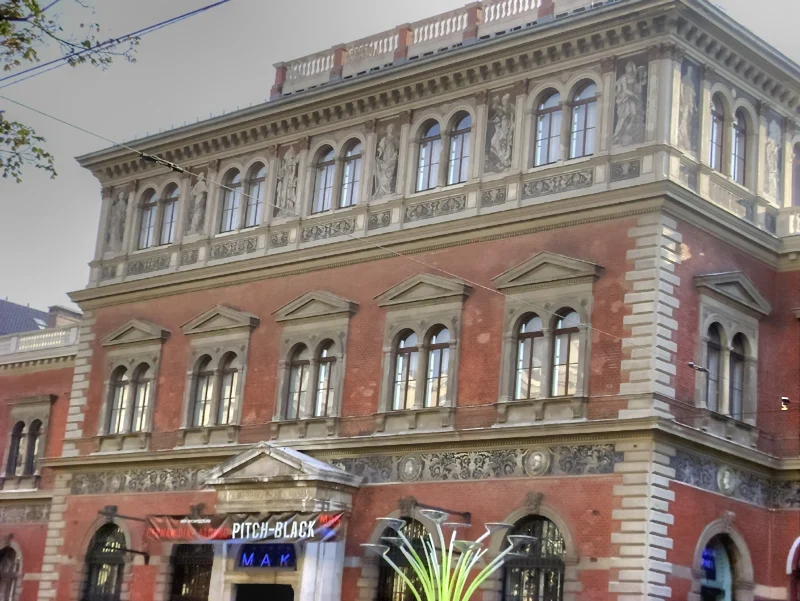
The museum occupies a historic city palatial building with interiors that mirror some of the lavish decorative styles found in the collections. Built between 1863 and 1871, the structure features neo-Renaissance architecture with ornate details, high ceilings, and a classical arrangement of rooms and galleries. This setting allows the objects, particularly those from earlier centuries, to resonate authentically in related contexts. Using the original architectural features supports immersion into the periods represented, especially the 19th-century and early 20th-century sections.
The presentation balances traditional display methods with modern exhibition design. Cabinets, plinths, and vitrines are arranged to respect the objects’ scale and materiality. Lighting is set to reveal fine details without causing damage. However, some parts of the museum have been criticized for uneven lighting and occasionally dense displays that can make it challenging to focus on individual pieces. Unlike experimental design museums with minimalistic environments, this museum maintains a more conventional presentation style, prioritizing historical ambience.
Signage and interpretation provide clear information about objects, their makers, and contexts, though the depth of explanation varies by gallery. The museum places emphasis on craftsmanship and materials, which suits its focus, but at times, explanatory texts could offer more connections to broader social histories. Visitor flow follows the chronological and thematic divisions, generally making sense for navigating from historic to contemporary design.
The atmosphere is one of measured grace and formality. The grand rooms and period architecture create a setting that encourages contemplation, yet may feel a bit distant for those expecting casual or interactive spaces. This formality aligns with the kind of objects exhibited but might deter visitors unfamiliar with decorative arts.
A Visit for Different Audiences
The museum serves audiences interested in design history, decorative arts, and the crafts tradition, particularly those drawn to Vienna’s role in early Modernist aesthetics. Students and specialists in design and art history would find the large Wiener Werkstätte holdings and detailed craftsmanship displays especially valuable for research and study.
Collectors, artisans, and makers may appreciate the focus on material techniques and forms. The collection’s span from historical to contemporary design allows for comparative insights, which can inspire creative professionals. At the same time, visitors with a general curiosity about European cultural history might find the exhibitions informative if they have some prior interest in or knowledge of applied arts.
Families or casual visitors less familiar with decorative arts and design might not find the museum as accessible, partly because of the formal atmosphere and presentation style. It does not prioritize interactive or hands-on learning environments that have become common in museums trying to attract younger audiences or those new to art appreciation.
The museum’s specialized nature means it is better suited to those willing to engage with the objects on their own terms rather than expecting broad narrative storytelling or entertainment-focused displays. It caters more to thoughtfulness and close attention than to fleeting impressions.
The Strongest Reasons to Go
Its standing as a repository of Viennese design and applied arts is its greatest draw. The detailed archives of the Wiener Werkstätte alone provide a comprehensive view of one of the 20th century’s key design movements that influenced architecture, fashion, and craft worldwide. Here, notebooks, prototypes, and finished objects converge to show the holistic creative process advocated by the movement’s founders.
Similarly, the quantity and quality of Baroque and Rococo furniture and metalwork offer visitors a chance to see the refinement of material culture in Austria and Central Europe at moments of imperial prestige. This aspect balances the modernist and contemporary acquisitions, giving a historical arc within a single museum that is uncommon elsewhere.
The museum’s commitment to contemporary design allows it to register current shifts in materials, production, and social concerns. This ongoing acquisition policy prevents the museum’s narrative from stagnating in the past and shows the applied arts as a field in constant evolution.
Finally, the building itself contributes to the experience. A neo-Renaissance palace in central Vienna gives an architectural frame that enriches understanding of the collections especially from the 19th century. Such continuity between objects and setting is not a universal feature in museums that house decorative arts.
Planning Notes
Visitors should check the museum’s official website before planning a trip, as opening hours and ticketing details can vary, especially during temporary exhibitions or holidays. There is no clear public information universally available about discounts, guided tours, or audio guides, so those seeking comprehensive resources on the collections may need to prepare by researching or contacting the museum directly.
The location in Vienna is accessible via public transportation, but practical details about parking or accessibility for visitors with mobility challenges should be confirmed in advance. The historic building, while atmospheric, might not have all the modern facilities expected in newer museum venues.
In terms of timing, given the depth and breadth of the collections, visitors aiming to grasp the major themes and highlights without rushing should allocate several hours. Those with particular interest in areas such as the Wiener Werkstätte or furniture collections might require multiple visits.
Editorial Conclusion
The Museum of Applied Arts Vienna stands as a focused institution with a clear identity centered on applied arts and design from a Viennese and European perspective. Its deep collections in both historical craftsmanship and modern design provide a coherent and specialized presentation that conveys the significance of form, materials, and function in shaping culture through objects. While its approach may feel traditional and formal, it suits the museum’s core subject and helps preserve a connection between the decorative arts themselves and the environments they came from.
The museum’s strengths lie in its archival quality and its capacity to trace important design movements such as the Wiener Werkstätte, alongside historic craftsmanship that few other museums display with such consistency. Its inclusion of contemporary design keeps the story open-ended rather than purely retrospective.
It is not a museum designed for casual browsing or interactive discovery, and it does not cater to every kind of visitor. Instead, it rewards close looking and interest in the material and conceptual aspects of applied arts. Those who engage with its specific focus will find a high level of expertise and a collection with both historical and ongoing relevance within design history.