National Museum of Mongolia Review
Ulaanbaatar, Mongolia. The National Museum of Mongolia in Ulaanbaatar offers something that few other institutions can claim: a comprehensive and focused narrative of Mongolian history, culture, and identity, housed within a single, national repository. Unlike large,…
Ulaanbaatar, Mongolia. The National Museum of Mongolia in Ulaanbaatar offers something that few other institutions can claim: a comprehensive and focused narrative of Mongolian history, culture, and identity, housed within a single, national repository. Unlike large,…
Best forMuseum lovers, culture travelers, first-time visitors
Review focusCollections, visitor experience, and practical planning
What Sets It Apart
The National Museum of Mongolia in Ulaanbaatar offers something that few other institutions can claim: a comprehensive and focused narrative of Mongolian history, culture, and identity, housed within a single, national repository. Unlike large, sprawling museums with broad or multiple national themes, this museum concentrates explicitly on Mongolia’s unique trajectory—its ancient nomadic traditions, the rise of the Mongol Empire, and the cultural realities of a modern, independent nation. Its defining feature is the clarity of its mission: to document and interpret Mongolia’s story through material culture, art, and archaeological finds, without distraction from unrelated regional histories or general natural history. This makes it an essential node for understanding Mongolia’s place in the world, free from the diluted scope some capital-city museums strain under.
Collection Depth and Significance
The strength of the National Museum of Mongolia lies in its significant archaeological and ethnographic collections. It holds treasures dating back to the Paleolithic era and the time of the Xiongnu Confederation—ancient nomadic peoples who predate the Mongol Empire by centuries. Objects connected to Genghis Khan and the Mongol Empire dominate the museum’s appeal; these include weaponry, inscribed tablets, and traditional costumes that link legendary figures with tangible artifacts. The museum’s ethnographic collection is thorough, portraying the lifestyles, beliefs, and social customs of Mongolia’s diverse ethnic groups. This includes extensive material related to nomadic pastoralism, a central theme in Mongolian history and identity.
The collections provide not only an overview of high-profile historical events, such as the Mongol conquests of the 13th century, but also daily life through centuries of nomadic culture. The range of artifacts—textiles, tools, religious icons, and horse gear—gives a textured insight into how Mongols lived and moved across the steppes. This long-term view, from ancient to contemporary, adds layers to understanding Mongolia beyond the Mongol Empire alone. It establishes a foundation for appreciating Mongolia’s cultural resilience as it adapted through Chinese, Russian, and Soviet influences into its current nationhood.
Design, Displays, and Atmosphere
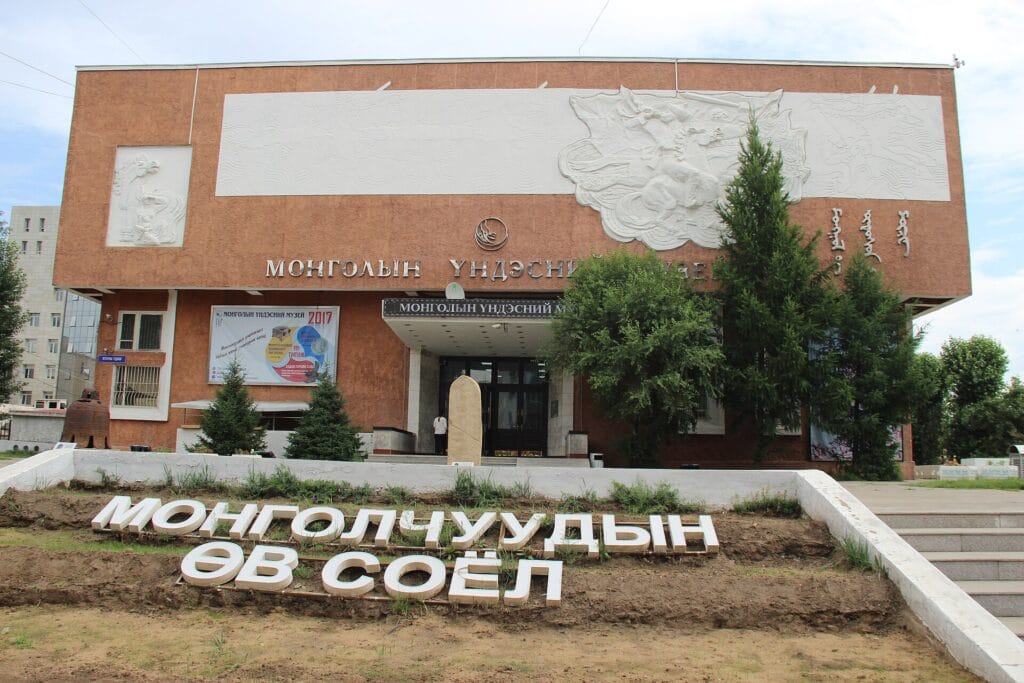
The museum occupies a modern building in central Ulaanbaatar, designed with straightforward public access in mind rather than ambitious architecture. The design avoids landmark architecture; it relies instead on a rational interior layout to aid navigation through chronological and thematic sections. This utilitarian approach serves the museum’s mission but does not offer the spectacle some visitors might expect from a national museum. The emphasis remains on the objects rather than their display environment.
Exhibits generally use conventional museum display methods, with artifacts housed in well-lit but simply styled cases, accompanied by bilingual text panels in Mongolian and English. The interpretation is factual and focused, providing context without editorializing or extended narrative. This restraint is appropriate given the material, but some visitors might find the presentation minimal. The labels focus on identifying objects, situating them temporally and culturally, but do not often delve into broader interpretive storytelling or multimedia elements.
The museum covers a large chronological span, and the flow from prehistoric to modern Mongolia is logical. The atmosphere is quiet and respectful, matching the museum’s role as a keeper of national memory. It does not seek to entertain but rather to preserve and explicate, which might appeal more to those prepared to engage with history soberly rather than visitors seeking vivid or interactive experiences.
A Visit for Different Audiences
Scholars, history enthusiasts, and those with a deep interest in Mongolia or Central Asia will find the museum particularly rewarding. Its focus on Mongolian material culture means it contains original objects that can serve as research aids for specialists in archaeology, ethnography, and Mongol history. The prehistoric archaeology section, for example, connects Mongolia with wider Eurasian prehistory, offering comparative perspectives to those studying early nomadic cultures.
The ethnographic displays offer anthropology students or researchers a detailed survey of Mongolia’s diverse nomadic peoples, their crafts, and spiritual life. This can provide concrete illustrations for academic analysis or comparative cultural studies. Additionally, the museum’s adherence to factual, concise labels helps the specialist avoid confusion caused by vague or emotionally charged interpretation.
However, for casual tourists or those unfamiliar with Mongolian history, the museum may seem dense or at times arid. The limited use of multimedia, absence of dramatic narrative framing, and restrained graphic design may not fully meet expectations for an entertaining or highly accessible presentation of Mongolia’s past. Visitors looking primarily for visual spectacle, interactive experiences, or engaging storytelling might find the pace slow or the displays less immediately captivating than institutions with a larger entertainment budget.
The Strongest Reasons to Go
The museum’s most compelling strength is its unparalleled assemblage of Mongolian artifacts that map the country’s historical and cultural development over millennia. It documents Mongolia’s skills in horsemanship, metalworking, and textile production in a straightforward manner, giving visitors primary evidence of nomadic lifeways rather than interpretive overlays. The ancient artifacts from the Xiongnu and the Mongol Empire period offer insight into critical moments in world history, helping anchor one’s understanding of the region beyond stereotypes or simplified narratives.
Additionally, the ethnographic collections preserve the material culture of Mongolia’s nomads in a way that surpasses what is often available elsewhere. This gives a perspective on traditions that survive to the present day and are pivotal in explaining the continuity and change within Mongolian society.
Those with a scholarly or serious interest in Mongolia will find the museum’s holdings indispensable. It even functions as a national archive for cultural objects, consolidating material that might otherwise be scattered or inaccessible. From an educational point of view, the museum’s straightforward presentation style enables visitors to focus on the objects themselves without distraction.
Planning Notes
For visitors intending to explore this museum, checking the official website before visiting is advisable to confirm current opening hours, ticket prices, and available visitor services. Information on guided tours or audio guides is not widely documented and may vary. The location in Ulaanbaatar’s city centre is convenient for those combining a broader itinerary in Mongolia’s capital.
The museum’s labels are delivered in both Mongolian and English, which supports accessibility for international visitors, though the depth of English interpretation may vary by exhibit. The museum’s relatively sober presentation style might mean visits take less time than one might assume—allowing a few hours to comfortably cover the permanent collections.
Those seeking a fully immersive or interactive museum experience may wish to supplement their visit with other cultural sites or galleries elsewhere in Ulaanbaatar, particularly museums focused on Buddhist art or Mongolia’s natural environment.
Editorial Conclusion
The National Museum of Mongolia offers a focused and serious survey of Mongolian history and culture grounded solidly in its collections. Its determination to be a repository of Mongolian identity, conveyed through original objects stretching from prehistoric times to the present, marks it as an essential institution for understanding Mongolia’s past through its material heritage. The museum does not rely on spectacle or modern interpretive techniques but presents its collections with a straightforward clarity that respects the depth and complexity of Mongolia’s story.
This approach means the museum matters most to those prepared to engage with history on its own terms rather than visitors seeking entertainment or highly accessible interpretation. It does not aim to be a broad cultural amusement or interactive playground. Instead, it offers measured, factual knowledge held together by a clear national focus, making it a key resource for researchers, students, and anyone invested in the region’s unique historical narrative.