Folk Heritage Museum Bhutan Review
Folk Museums · Thimphu, Bhutan. Bhutan’s Folk Heritage Museum in Thimphu exists as a tangible link to the country’s rural past. While Bhutan has rapidly modernized over recent decades, much of its traditional lifestyle centered on subsistence farming and…
Folk Museums · Thimphu, Bhutan. Bhutan’s Folk Heritage Museum in Thimphu exists as a tangible link to the country’s rural past. While Bhutan has rapidly modernized over recent decades, much of its traditional lifestyle centered on subsistence farming and…
Best forMuseum lovers, culture travelers, first-time visitors
Review focusCollections, visitor experience, and practical planning
Why This Museum Matters
Bhutan’s Folk Heritage Museum in Thimphu exists as a tangible link to the country’s rural past. While Bhutan has rapidly modernized over recent decades, much of its traditional lifestyle centered on subsistence farming and artisan crafts has vanished or transformed. This museum captures that vanishing way of life not through abstract themes but through physical structures and objects that were once parts of everyday rural life. Its significance lies in preserving the material culture of Bhutan’s common people rather than focusing on royal or religious history, which tends to dominate narratives elsewhere. Within a small and carefully preserved scope, it offers a rare, focused window into the domestic and agrarian traditions of Bhutan’s past centuries.
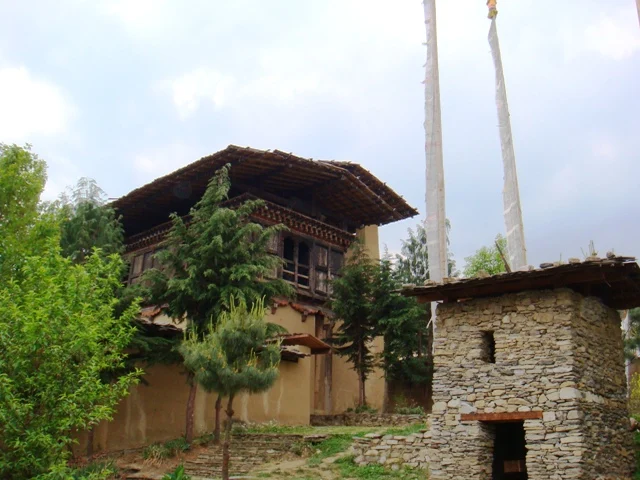
Some museums touch on folk culture at the edges of vast national histories. This one frames folk heritage as an end in itself. Its strength lies in the intimacy of place and object: traditional farmhouses, interiors, tools, and household items collected and displayed together to evoke what life was like in Bhutan’s villages in the 19th and early 20th centuries. By physically relocating entire traditional buildings to its gardens, the museum creates a microcosm of rural Bhutan. That approach allows visitors to get closer to the textures of ordinary life, rather than viewing folk culture as static, isolated artifacts in a gallery case.
The Collection in Focus
The museum centers on two main three-storey traditional farmhouses, built according to the architectural styles of two distinct regions in Bhutan. These houses, relocated and reassembled within the museum grounds, provide a structural backbone to the collection. They are supplemented with dozens of authentic objects—farm implements, kitchen utensils, weaving tools, household furniture, traditional clothing, and ritual items. This ensemble presents a comprehensive snapshot of agrarian life.
While similar objects can be found in other Bhutanese museums, the Folk Heritage Museum’s thematic unity is a strength. It groups items by function and space—for instance, the dark grain-storage rooms, the hearth-centered kitchens, the loom houses—rather than displaying them in isolation. This spatial logic helps make clearer the roles these objects played within daily life, from food preparation to textile production and seasonal farming cycles.
The agricultural tools on display represent the types of hand implements that farmers used before mechanization, linking the collection to Bhutan’s largely subsistence economy of the past. The weaving tools illustrate Bhutan’s longstanding textile traditions, important both economically and culturally, especially as woven goods supplied local and regional markets. The inclusion of ritual objects used in household religious observance connects the folk culture to Bhutan’s pervasive Buddhist beliefs.
One limitation is that the collection focuses almost entirely on rural central Bhutan, especially the Paro and Thimphu valleys, with less representation from eastern or southern Bhutan. This regional selectivity narrows the museum’s claim to represent “folk heritage” countrywide. It is better understood as a deep dive into the material culture of certain agricultural communities rather than a nationwide ethnographic survey.
How the Story Is Told
The museum’s story emerges primarily through the authentic farmhouses themselves and the objects arranged within them. Instead of thematic galleries or multimedia aids, the interpretation depends heavily on the physical environment—traditional timber architecture, dim interiors, and the artifacts left in situ. The traditional buildings become three-dimensional exhibits, enabling visitors to imagine the rhythms of daily work and family life within those walls.
Written panels and labels exist but aim to let the physical experience lead. This might present a challenge for visitors not already familiar with Bhutanese culture or farming traditions, as the museum avoids over-explaining. The approach assumes an interest in material culture and traditional ways rather than straightforward historical narratives. It does not use digital media or interactive displays to broaden accessibility or provide context beyond the immediate domestic environment.
By focusing on objects as components of a living environment, the museum delivers a form of historical reconstruction. At the same time, it neither romanticizes rural life nor sanitizes it; the simplicity and utility of the buildings and tools speak for themselves, suggesting lives shaped by manual labor and local resources. The absence of multimedia and the reliance on physical authenticity might feel sparse by the standards of some modern museums but fits the down-to-earth subject.
The Visitor Experience
The layout is straightforward but purposeful. The two main farmhouses form the heart of the site, with stable pathways guiding visitors through rooms and sheds arranged around inner courtyards. The houses’ communal spaces contrast with workrooms and storage areas, efficiently conveying functional distinctions without the need for complex signage. The atmosphere is quiet and reflective, aided by the museum’s small scale and its location away from the busiest city streets.
Outside in the compound, small gardens featuring local plant species and cropping patterns add subtle ecological context to the heritage practices. The museum grounds remain compact enough for a visit to last around an hour, though readers should check details given there is no official website providing updated visitor information as of now.
Facilities and visitor services have limited published information. It is unclear whether there are regular guided tours or interpretive staff on site, which might limit understanding for those unfamiliar with Bhutanese culture or agrarian history. This could be an important consideration for non-local visitors, especially since explanatory materials are minimal and the exhibition approach relies on visitors’ cultural literacy or prior knowledge.
Who Will Enjoy It Most
The museum appeals particularly to those interested in vernacular architecture and daily rural life, rather than grand political or religious history. Scholars and enthusiasts of ethnography, anthropology, and material culture might find the site valuable for its hands-on demonstration of traditional construction and household knowledge.
Visitors with a background in South Asian or Himalayan studies will appreciate the focus on Bhutan’s agrarian past, a subject less documented or accessible than the country’s Buddhist heritage or royal traditions. The museum’s straightforwardness and authenticity give it credibility as a reference point for Bhutanese grassroots cultural history.
However, casual tourists or those expecting multimedia presentations and broad historical narratives may find the experience somewhat narrow. The emphasis on two main houses and related objects reflects a deliberate choice to document a specific, well-defined lifestyle rather than provide a comprehensive national history. This specialization is a strong point for focused visitors but makes for a limited general museum.
Planning the Visit
Current details on opening hours, admission fees, and visitor services are scarce or anecdotal. Because the museum is a private foundation initiative located in the outskirts of Thimphu, potential visitors should confirm practical information through local tourism offices or official Bhutanese travel resources before visiting.
Visitors should be prepared for a modest facility with a rural setting. Maps or interpretive literature might not be readily available on site, and interpreting the exhibits likely requires some independent reading or prior knowledge to enhance understanding. The museum’s compact footprint suggests that the visit will not require a full day, but the depth of material culture presented demands thoughtful pacing.
Editorial Verdict
The Folk Heritage Museum Bhutan anchors itself firmly in the preservation of everyday rural life, embracing a focused, authentic, and physical approach. It does not strive to be comprehensive in covering Bhutan’s folk traditions nationwide, nor does it attempt to popularize or entertain through technology. Instead, it centers on two traditional farmhouses, their architecture, and the objects that supported subsistence farming, weaving, and household ritual in central Bhutan.
That narrow but deep focus is both the museum’s strength and its limit. Those interested in vernacular building, Himalayan rural practices, or Bhutan’s social history will find the site a rare and useful resource. Others seeking broader national histories or more interpretive support may find it less satisfying. Its quietly deliberate presentation places material culture and architectural form front and center, demanding a visitor’s close attention and curiosity about traditional life.
As a standalone institution dedicated to preserving and demonstrating Bhutan’s vanished rural lifestyles, the Folk Heritage Museum holds a distinctive place in Thimphu’s cultural landscape. It deserves recognition for the tangible sense of place and historical specificity it preserves, even if it is less expansive or polished than larger national museums. Readers intending to visit Bhutan’s capital with an interest in this precise slice of the country’s past will find it worth pursuing further information to plan their visit accordingly.