Beamish Museum
Stanley, United Kingdom. Beamish Museum in Stanley, United Kingdom, recreates life in the northeast of England during the early 20th century. Functioning largely as an open-air museum, it conveys the social, industrial, and domestic history of County…
Best forMuseum lovers, culture travelers, first-time visitors
Setting / nearbyStanley, United Kingdom
Overview
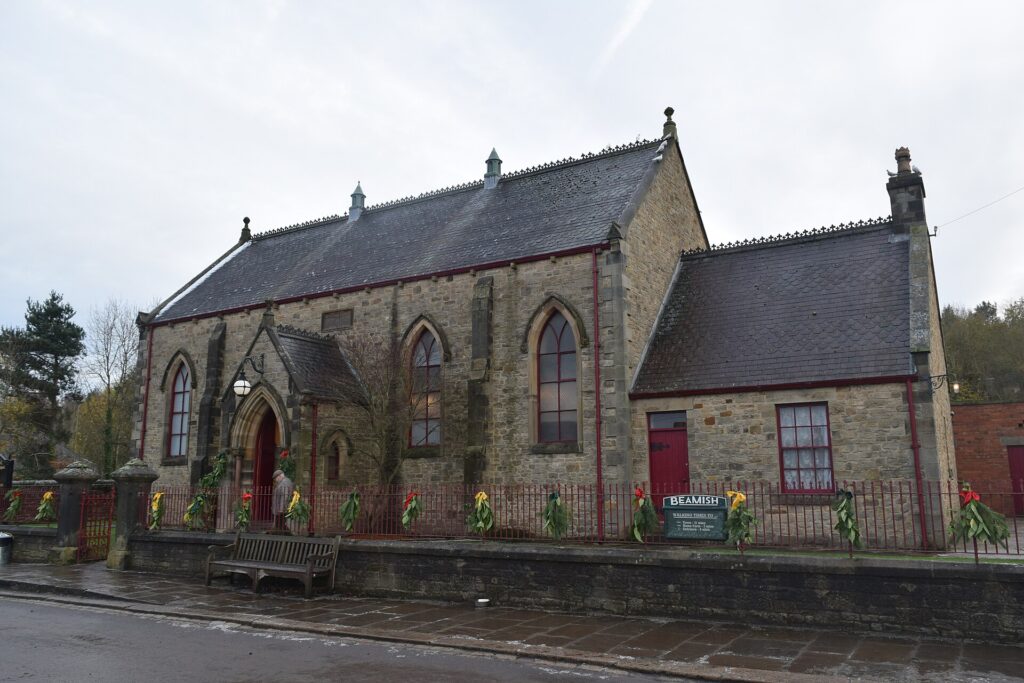
Beamish Museum in Stanley, United Kingdom, recreates life in the northeast of England during the early 20th century. Functioning largely as an open-air museum, it conveys the social, industrial, and domestic history of County Durham and surrounding areas through original buildings, reconstructed streets, and period vehicles. Rather than presenting isolated objects in glass cases, Beamish arranges its exhibits within a deliberately recreated environment, allowing a walk-through experience that links ordinary people’s lives to the region’s industrial past. The museum covers roughly three distinct time zones—primarily the 1820s, 1900s, and 1940s—each illustrated through architecture, trades, shops, workshops, and transport typical of those decades.
Collection Highlights
The museum specializes in the industrial and social history of northeast England. Visitors will encounter a mining colliery complex that includes working pit wheels and a winding engine house, illustrating coal mining technology and the workforce around the turn of the 20th century. This part of the collection captures the physical and social environment of miners and their families, featuring reconstructed pit cottages and related community buildings.
Another major element is the recreation of a market town, known as “Town,” dating to the 1910s and 1920s. It includes a butchers, bakers, grocers, drapers, and other small businesses, complete with period shop interiors and authentic signage. The museum often fits these shops with original stock or close replicas, providing insight into everyday commercial life during that era.
A transport collection exists in the form of trams, buses, and steam locomotives, operated along tracks within the museum grounds. The tramway runs between the recreated town and an early 20th-century colliery village. These vehicles are not static displays but are used to move visitors, helping demonstrate regional transportation history. The rolling stock ranges from horse-drawn trams to steam-powered trams, capturing technological shifts in public transit.
Industrial workshops assembled on site represent many crafts, trades, and local industries. These include a blacksmith’s forge, printer’s workshop, and an engineering works. The recreated premises often feature working machinery and tools, sometimes operated by volunteers or staff in period dress to show processes like printing, metalworking, and woodworking.
For the 1940s period, a farm and school provide views into rural life during the wartime years. The farm includes machinery, animal breeds, and buildings typical of the era. The school offers educational contexts common during World War II, including displays of rationing and home front efforts. Buildings and interiors are based on original examples or detailed research rather than generic reconstructions.
Building and Setting
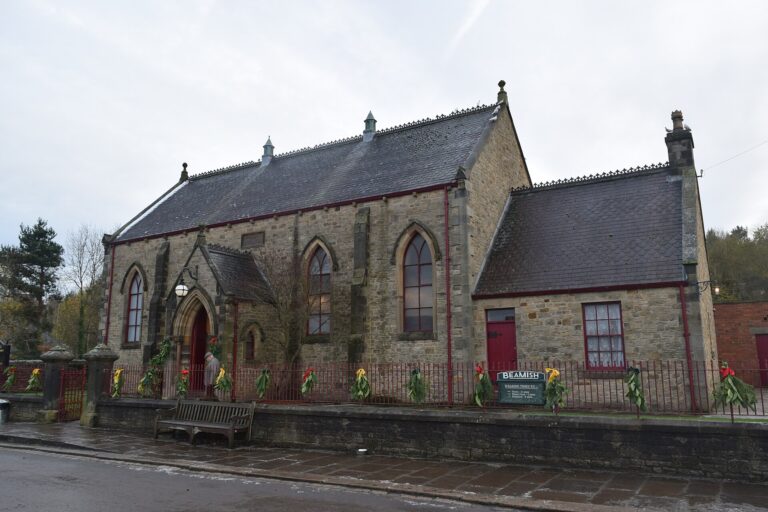
Unlike most museums housed within a single building, Beamish is a sprawling outdoor site of around 300 acres. It occupies former farmland and some early industrial sites near Stanley in County Durham. Many of the structures are original buildings relocated from scattered locations within northeast England. Others are carefully reconstructed to match historic examples where originals were unavailable.
Architecturally, the site presents a mix of vernacular housing, industrial buildings, civic structures, and shops from the 19th and 20th centuries. The village streets and colliery buildings are laid out to form neighborhoods and industrial zones familiar to the local region’s historical patterns. The physical environment includes a river, woodland, and open fields, which frame the buildings and demonstrate the connection between town, industry, and countryside.
Since the museum is set outdoors, weather conditions and seasonal changes may affect the visit. The scale of the site means visitors should prepare for walking across distances and exploring on foot or by using the museum’s tram and bus links.
Practical Information
Beamish Museum is located near Stanley, County Durham. For updated details on opening hours, ticketing, entry costs, group visits, or accessibility arrangements, it is advisable to consult the museum’s official website before planning your trip. The size and layout of the museum suggest a visit will last several hours at minimum, depending on your pace and interests. The museum’s infrastructure supports visitor movement with paths and public transport, but terrain may vary. Check information on any specific physical access needs or mobility assistance.
Some of the operational historic vehicles and workshops may be active only on selected days or seasons. Temporary exhibitions, events, or educational programming are often scheduled but not permanent, so checking the current program before arrival is recommended.
Why Visit
Beamish Museum provides a comprehensive look into regional life shaped by coal mining and related industries without relying on conventional gallery displays. Its focus on an immersive environment brings to life the daily world of working-class communities rather than elite culture or abstract historical narratives. This approach offers a more textured sense of how people lived, worked, and interacted with the industrial landscape.
The museum’s strength lies in the scope and authenticity of its reconstructions combined with original buildings and artifacts. Those interested in industrial history, social history of northern England, and early 20th-century technology will find many details worth noting, from mining machinery to tramcars to shop interiors. It is not a quick stop—fully exploring the various areas demands time and some stamina.
One limitation for some visitors might be that the immersive, outdoor layout requires considerable walking and may pose challenges in poor weather or for those with mobility issues. The rural location also calls for advance travel planning. Additionally, the museum’s focus on a specific region and period might not engage those looking for broader historical coverage or different artistic, archaeological, or scientific collections.
In short, Beamish Museum suits visitors who prefer history presented in an experiential rather than purely academic or object-based form. It illustrates local industry and community life through reconstructed streets, workshops, and transportation rather than through conventional documents and cases. The result is a practical, tangible encounter with northeast England’s past that can help build a clearer picture of early 20th-century working life in Britain.