Museo de la Revolución
Havana, Cuba. The Museo de la Revolución in Havana offers a focused look at the history of Cuba’s mid-20th century political upheaval and its aftermath. It occupies the former Presidential Palace, which adds a direct architectural…
Best forMuseum lovers, culture travelers, first-time visitors
Setting / nearbyHavana, Cuba
Overview
The Museo de la Revolución in Havana offers a focused look at the history of Cuba’s mid-20th century political upheaval and its aftermath. It occupies the former Presidential Palace, which adds a direct architectural link to the events it covers. The museum concentrates on the period around the Cuban Revolution of 1959 and the leaders and incidents associated with it. Its identity is shaped by its location in Cuba’s capital and a building that was once the seat of government, situating the story of revolution within the very walls where decisions were made before, during, and after the overthrow of the Batista regime. The museum is not a general history museum but rather one specialized in a pivotal episode in Cuba’s recent political past.
Collection Highlights
The core of the museum’s collection revolves around the 1950s and 1960s revolutionary period, featuring artifacts connected to key figures like Fidel Castro, Che Guevara, and Camilo Cienfuegos. Among the objects are photographs, documents, weapons, uniforms, and personal effects related to the uprising and the subsequent consolidation of Castro’s government. The exhibits include detailed displays on battles, particularly the attack on the Moncada Barracks and the guerrilla campaign in the Sierra Maestra mountains. Visitors will find vehicles used by the revolutionaries and government officials, along with propaganda materials and international diplomatic gifts received by the new regime.
Not all items are from Havana or even Cuba — some trace international support for or opposition to the revolution, showing the geopolitical dimension of the conflict during the Cold War. The museum also holds artifacts linked to the earlier Cuban republic era, displayed in the context of the revolutionary narrative. The collection is mostly historical and documentary, focusing less on artistic or cultural expressions beyond propaganda and political iconography. This emphasis reflects the museum’s role as a military and political history institution rather than a broader cultural facility.
Building and Setting
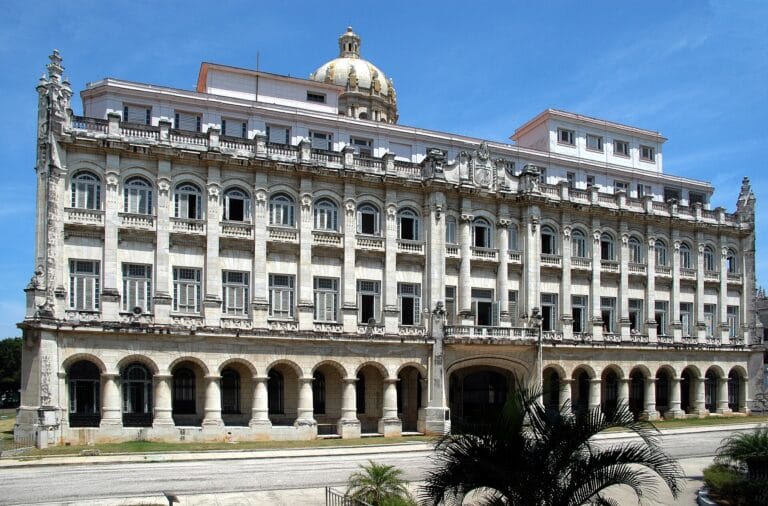
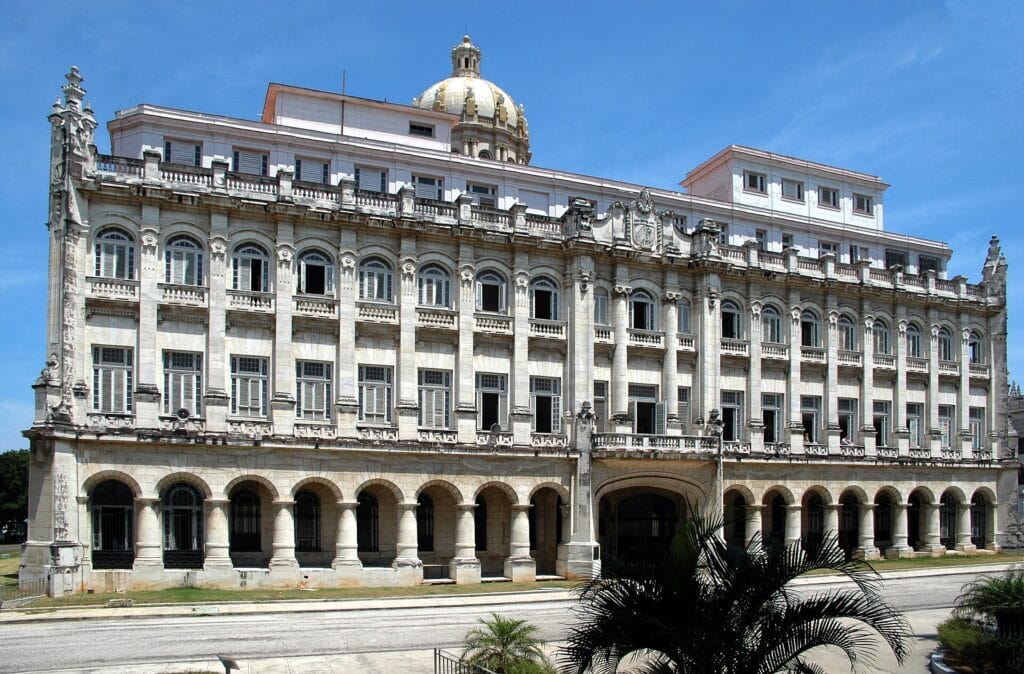
The museum occupies what was originally the Presidential Palace, built in the early 20th century and remodeled over several decades. The palace’s architecture mixes styles common in Cuba’s capital, including neoclassical and eclectic features from the 1920s. Its location is at the end of Havana’s central park, the Parque Central, placing it amid government buildings and historic landmarks. Being housed in the former seat of the presidency gives visitors a tangible link to the political power structures that the revolution changed.
The building itself is substantial, with ornate interiors, columns, and grand staircases which contrast with the military and guerrilla materials on display. Some rooms retain their original decoration while others have been adapted for exhibitions. The museum’s setting offers a visual and spatial context that connects Cuba’s political history with the architecture of its governing institutions. The grounds around the museum include outdoor exhibits such as tanks and planes that were part of the revolutionary struggle.
Practical Information
Visitors interested in the Museo de la Revolución should check the official website or contact Cuban tourism sources for the latest information on hours, admission fees, guided tours, and accessibility before planning a visit. The museum is located centrally in Havana and is reachable by the city’s main public transport routes and taxis. Facilities are generally typical for a major historical museum, though details like audio guides or multilingual materials may vary. Visitors will likely benefit from seeing the exhibition with some background knowledge of Cuban history in the 20th century to better understand the specific references and context.
As with many historical museums, photography policies, security checks, and restrictions on carrying bags might be in place. It is sensible to allow sufficient time to examine both the indoor exhibits and the outdoor displays. The museum’s location near other central Havana attractions can make it part of a broader cultural day in the city.
Why Visit
When deciding on a visit, the Museu de la Revolución is especially worthwhile for those who want a historical overview of the Cuban Revolution grounded in original artifacts and the physical context of the former Presidential Palace. Its strengths lie in the direct connection between the building’s former function and the narrative presented inside. The collection’s focus on political and military history lends clarity and specificity, though it might feel narrow for visitors interested in Cuban culture outside this framework.
People interested in Cold War history or revolutionary movements will find key documents and objects that illustrate these themes vividly. On the other hand, visitors expecting a broad cultural or artistic exploration of Cuba might find the museum’s focus quite limited. The setting allows for reflection on the nature of political power and revolution, making the museum distinct from Havana’s other offerings, which often emphasize social or artistic history.
The outdoor displays of vehicles and weapons add a material dimension that supports the story told indoors, even if some exhibits might appear dated or designed with strongly political interpretation. Understanding the Cuban Revolution’s story through material culture rather than oral histories or solely documentary recordings is one way the museum structures its narrative. For those curious about how history can be conveyed through artifacts in a former seat of power, this museum provides a concrete, visually interesting opportunity.
In summary, the Museo de la Revolución is not a light, casual stop but a place to engage with one of the 20th century’s important political events through its tangible remains and governmental architecture. It rewards preparation and a willing attention to political history presented through physical objects and displays. For anyone considering this Havana destination, assessing an interest in the Cuban Revolution and 20th-century history will help decide whether this institution fits their museum itinerary.