Museo de la Revolución Review
Havana, Cuba. The Museo de la Revolución in Havana is defined almost entirely by the history and symbolism of Cuba’s twentieth-century revolutionary period. Situated in what was once the Presidential Palace, the building itself stands as…
Havana, Cuba. The Museo de la Revolución in Havana is defined almost entirely by the history and symbolism of Cuba’s twentieth-century revolutionary period. Situated in what was once the Presidential Palace, the building itself stands as…
Best forMuseum lovers, culture travelers, first-time visitors
Review focusCollections, visitor experience, and practical planning
Context and Identity
The Museo de la Revolución in Havana is defined almost entirely by the history and symbolism of Cuba’s twentieth-century revolutionary period. Situated in what was once the Presidential Palace, the building itself stands as a testament to shifts in national identity from the era of local strongmen and U.S. influence toward the revolutionary government inaugurated in 1959. This museum’s focus is narrow but intense: it centers on the Cuban Revolution and its persistent legacy, emphasizing not only the armed struggle but also the ideological underpinnings and international context that shaped modern Cuba. Unlike broad historical museums that attempt to cover centuries or multiple themes, the Museo de la Revolución aims to provide a deep dive into a pivotal period through the lens of Cuban nationalism, socialism, and anti-imperialism as expressed in official memory.
More than just recounting battles and leadership figures, it presents the revolution as a narrative of liberation and sovereignty with a strong nationalistic character. This tight identity means the museum functions less as a neutral historical survey and more as an institution aligned with Cuban state perspectives. That focus constrains its appeal mostly to those interested in modern Latin American history, Cold War geopolitics, and revolutionary movements. At the same time, the concentration on revolutionary Cuba’s myth-making and symbolism offers insights into how history is curated for political purposes.
Inside the Collection
The collection is anchored by multimedia exhibits, photographs, documents, and memorabilia from the revolutionary era and its aftermath. Central figures such as Fidel Castro, Che Guevara, and Camilo Cienfuegos dominate the narrative, supported by items ranging from personal effects and military paraphernalia to government decrees and propagandistic posters. The strong presence of weapons, flags, and military uniforms serves not only as historical evidence but also as emblems of resistance and national dignity.
Beyond the Cuban leaders and fighters, the museum includes displays about the broader international alliances and conflicts surrounding the revolution, including Cuba’s role in Africa and Latin America during the Cold War. This cements the museum’s scope firmly within twentieth-century political struggle rather than cultural or social history. The archives also hold a certain documentary weight, presenting primary sources that reveal how the revolution was communicated internally and internationally.
While there is clear coherence in the collection’s theme, the coverage is uneven. The material concentrates heavily on the triumphs and heroism of the revolutionary cause, with little visible attention to dissenting voices or the complexities of the revolution’s social impact. The omission or marginalization of critical perspectives limits a fuller understanding of the period’s contested realities and ongoing economic and political challenges. The emphasis is on the revolution’s origins and successes rather than a critical engagement with its messy, often harsh, consequences.
Architecture and Display
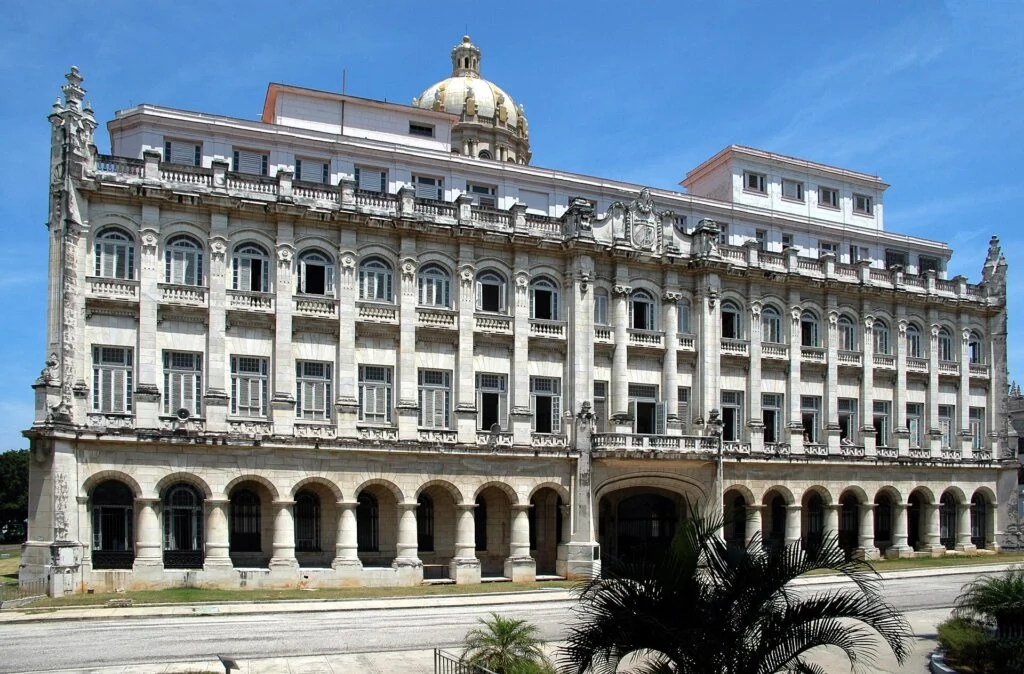
The museum occupies the former Presidential Palace, a building completed in 1920 in an eclectic style blending neoclassical and baroque elements. The palace’s original opulence and grandeur once symbolized the top-down power structure of pre-revolutionary Cuba, which the museum openly contrasts with the egalitarian ideals of the revolution. The choice of this building is significant—it embodies historical continuity and rupture simultaneously.
The interior’s adaptation to museum use preserves much of the palace’s original decorative schemes, including marble floors, frescoes, and grand staircases, creating a striking backdrop for the exhibits. This contrast between luxurious architecture and revolutionary narrative frames the tension between old and new regimes. However, the museum’s modern display techniques are, by available accounts, restrained. Exhibits employ conventional panel texts, photographs, and vitrines rather than embracing contemporary museological trends such as interactive technology or immersive environments.
The spatial organization follows a roughly chronological route, though some rooms focus thematically on particular events or figures. This approach provides clarity but may feel static or predictable to those accustomed to more dynamic exhibition design. The historic ambiance of the building commands attention but can complicate the integration of text and objects into cohesive storytelling, especially given the building’s varied room sizes and ornamental detailing.
For Families, Specialists, and First-Time Visitors
Families with younger children may find this museum challenging to engage with due to the weighty political content and lack of interactive or child-friendly interpretation. The subject matter—revolution, warfare, and ideological struggle—demands a degree of prior background or adult mediation. There is no indication from available sources that the museum offers targeted educational programming or hands-on activities suited to younger audiences.
Scholars and specialists in Latin American studies, Cold War history, or political science will find the collection’s focus helpful for understanding Cuba’s revolutionary narrative as officially constructed. The presence of original documents and photographs can support research into propaganda and memory politics, though the overall framing remains partisan. For those seeking critical or multi-perspective treatments of the revolution, the museum’s official stance requires contextual awareness and supplementary sources.
First-time visitors curious about Cuba’s national identity and twentieth-century history will gain a clear, if partial, overview of the revolution and its symbolism. The museum delivers dense historical content with a degree of narrative coherence, but those unfamiliar with Cuban history may need to prepare through outside reading to fully grasp the significance of names, events, and ideological currents referenced.
What Works Best
The museum’s strength lies in its clear identity and consistency of focus. It deliberately presents the revolution as an epoch-defining event with political and symbolic resonance, and it marshals a solid collection of materials to support this. The building itself enriches the narrative by embodying the political transition from old regimes to revolutionary governance, creating a tangible encounter with Cuban history’s layers.
Another strong point is how the museum situates Cuba’s revolution within the international arena. Exhibits that link Cuba’s experience to wider geopolitical struggles deepen the story beyond a purely national scope. This global frame reminds visitors that Cuba’s revolution was both a local and international phenomenon during the Cold War, a crucial context often glossed over in narrower treatments.
Practical Considerations
Information about current opening times, ticketing, accessibility, guided tours, and services is best confirmed through the museum’s official sources prior to planning a visit. Since this museum is located in central Havana, access by public transport or taxi is generally convenient. The palace structure does provide some challenges to accessibility for visitors with mobility impairments, given the building’s age and layout, though specific accommodations are not well documented.
There is little indication of extensive visitor facilities such as cafés or shops, common in many large museums. Visitors should plan accordingly. If planning a visit, it is advisable to prepare by researching basic Cuban history and the revolution’s key figures to better contextualize the exhibits.
Verdict
This museum offers an intensive look at Cuba’s revolutionary past, shaped decisively by its location in the former presidential palace and its focus on a politically charged, ideologically framed historical narrative. It excels at presenting revolutionary symbolism through objects, documents, and the building itself, giving visitors a sense of how the revolution was constructed as both a historical event and a foundational myth for Cuban identity.
Its narrow scope limits its use as a comprehensive museum of Cuban history or culture, and its political framing means it is best approached with some prior knowledge or critical perspective. The architecture provides a powerful contrast that brings history alive in a way many museological approaches might struggle to achieve, even though the exhibit design remains conventional.
In sum, the Museo de la Revolución is a specialised institution that offers clear insight into one chapter of Cuban history, shaped by and inseparable from the political narratives it promotes. It rewards those with an interest in revolutionary history, Latin American politics, or Cold War studies who can engage with its partial and partisan story thoughtfully.