National Gallery of Kosovo Review
Pristina, Kosovo. The National Gallery of Kosovo, situated in Pristina, serves as the country’s primary institution for modern and contemporary visual arts. Established against a backdrop of Kosovo’s complex political history and cultural evolution, the gallery…
Pristina, Kosovo. The National Gallery of Kosovo, situated in Pristina, serves as the country’s primary institution for modern and contemporary visual arts. Established against a backdrop of Kosovo’s complex political history and cultural evolution, the gallery…
Best forMuseum lovers, culture travelers, first-time visitors
Review focusCollections, visitor experience, and practical planning
Context and Identity
The National Gallery of Kosovo, situated in Pristina, serves as the country’s primary institution for modern and contemporary visual arts. Established against a backdrop of Kosovo’s complex political history and cultural evolution, the gallery holds a particular importance as a repository not only of artistic production but also of national identity formation. Kosovo’s recent decades, marked by conflict, reconstruction, and efforts at international recognition, have shaped the gallery’s mission and collection development. For visitors aiming to understand Kosovo’s artistic narratives alongside its sociopolitical journey, the gallery offers a focused yet nuanced setting.
Kosovo’s art history, especially in the late 20th and early 21st centuries, reflects the intersecting cultural influences of the Balkans, the lingering effects of socialist Yugoslavia, and the region’s diverse ethnic composition. The National Gallery’s role extends beyond mere exhibition: it functions as a cultural forum and educational space designed to showcase local talent and provide a stage for dialogue about identity, memory, and contemporary challenges. This context is essential for appreciating how the gallery curates its programming and why it emphasizes certain artists and themes over others.
Inside the Collection
The core strength of the National Gallery of Kosovo lies in its collection of modern and contemporary artworks from Kosovo and the surrounding region. The collection spans a range of media including painting, sculpture, graphic arts, and multimedia installations. It is particularly strong in pieces produced from the 1970s onward, capturing artistic responses to the shifting political and social landscape of Kosovo.
Key themes in the collection revolve around memory, resistance, and the tension between tradition and modernization. Artists such as Tahir Emra and Muslim Mulliqi are well-represented, their works foregrounding both aesthetic experimentation and the articulation of Kosovo’s cultural identity. The gallery also features younger contemporary artists who explore current realities and global art dialogues, providing a glimpse into emerging artistic trends in the region.
Unlike large encyclopedic museums with broad international holdings, the focus here is deliberately regional and thematic. Visitors should expect more than standard historical narratives; the gallery foregrounds local voices and experiences with an emphasis on contemporary relevance. At the same time, the collection is compact and selective, which makes it manageable for visitors rather than overwhelming.
Architecture and Display
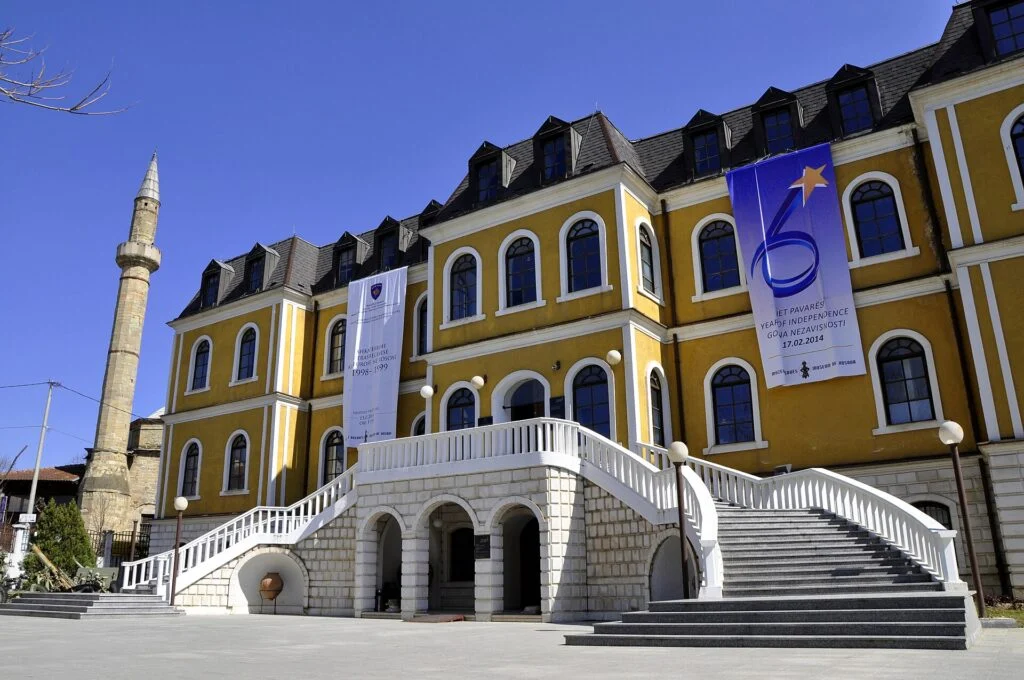
The National Gallery occupies a building with a relatively modest and functional architectural character that reflects its institutional mission rather than grandiosity. The design provides straightforward gray-white wall spaces and well-lit galleries suitable for viewing the range of media on display, though it does not prioritize architectural spectacle. The layout allows for a logical progression through thematic sections and individual artist showcases without excessive scale or overly complex navigation.
Display conditions are generally sound, with appropriate attention to lighting, spacing, and the preservation needs of modern media. The gallery’s exhibition style remains mostly traditional, using wall labels and introductory texts that provide essential contextual information. Interpretation is clear and accessible without heavy theoretical jargon, which helps the gallery communicate effectively to a diverse range of visitors, from local residents to international guests with varying degrees of familiarity.
The space also supports temporary exhibitions and special projects, though its capacity limits the scale of these events. This focused setting reinforces an impression of intimacy and direct engagement with the artworks rather than an expansive or multi-thematic showcase.
For Families, Specialists, and First-Time Visitors
Families that include children interested in art will find the National Gallery of Kosovo approachable. The manageable size and clear explanations facilitate exploration without fatigue or confusion. While the gallery does not have extensive child-oriented programming or interactive displays standard in specialized family museums, its simplicity can be suitable for parents seeking an introduction to Kosovo’s visual arts culture for younger audiences. However, families should consider that the content tends toward modern and contemporary art, which may require some explanation or mediation, especially for younger children unfamiliar with abstract or conceptual styles.
For specialists—such as art historians, curators, or researchers—the National Gallery offers a valuable, if compact, window into Kosovo’s post-war art scene. Its holdings provide important primary materials reflecting local artistic developments and cultural policy post-independence. The gallery’s archival resources, if accessible by appointment, could support deeper research into Kosovo’s visual culture. However, specialists will note that the collection is selective and works primarily within a regional framework, so comparisons with wider Balkan or European art histories require supplementary study elsewhere.
First-time visitors with general interest in art and Balkan history will appreciate the gallery’s focused scope. The careful curation and clear labeling allow a coherent narrative to emerge without overwhelming complexity. The gallery’s welcoming atmosphere and manageable scale make it a logical starting point for understanding Kosovo’s artistic identity.
What Works Best
The strongest attribute of the National Gallery of Kosovo lies in its ability to present the story of Kosovo’s modern and contemporary art with clarity and regional specificity. The focus on local artists and themes reflects a conscious effort to nurture cultural pride and awareness at a time when Kosovo continues to define its place in Europe and the world.
Visitors benefit from an uncluttered presentation style and thematic organization, which make the museum accessible to both informed and casual audiences. The balance between established figures from the Yugoslav and early Kosovo art scenes and emerging contemporary voices offers insight into continuity and change. This approach adds depth, encouraging visitors not merely to view art as isolated objects but as expressions of evolving identity.
Moreover, the gallery’s atmosphere is one of quiet concentration rather than spectacle. This allows artwork to take precedence without competing distractions. For those interested in how art markets, institutions, and state cultural policies intersect in a post-conflict society, the museum provides an understated but important case study.
Practical Considerations
Details about admission, opening hours, guided tours, audio guides, and accessibility should be verified directly with the institution via its official communications. Potential visitors should note that as a relatively modest public institution in a smaller European capital, the National Gallery’s visitor facilities may not approach the scale or diversity found in larger metropolitan museums. While this simplicity can be a virtue in terms of atmosphere and ease of navigation, some visitors might find the lack of extended visitor amenities or English-language materials more pronounced.
Pristina itself offers a range of accommodations and cultural sites that can be combined with a gallery visit. Given the gallery’s central location, it fits well within a condensed cultural itinerary, especially for those interested in the recent history and culture of Kosovo.
Verdict
The National Gallery of Kosovo fulfills a clear and culturally resonant role as the country’s main public institution for modern and contemporary art. Its collection, while selective and regionally focused, presents a well-curated narrative about Kosovo’s artistic and social developments since the latter half of the 20th century. The gallery’s strengths lie in its clear thematic layout, concentration on local artistic voices, and its policy of approachable interpretation.
Though the building and display style are utilitarian rather than architecturally ambitious, this suits the scope and mission of the institution. The gallery is best suited for visitors with an interest in Kosovo’s cultural identity or those seeking a coherent introduction to Balkan contemporary art. Families can also find value here, though young children may require some guidance to engage fully. Specialists will find the collection pertinent but limited in geographical range and scope.
Ultimately, the National Gallery of Kosovo offers a focused and thoughtful environment in which to consider art’s role in a society undergoing modern nation-building. It serves its public well with a thoughtful collection and accessible presentation, though visitors should plan carefully and seek up-to-date practical information before their visit.