GeoCenter Møns Klint Review
Borre, Denmark. GeoCenter Møns Klint is located near the famous white chalk cliffs of Møns Klint, Denmark’s most notable geological landmark. The museum was established to contextualize and interpret the region’s unique geology, paleontology, and natural…
Borre, Denmark. GeoCenter Møns Klint is located near the famous white chalk cliffs of Møns Klint, Denmark’s most notable geological landmark. The museum was established to contextualize and interpret the region’s unique geology, paleontology, and natural…
Best forMuseum lovers, culture travelers, first-time visitors
Review focusCollections, visitor experience, and practical planning
Historical Context
GeoCenter Møns Klint is located near the famous white chalk cliffs of Møns Klint, Denmark’s most notable geological landmark. The museum was established to contextualize and interpret the region’s unique geology, paleontology, and natural history. The cliffs themselves are a result of sedimentation from the Cretaceous period, roughly 70 million years ago, and provide valuable insight into Earth’s geological past, including annual layers of sediment, fossil records, and evidence of the massive meteorite impact believed to have contributed to the extinction of the dinosaurs.
Founded in the early 21st century, GeoCenter serves as both a gateway to understanding the regional landscape and an educational resource focused on the intersection of geology and biodiversity. Instead of traditional art or historical archives, the center concentrates on natural science, with particular attention to the physical environment and fossil evidence found within these chalk cliffs. The museum reflects a Scandinavian approach to natural history, emphasizing hands-on learning, scientific inquiry, and regional relevance before broadening out to global processes.
Its role extends from local school education to attracting travelers with an interest in Earth sciences and outdoor exploration. The museum’s position within the Møns Klint area physically and thematically ties it to the environment, reinforcing the region’s geological significance but also presenting limits on its audience, since it primarily appeals to visitors with existing interest in geosciences or natural history.
What You See on Arrival
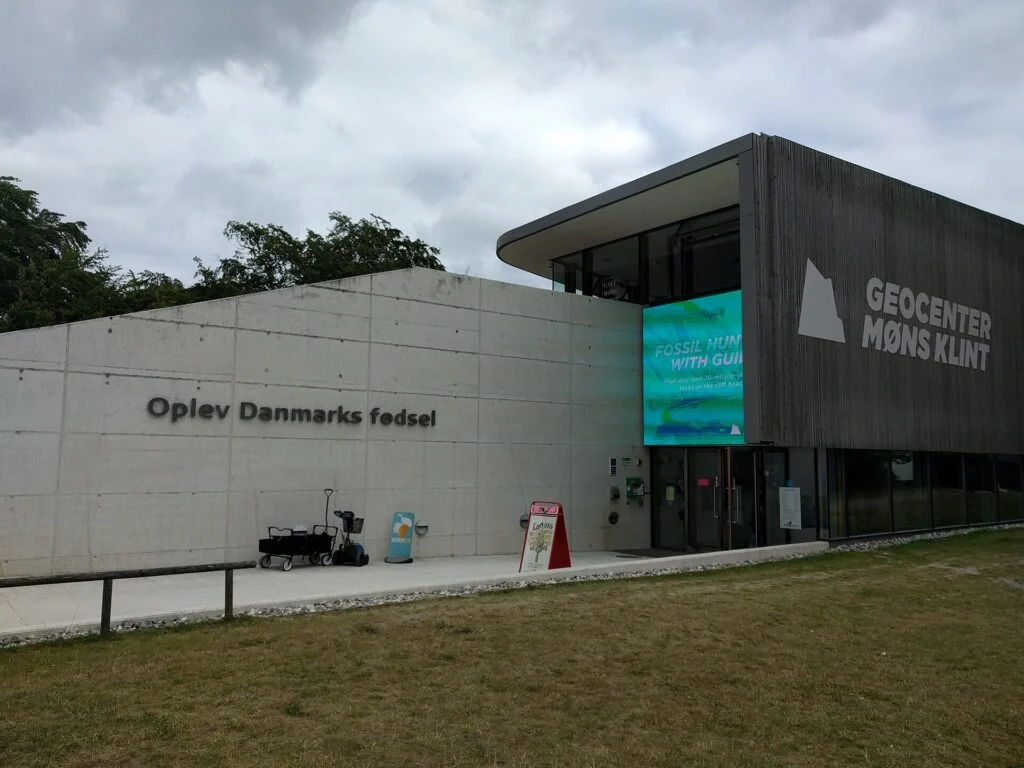
Arriving at GeoCenter Møns Klint, visitors are immediately confronted with an architectural form designed to complement rather than overshadow the landscape. The building employs materials and shapes that echo the chalk cliffs nearby without mimicking them outright. Rather than a grand façade, the entrance is modest and functional, signaling that the center’s focus is on substance over spectacle.
Outside, the setting serves as a natural introduction to the museum’s themes. The surrounding landscape offers direct views of the cliffs, linking the indoor exhibitions to the outdoor environment where much of the scientific story unfolds. This physical connection frames the visitor experience by grounding it in place and emphasizing the geological processes visible beyond the building. Interpretive panels and signage near the entrance prepare visitors for the underlying themes of earth formation, fossil findings, and climate changes.
Inside, one can expect a progression from general geological concepts to specifics about the chalk cliffs and their fossil record. The layout is reportedly straightforward, designed to support a linear or thematic visit through various sorts of exhibits, including fossil displays, geological samples, and interactive elements that encourage closer inspection of natural processes. Visual cues and text in Danish and English support comprehension for both local and international audiences, although the degree of multilingual detail should be confirmed for each visit.
Highlights and Key Exhibitions
GeoCenter Møns Klint’s core appeal lies in its detailed presentation of geology and fossil science. Central to its exhibitions are the chalk cliffs themselves, which provide a rare and accessible geological cross-section spanning millions of years. Visitors encounter large fossil specimens from marine organisms such as sea urchins, bivalves, and ammonites preserved within the chalk layers. These fossils help explain ancient ecosystems and the gradual changes in Earth’s climate and sea levels.
One of the more compelling themes in the museum is the meteorite impact hypothesis related to the Cretaceous-Paleogene extinction event. While this is a global geological story, GeoCenter connects it specifically to evidence found on or near Møns Klint, giving a local perspective on a worldwide event. Exhibits may include detailed reconstructions, impact simulations, and explanations of how the cliffs serve as a geological record.
In addition to fossils and stratigraphy, there is an emphasis on processes like erosion, sedimentation, and tectonics, showing how landscapes evolve over time. Interactive displays, such as touchable rock samples or simulated fossil digs, allow visitors to engage directly with scientific methods, offering a tactile experience uncommon in many geological museums.
The museum also addresses contemporary environmental themes by considering how geological history influences current biodiversity and landscapes. This includes a look at the flora and fauna of the region today and how they connect to soil composition and climate patterns shaped millions of years ago.
While temporary exhibitions are not widely highlighted, the permanent collection covers a solid range of geological topics. The collection focuses on a narrative that links the local natural environment with broader Earth sciences, making it a specialized but thorough educational resource. The depth of the fossil collection, in particular, can appeal both to casual visitors and students or researchers interested in paleontology.
Visitor Experience
The visitor experience at GeoCenter Møns Klint is designed to be educational but accessible. The pacing encourages a gradual build-up of knowledge, starting with general geological principles before moving into the local specifics of the chalk cliffs and their fossil record. This layering of information is useful for an audience that may not have a background in geology but is curious about natural sciences.
Interpretive materials vary in complexity, balancing scientific accuracy with approachable language. For visitors without prior knowledge, some concepts might require extra attention or supplementary reading. The use of interactive displays is a deliberate strategy to make abstract or complex geological processes tangible. These hands-on components help prevent the content from feeling too dense or technical.
Children and families, particularly those with an interest in nature, are likely to find the exhibits stimulating, though the museum does not specifically cater to very young children beyond general family-friendly design. More scientifically literate visitors and educators may appreciate the detailed fossil displays and the emphasis on local geological context.
The flow generally moves from introductory areas through detailed fossil and rock samples and finally to environmental and ecological explanations. While this linear path aids comprehension, visitor autonomy in exploring is also supported, allowing users to focus on areas of personal interest.
One limitation for some could be the museum’s relatively narrow thematic focus. Those seeking a broad national history or cultural artifacts will need to look elsewhere. The center’s concentration on geology and paleontology means it may not hold all visitors’ attention for long periods, especially those less drawn to natural science topics.
Overall, the presentation style is engaging but prioritizes factual content over theatrical or highly stylized displays. Visitors should be prepared for a scientific approach rather than a dramatically visual or entertainment-driven one.
Tickets, Access, and Planning
Specific details about tickets, including price levels, discounts, and package deals, are not firmly established within publicly available sources, so prospective visitors are advised to consult the official GeoCenter Møns Klint website before planning a visit. Likewise, opening hours can vary seasonally, and special arrangements such as guided tours or educational programs may not be standard or regularly scheduled.
Access to the museum is generally good via regional transportation options in Borre and the surrounding Møn island, but the site’s rural setting means that private transport might offer the most flexibility. Visitors should plan for weather conditions when venturing outdoors, as the chalk cliffs and immediate environs are outdoor components relevant to the museum experience.
Those with mobility considerations should check the museum’s current accessibility provisions directly. Given the nature of geological sites and some uneven terrain outside, reaching all outdoor features might be challenging for certain visitors.
Planning a visit ideally includes allocating sufficient time to absorb geological content, engage with interactive exhibits, and explore some of the outdoor natural surroundings. Visitors interested mainly in soft sciences, local history, or art history may find the focus less aligned with their interests.
Final Verdict
GeoCenter Møns Klint stands as a focused geological and natural history museum anchoring the story of Denmark’s famous chalk cliffs within a scientifically minded visitor context. It succeeds as an educational resource clarifying the formation, fossil history, and ongoing natural processes shaping the landscape.
Its strengths lie in the depth of its geological collections, especially its fossils and detailed explanation of large-scale Earth events as seen through a local lens. The museum is suited to visitors with a specific interest in geology, paleontology, earth sciences, or the natural environment generally. Families with children interested in natural history will also find value, provided they appreciate a learning-oriented visit rather than entertainment or cultural history.
Limitations emerge from its narrow focus and the absence of broader regional or cultural narratives, which may restrict appeal to a wider tourist demographic. The visitor experience is competent and educational but may not captivate those looking for highly visual or narrative-driven exhibitions.
For those planning a trip, the GeoCenter is best approached with an understanding that it functions primarily as a specialized interpretive center rather than a general cultural institution. Checking practical information on the official website before visiting is advisable to ensure access, ticketing, and programming suit individual needs.
In summary, GeoCenter Møns Klint offers a serious and regionally significant insight into geological history, standing out mainly for visitors invested in natural science education. It complements the surrounding landscape by providing context and meaning to the striking physical environment it adjoins, making it a worthwhile stop within Denmark’s range of themed museums focused on nature and science.