Fregatten Jylland Review
Ebeltoft, Denmark. Fregatten Jylland is a maritime museum centered on the physical preservation and interpretation of one of Denmark’s most significant 19th-century naval vessels, the frigate Jylland. Launched in 1860, the ship is a rare example…
Ebeltoft, Denmark. Fregatten Jylland is a maritime museum centered on the physical preservation and interpretation of one of Denmark’s most significant 19th-century naval vessels, the frigate Jylland. Launched in 1860, the ship is a rare example…
Best forMuseum lovers, culture travelers, first-time visitors
Review focusCollections, visitor experience, and practical planning
Historical Context
Fregatten Jylland is a maritime museum centered on the physical preservation and interpretation of one of Denmark’s most significant 19th-century naval vessels, the frigate Jylland. Launched in 1860, the ship is a rare example of a wooden warship that combined sail and steam propulsion during a transitional period in naval technology. The frigate was built to bolster Denmark’s navy at a time of geopolitical tension in Northern Europe, particularly following the First and Second Schleswig Wars, which challenged Danish control over surrounding territories.
The ship served actively in the Danish navy for several decades, including participation in the Battle of Heligoland in 1864, Denmark’s last major naval engagement with the Austrian-Prussian fleet. Its hybrid design reflects the era’s technological experimentation, as navies worldwide moved away from wooden sailing ships towards ironclads and steam power. After decommissioning, the Jylland remained preserved due to its historical importance, eventually becoming the focus of a dedicated museum in Ebeltoft. The site serves not only to tell the story of the ship itself but also to illustrate broader themes around 19th-century naval warfare, Scandinavian maritime history, and Denmark’s national identity during a period of rapid change.
What You See on Arrival
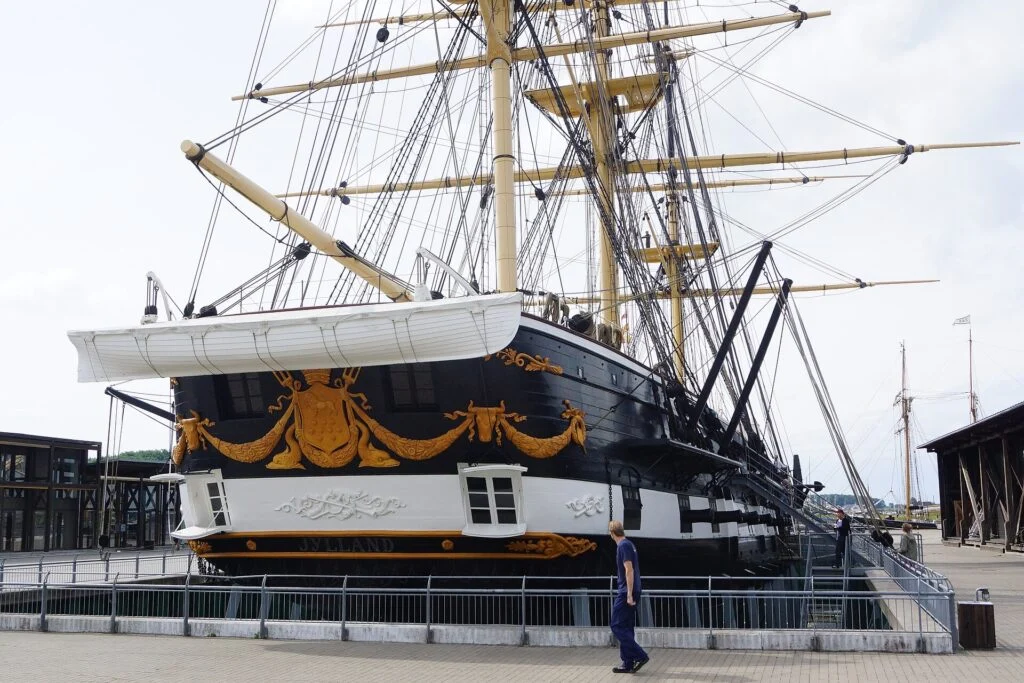
Upon approaching the museum site in the coastal town of Ebeltoft, visitors are immediately confronted with the impressive sight of the Jylland itself. Moored permanently in a dry dock, the ship presents a commanding profile, its long wooden hull, tall masts, and rigging visible even from a distance. This framing clearly signals the museum’s core focus—focusing on the ship as a historical artefact and a vessel worthy of close study.
The museum’s identity is strongly maritime and heritage-driven rather than broad historical or thematic museum work. The visitor pathway typically starts with external views of the ship, creating a sense of anticipation before entering the indoor exhibition spaces. The entrance areas near the dock include interpretative panels and information that introduces the ship’s history and significance. Visitors gain an immediate understanding that the Jylland is not merely a static exhibit but a preserved piece of functioning naval architecture that invites exploration both on board and through related displays.
This orientation establishes expectations for a focused, hands-on experience highlighting seafaring technology and naval tradition with an emphasis on the lifeways onboard. The exterior setting of the ship with visible rigging and the dock infrastructure primes visitors physically and intellectually for the maritime themes that dominate the site.
Highlights and Key Exhibitions
The centerpiece of the museum is, of course, the Fregatten Jylland herself. The preservation of the wooden hull, rigging, steam engine, and armament offers an extensive insight into mid-19th-century naval engineering. Visitors can explore multiple decks of the ship, observing authentic cabins, gun decks, the captain’s quarters, crew areas, and machinery spaces. This allows for a tangible encounter with naval life of the period, balancing technical detail with human stories.
One key highlight is the ship’s steam engine and coal-powered boiler equipment. The survival of original machinery and components is notable, as few ships from this era remain so intact. Interpretive materials explain how the dual propulsion system operated, shedding light on challenges faced by the Danish navy at a time when steam power was still novel but strategically crucial. Demonstrations of how steam and sail power were coordinated emphasize the transitional nature of the vessel.
The extensive onscreen and panel-based interpretative content situates the Jylland in the context of Danish naval history, particularly during the Schleswig Wars. Exhibits outline the frigate’s role in naval battles, training, and diplomatic missions, illustrating the ship’s multi-faceted uses. Artifacts found onboard, including naval instruments, uniforms, weaponry, and everyday utensils, complement this narrative, offering points of entry into both military and social histories.
The museum also provides access to the ship’s gun decks where a series of cannons remain arranged as they would have been during combat. This allows a direct understanding of the logistics and spatial constraints of naval warfare. Descriptions explain the types of naval artillery used, crew roles in battle stations, and tactical considerations of the era. Information about the Battle of Heligoland is given particular emphasis, as it was one of the ship’s most notable engagements.
More broadly, the museum’s exhibition spaces sometimes offer comparisons between wooden sailing frigates and emerging ironclad designs elsewhere—a useful contextual frame for understanding why the Jylland’s hybrid construction was significant. There are also displays covering life at sea, addressing issues such as crew health, nutrition, discipline, and morale, giving a well-rounded picture of maritime service in the late 19th century.
While the ship is the undoubted highlight, smaller museum spaces provide historical context about Ebeltoft as a maritime community and the local shipbuilding tradition. This situates the Jylland not just as a naval vessel but as an artifact connected to regional history and shipwright craftsmanship.
The comprehensiveness of the exhibitions means visitors interested in naval architecture, military history, or Danish maritime heritage will find substantial material to engage with. However, those hoping for a broader coverage of Danish history or international naval developments may find some thematic limits, as the museum concentrates tightly on the Jylland and related 19th-century naval narratives.
Visitor Experience
The experience of visiting Fregatten Jylland is, at its core, anchored by the ship itself. The opportunity to walk its decks and explore its interior spaces provides a form of direct engagement few maritime museums can offer. This arrangement caters particularly well to visitors with an interest in ships, technology, or 19th-century naval history.
Interpretative signage is generally clear and organized, providing a narrative thread that aids understanding without overwhelming with excessive technical jargon. While certain areas of the ship involve steeper physical exertion and narrow passages, the layout is intuitive, encouraging a slow, methodical pace suited to absorbing detail. This works well for visitors who prefer a hands-on, exploratory approach.
The museum’s focus means the visitor experience may be narrower than larger institutions that deal with multiple historical periods or themes. Some visitors might find that the lack of broader contextual artifacts or interactive multimedia experiences limits engagement for younger or general audiences. However, the physical presence of the ship compensates for this with its sheer scale and authenticity.
For history enthusiasts or those with naval or maritime interests, the museum’s strengths lie in the physical evidence of the ship and machinery combined with grounded storytelling about life aboard and the political context of Danish naval power. The absence of extensive contemporary reinterpretations or modern exhibition gimmicks may appeal to those seeking a straightforward heritage presentation.
The museum’s location in Ebeltoft, a small town with a maritime character, also complements the visit, situating the ship within a living regional environment historically linked to seafaring and shipbuilding. This helps reinforce the narrative beyond the museum’s walls without appearing artificially constructed.
That said, some practical considerations should be noted. Since the central attraction is a historic ship, certain physical constraints are expected, such as steps, ladders, and tight spaces, which may challenge visitors with limited mobility. Information about accessibility and visitor services should be confirmed on official channels prior to planning a visit. Additionally, the primary appeal of the museum can require a level of prior interest or curiosity about naval history to fully appreciate the detailed exhibits.
Tickets, Access, and Planning
Specific operational details—such as entrance fees, opening times, tour options, and availability of audio guides—are not definitively outlined here and can vary seasonally or due to operational considerations. Prospective visitors should consult the museum’s official website to obtain the most current practical information before making travel arrangements.
The museum’s location in Ebeltoft is accessible by road and regional transport; however, detailed information on parking or public transit connections should be verified locally. Given that the Jylland is a preserved ship requiring ongoing maintenance, visit times may sometimes be affected by conservation activities or weather conditions. Checking ahead can help avoid unexpected closures or restrictions.
The layout primarily encourages self-guided visits, although group tours or staff-led interpretations might be available during certain periods. Any visitor resources providing more in-depth interpretation, such as multimedia guides or educational material, should be confirmed directly through official sources.
Final Verdict
Fregatten Jylland offers a focused, tangible experience rooted in the preservation of a unique naval artifact. Its strength lies in the intact physical environment of the ship, which provides a rare window into naval technology and life at sea in the mid-19th century. The museum delivers a detailed, well-presented story of the ship’s construction, role in Danish naval history, and the broader maritime culture of the era.
The site will particularly satisfy individuals interested in maritime engineering, naval warfare, and Denmark’s local maritime heritage. The clear interpretative approach allows for an accessible and educational visit, though a certain degree of pre-existing interest in maritime subjects enhances appreciation of many details.
Limitations arise from the museum’s narrow thematic scope and somewhat traditional exhibition style that may not engage all visitors equally, especially those looking for more interactive or comprehensive historical coverage. Physical access constraints inherent in ship museums should be expected and investigated in advance.
In summary, Fregatten Jylland stands as an important institutional effort to preserve and interpret a singular historic warship. While it may not suit all tastes, its focused presentation and authentic environment make it a significant destination within Denmark’s cultural landscape. Visitors planning a trip should prepare thoughtfully and refer to official resources to optimize their experience.