Biomuseo
Panama City, Panama. The Biomuseo in Panama City is a natural history museum focused on the biodiversity of Panama and its significance in the natural world. It aims to tell the story of how the formation of…
Best forMuseum lovers, culture travelers, first-time visitors
Setting / nearbyPanama City, Panama
Overview
The Biomuseo in Panama City is a natural history museum focused on the biodiversity of Panama and its significance in the natural world. It aims to tell the story of how the formation of the Isthmus of Panama influenced the movement of species between North and South America, shaping ecosystems and evolutionary paths. The museum’s exhibitions explore the country’s unique position as an ecological crossroads, highlighting the immense variety of plants, animals, and environments found within this relatively small geographical area. As a site dedicated to biodiversity and natural sciences, the Biomuseo offers insights into environmental themes that have both regional and global implications.
The museum is positioned to help visitors understand the importance of biological diversity and the challenges it faces in the modern age. It steers away from being just a display of specimens; instead, it presents interpretive exhibits that attempt to connect visitors to the idea of nature’s complexity and interconnectedness. While it embraces an educational mission, the Biomuseo also reflects Panama’s pride in its natural heritage and serves as a resource for students, educators, researchers, and the general public interested in ecology and conservation.
Collection Highlights
The Biomuseo’s exhibits concentrate on Panama’s role as a natural bridge. The collection does not focus on rare artifacts or traditional natural history specimens alone but combines scientific information with multimedia displays and contextual narratives. Visitors can expect to see detailed presentations on the land bridge’s effects on animal migration, from mammals and birds to marine life and insects. The museum includes specimens and models that illustrate evolutionary processes, ecological relationships, and biodiversity hotspots within Panama.
Some key themes include the Great American Biotic Interchange, which describes how species from two continents mingled once the isthmus emerged. The museum also places emphasis on the country’s ecosystems—rainforest, coastal marine areas, and mountainous regions—showcasing the distinct flora and fauna of each. Exhibits typically explore local species, including endemic and endangered wildlife, offering insights into conservation issues and the ongoing efforts to safeguard these natural environments.
The museum employs a combination of vivid visuals, interactive stations, and scientific explanations to engage visitors of various ages. It is designed to appeal to those with an interest in natural history, biology, ecology, or environmental science, as well as families seeking an educational experience. While focused on Panama, the content also ties into wider ecological processes that shaped the Americas and continue to influence biodiversity today.
Building and Setting
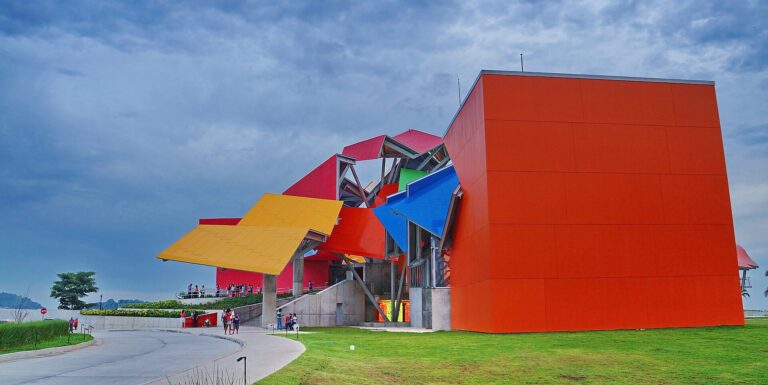
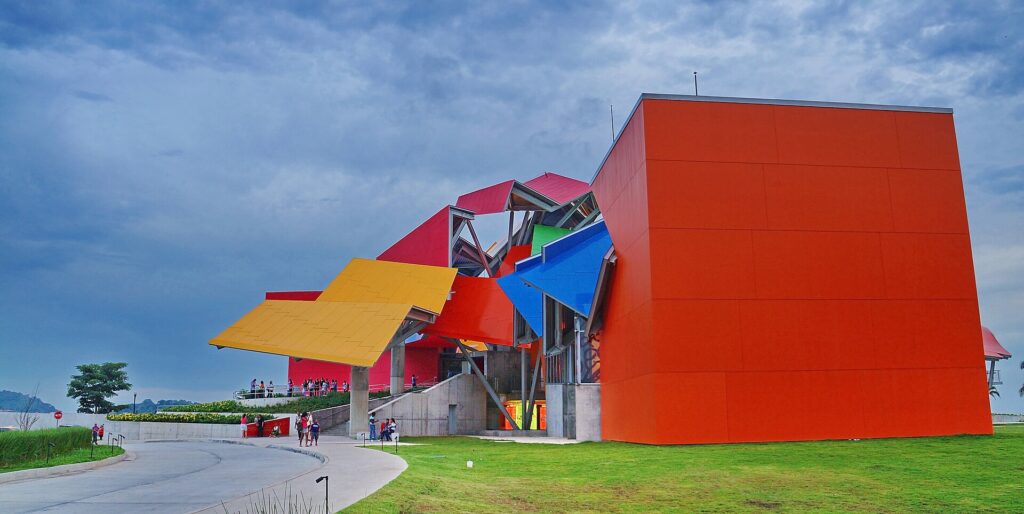
The Biomuseo’s building itself is often noted for its distinctive architecture. Located in Panama City on the Amador Causeway, the museum occupies a site that links the urban environment to nearby coastal waters and islands. This setting underscores the museum’s themes of land, sea, and ecological transition zones. The museum’s design is striking and colorful, making it a noticeable landmark in the cityscape.
The structure’s colors and form are said to reflect aspects of Panama’s biodiversity, although specific architectural interpretations can vary among visitors. The placement on the causeway provides potential views of the ocean and Panama Bay, situating the museum within a broader natural context. The building’s layout supports a sequence of galleries and exhibition spaces that guide visitors through its main themes in a logical and accessible manner.
For those interested in architecture alongside natural history, the museum’s design represents a modern approach to public science education. It stands out from other natural history or ecological museums in the region by combining striking visual identity with environmental narrative.
Practical Information
Visitors considering a trip to the Biomuseo should consult its official website for the most accurate and current details regarding opening hours, admission fees, guided tours, accessibility, and available services. Policies and practical arrangements may change, so direct confirmation is advisable before planning a visit.
The museum is located within Panama City, easily accessible from the city center by car or public transit, though visitor routes and parking options should be checked ahead. The Amador Causeway location also offers opportunities for combining a museum visit with nearby attractions such as walking paths, marinas, and restaurants, but visitors should plan their time accordingly.
While the museum may appeal to a broad age range, educational programs may be especially suitable for school groups and families with children interested in natural sciences. Those with mobility considerations should verify accessibility features in advance. Gift shop and café services, if present, can add to the experience but should be confirmed with current visitor information.
Why Visit
The Biomuseo offers a focused perspective on an important environmental story that may not be well known outside of Panama and ecological science circles. For travelers interested in natural history or biodiversity, the museum delivers detailed, region-specific content that places Panama’s natural heritage in a wider framework. It challenges visitors to see the country not only as a travel destination or a geopolitical connection point between continents but also as a living laboratory of evolutionary and ecological processes.
While the exhibitions emphasize education, they avoid overly technical jargon and attempt to make complex scientific topics understandable to a general audience. The museum’s emphasis on ecological preservation and awareness aligns it with contemporary concerns about environmental sustainability. This makes it relevant not only for tourists but also for residents of Panama and international visitors mindful of biodiversity issues.
At the same time, the museum’s location and architectural presentation make it a visually distinct cultural institution. It offers visitors a chance to experience science communication in a setting linked to the landscape and seascape of Panama. Though it might not cater to those seeking traditional natural history displays centered on large fossil collections or historical artifacts, Biomuseo provides a different experience—one rooted in current environmental science and local natural heritage.
In summary, the Biomuseo is suited to visitors curious about nature, biodiversity, and environmental change, who appreciate a museum that combines science with design and narrative. It is best approached with a readiness to engage with ecological concepts and Panama’s role in shaping biodiversity across the Americas. Planning ahead and reviewing official details to match personal interests will help make the visit more rewarding.