John F. Kennedy Presidential Library and Museum
Boston, United States. The John F. Kennedy Presidential Library and Museum in Boston is dedicated to the life, career, and legacy of the 35th President of the United States. It functions as a presidential library, which means…
Best forMuseum lovers, culture travelers, first-time visitors
Setting / nearbyBoston, United States
Overview
The John F. Kennedy Presidential Library and Museum in Boston is dedicated to the life, career, and legacy of the 35th President of the United States. It functions as a presidential library, which means it serves both as an archive and a museum, preserving documents and artifacts related to John F. Kennedy, as well as interpreting his administration and the historical period in which he served. Its purpose is to support historical research and public education about Kennedy’s contributions to American politics and society, as well as the broader context of the early 1960s. Located on Columbia Point in Boston, the library sits near the University of Massachusetts Boston and the Massachusetts Archives, situating it within a concentration of educational and governmental institutions.
As a presidential library, this site complements other Kennedy landmarks in Massachusetts and Washington, D.C., providing a comprehensive portrayal of his public service and private life. It is part of the network of libraries overseen by the National Archives and Records Administration, which ensures the preservation and accessibility of presidential records. Unlike some historical museums focused on broader historical narratives, this institution centers on one individual’s impact, but it does so by connecting personal, political, and cultural aspects of his presidency.
Collection Highlights
The library’s holdings include a wide selection of original documents, photographs, audio-visual materials, and artifacts related to John F. Kennedy’s presidency and personal life. Visitors can expect to see materials reflecting his career before, during, and after his time as president. This includes campaign materials, speeches, correspondence, and items related to major events such as the Cuban Missile Crisis, the Space Race, civil rights initiatives, and the early stages of the Vietnam War.
One significant part of the collection is the archival records that allow researchers to explore primary sources documenting Kennedy’s decisions and leadership style. For general visitors, thoughtfully designed exhibits use these materials to present a narrative about his administration’s challenges and achievements. Some exhibits focus on Kennedy’s military service during World War II, while others cover his family life, including his marriage to Jacqueline Kennedy, showing how personal and political spheres intersected.
In addition to documents, the museum displays objects like a replica of Kennedy’s Oval Office desk and multimedia presentations that provide context for his policies and speeches. The inclusion of letters, newspaper clippings, and campaign memorabilia adds depth to the story. Photographs and videos help anchor visitors in the historical moment, offering a sense of immediacy and connection to the era. The museum also addresses Kennedy’s assassination and legacy carefully, noting differing interpretations and the ongoing influence of his presidency on American culture and politics.
Building and Setting
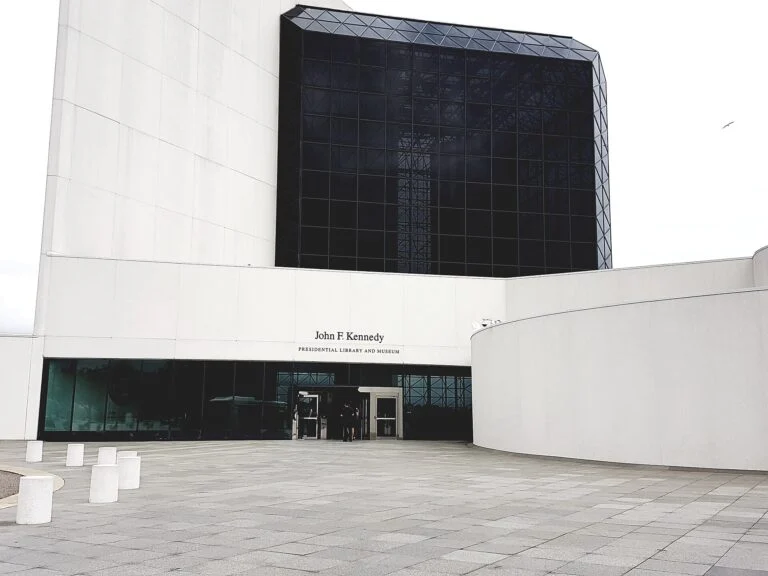
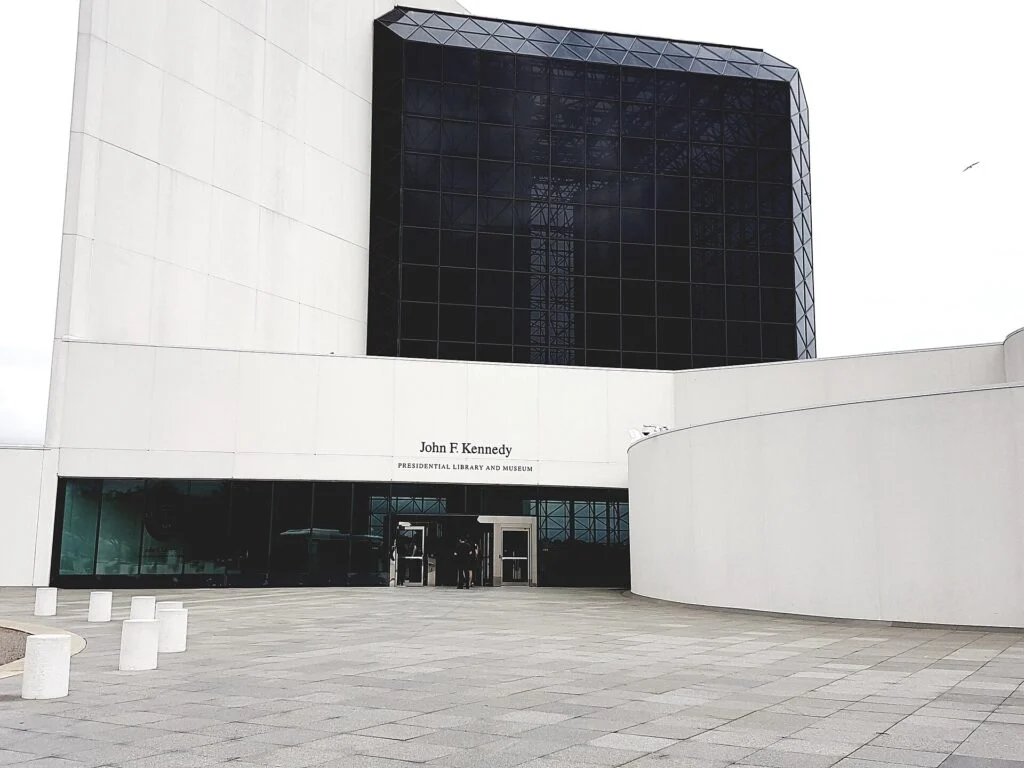
The building itself, designed by architect I.M. Pei, is notable for its modernist style and distinctive geometric shapes. It stands on a site overlooking Boston Harbor, a location that affords views of the waterfront and the city skyline. The structure’s clean lines and large windows offer a contemplative atmosphere fitting for a presidential library and museum. The design reflects the 1970s architectural trends with a focus on blending function and form.
The site’s proximity to other historical and governmental buildings, such as the Massachusetts State Archives, contributes to a sense of place connected to public service and history. The waterfront setting emphasizes openness and accessibility but also requires planning for arrival, as the area is somewhat removed from downtown Boston’s core, though it is reachable by public transportation.
Inside, the building is arranged to accommodate both archival storage and museum exhibits. The space is light and open, with galleries designed to allow visitors to move easily among exhibits and utilize multimedia resources. The architecture supports the dual function of the library as a research center and a public museum. Outdoor spaces around the building provide opportunities for reflection, though they are not a primary focus for visitors.
Practical Information
Visitors should check the official website to confirm current opening hours, admissions policies, and available tours or programs, as these can change. Details such as the availability of audio guides, guided tours, or special exhibitions are not always consistent, so advance planning is recommended. Since its location is not in Boston’s downtown core, visitors should also verify transportation options. The area has public transit connections, but the distance and transit times might affect how much time one can comfortably spend at the museum.
While the museum focuses primarily on the Kennedy presidency, it may not cover broader American history extensively, so visitors expecting a general historical overview of the 1960s should consider supplementing their visit with other local institutions. Accessibility features are generally in place, but specific accommodations should be confirmed. Facilities such as the bookstore or café may exist but are best verified beforehand.
The volume of visitors can vary seasonally and by special events, so checking for any scheduled closures or high visitor days is advisable. Researchers interested in accessing the archival materials should be aware that these resources often require appointments or specific protocols.
Why Visit
The John F. Kennedy Presidential Library and Museum offers visitors a focused and structured look at one of the most studied American presidencies. For those interested in modern American history, the Cold War era, or American politics, the museum provides primary source materials and curated exhibits that unpack Kennedy’s policies and challenges. It is particularly suitable for students, scholars, and visitors who appreciate detailed documentary evidence alongside interpretive displays.
The museum allows a deeper engagement with the events that shaped the early 1960s, such as the Cuban Missile Crisis, civil rights developments, and the space program. Visitors can develop a fuller understanding of the complexities and contradictions within Kennedy’s presidency and personal actions. It also explores the cultural moment of the 1960s, including the media’s role and the public’s response to Kennedy’s political style and eventual assassination.
At the same time, the museum does not attempt to provide a comprehensive history of the United States or the 1960s generally. Its focus is quite deliberately on Kennedy, which means that some related topics receive only passing attention. Visitors expecting an extensive treatment of the Cold War or American social movements beyond Kennedy’s role may want to look at additional resources or museums in the Boston area or beyond.
In summary, this institution is best approached with a clear interest in John F. Kennedy’s life and presidency. It supports respectful reflection on his time in office and invites visitors to consider how leadership, personality, and historical circumstance intersect. The balance of archival materials and public exhibits makes it a resource for both casual visitors and serious researchers. Those seeking a window into a pivotal period of 20th-century American history, shaped in part by this young president’s vision and challenges, will find considerable material here to stimulate thought and discussion.