New Museum
New York City, United States. The New Museum in New York City is a contemporary art museum dedicated to the presentation of new and emerging artists and ideas. Founded in 1977, it differs from many established institutions by focusing…
Best forMuseum lovers, culture travelers, first-time visitors
Setting / nearbyNew York City, United States
Overview
The New Museum in New York City is a contemporary art museum dedicated to the presentation of new and emerging artists and ideas. Founded in 1977, it differs from many established institutions by focusing explicitly on living artists and the current moment in art, often engaging with experimental and challenging works. The New Museum often presents exhibitions that introduce artists in the early stages of their careers or shows centered on underrepresented voices, making it a venue where fresh perspectives take center stage.
The institution is known for its commitment to expanding the dialogue around art, supporting projects that might not easily find a place in more traditional museums. The New Museum is not a historical collection or a repository of canonical works; rather, it is a dynamic platform for exploration and debate within the contemporary art world. This means visitors should expect to encounter thought-provoking installations, multimedia projects, and conceptual exhibitions that ask questions about society, culture, and aesthetics.
Collection Highlights
Unlike art museums with permanent collections focused on historical masters or significant movements, the New Museum is primarily exhibition-driven and does not maintain a large, traditional permanent collection. Instead, it emphasizes curated exhibitions and commissions by artists who are often in the earlier or mid-stages of their careers. This approach offers exposure to artworks that tend to be new or site-specific, sometimes created in dialogue with the museum space itself.
Past exhibitions have spanned a broad range of mediums including video, installation, painting, sculpture, performance, and digital art. The museum has showcased both international artists and those based in New York, reflecting a global yet locally aware perspective. Visitors may find exhibitions that challenge typical museum experiences by including interactive elements, multi-sensory components, or works that ask for active engagement.
The museum also organizes triennial exhibitions that survey the contemporary art landscape at large, offering a snapshot of emerging trends and themes as interpreted by the curatorial team. These exhibitions usually feature many artists from around the world, bringing together a variety of practices and perspectives in one place. They can be demanding but offer valuable insight into what is shaping the art world today.
Building and Setting
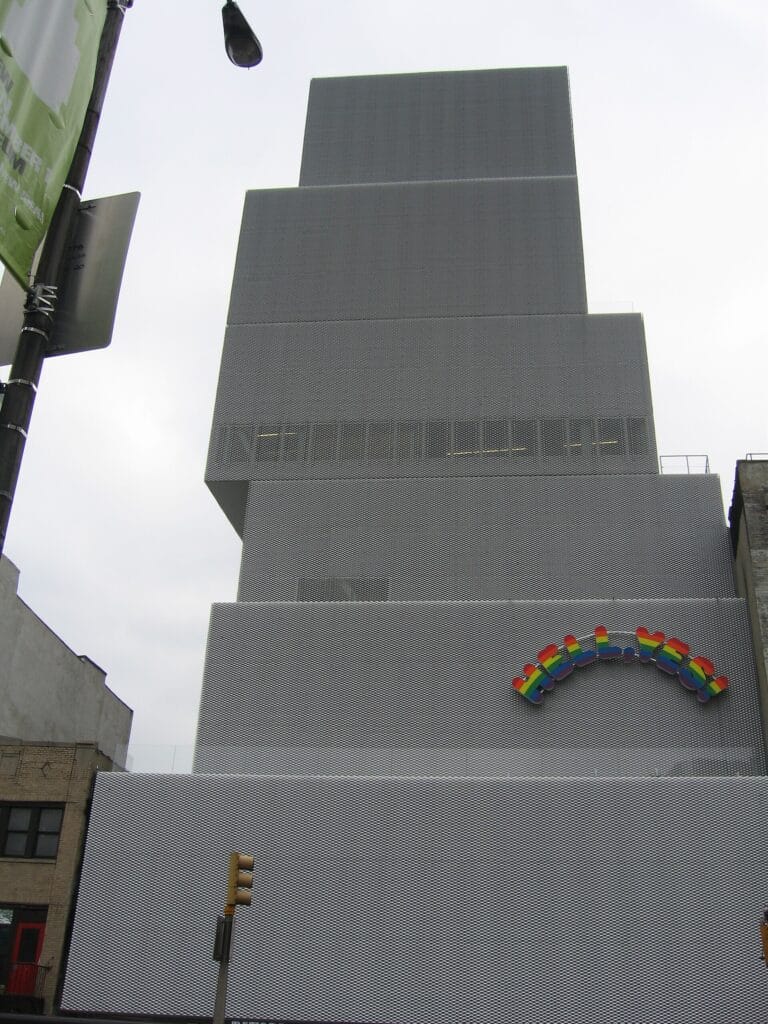
The New Museum occupies a distinctive building located on the Bowery in Manhattan. The structure is contemporary in its design, featuring a stacked-box form clad in a white facade. The architecture itself becomes part of the museum’s identity, reflecting its focus on the new and experimental. The building’s open galleries and flexible spaces are designed to accommodate the diverse and often large-scale works frequently exhibited.
Its location on the Bowery places it within a rapidly evolving neighborhood with a history of artistic and cultural experimentation. Nearby, visitors can find other art galleries, performance spaces, and restaurants, making the museum part of a broader creative community. The museum’s setting in lower Manhattan connects it to both historical layers of the city and its constant reinvention, aligning with the museum’s forward-looking mission.
The interior layout typically offers several floors of exhibition space, which are arranged to allow for both large-scale installations and smaller, more intimate works. The galleries are well-lit, though some exhibitions may use controlled lighting or architectural interventions to suit particular artworks. The museum environment is straightforward, prioritizing the art and creative presentation rather than elaborate decorative elements.
Practical Information
Those planning to visit the New Museum should be aware that practical details such as ticketing, opening hours, and tour availability may vary and are best confirmed through the museum’s official website before arrival. Since the museum often hosts special programming, temporary exhibitions, and events, it is also useful to check for announcements about visiting protocols or specific access arrangements.
Given the nature of the exhibitions, visits can be unpredictable in duration. Some shows may involve a few larger works spread over one or two floors, while others might include complex installations that require time to engage with fully. Visitors who prefer guided experiences should investigate whether tours or introductory materials are offered during their planned visit.
The New Museum is located at street level with an entrance on the Bowery, and its urban location means access is generally convenient via public transportation. The facility does not emphasize extensive amenities such as dining or extensive retail; visitors should plan accordingly if they expect such services.
Why Visit
Visiting the New Museum is an opportunity to experience contemporary art in a setting that prioritizes new voices and innovative expression. It is a place where art is considered in flux, reflecting ongoing conversations rather than fixed histories. This focus means the museum can be especially appealing to those interested in the cutting edges of artistic practice or in how art responds to contemporary issues.
The museum offers an accessible point of entry to contemporary art that might otherwise feel remote or difficult to understand. Because it showcases artists who are often still developing their careers, visitors may encounter ideas and works that are fresh and surprising, sometimes challenging traditional notions of what art is or can be.
However, it is important to approach the New Museum with an openness to experimental and conceptual art forms. Those looking for recognizable names or familiar styles might find the museum’s exhibitions less straightforward. The art presented can require patience or a willingness to engage in reflective viewing. Yet, for many, this challenge is part of the museum’s appeal.
Overall, the New Museum contributes to New York City’s diverse cultural landscape by focusing on the future of art and the ongoing evolution of artistic practice. It supports emerging artists and ideas at a critical moment in their development, providing insight into contemporary cultural currents through artistic creation rather than historical narrative.
Visitors interested in contemporary art, experimental projects, and new perspectives on creativity will find the New Museum a significant venue. It offers a window onto the possibilities and directions that art is exploring in the present moment, framed within a building and context that emphasize innovation and engagement.
For the latest information on exhibitions, hours, admission policies, and special events, potential visitors should refer to the New Museum’s official website before planning their visit. This will ensure the most accurate and current details are available.