New Museum Review
New York City, United States. Opened in 2007, the New Museum in New York City has established itself as a contemporary art institution with a focus on new and emerging artists. Situated on the Bowery in Lower Manhattan, the…
New York City, United States. Opened in 2007, the New Museum in New York City has established itself as a contemporary art institution with a focus on new and emerging artists. Situated on the Bowery in Lower Manhattan, the…
Best forMuseum lovers, culture travelers, first-time visitors
Review focusCollections, visitor experience, and practical planning
Historical Context
Opened in 2007, the New Museum in New York City has established itself as a contemporary art institution with a focus on new and emerging artists. Situated on the Bowery in Lower Manhattan, the museum was conceived as an alternative venue dedicated exclusively to what might be deemed the “new” in art production. It distinguishes itself by fostering the presentation of experimental, underrepresented, and sometimes controversial visual art. The museum’s mission is framed around supporting artists who are at the early or mid-stage of their careers and whose work pushes boundaries or challenges prevailing art world conventions.
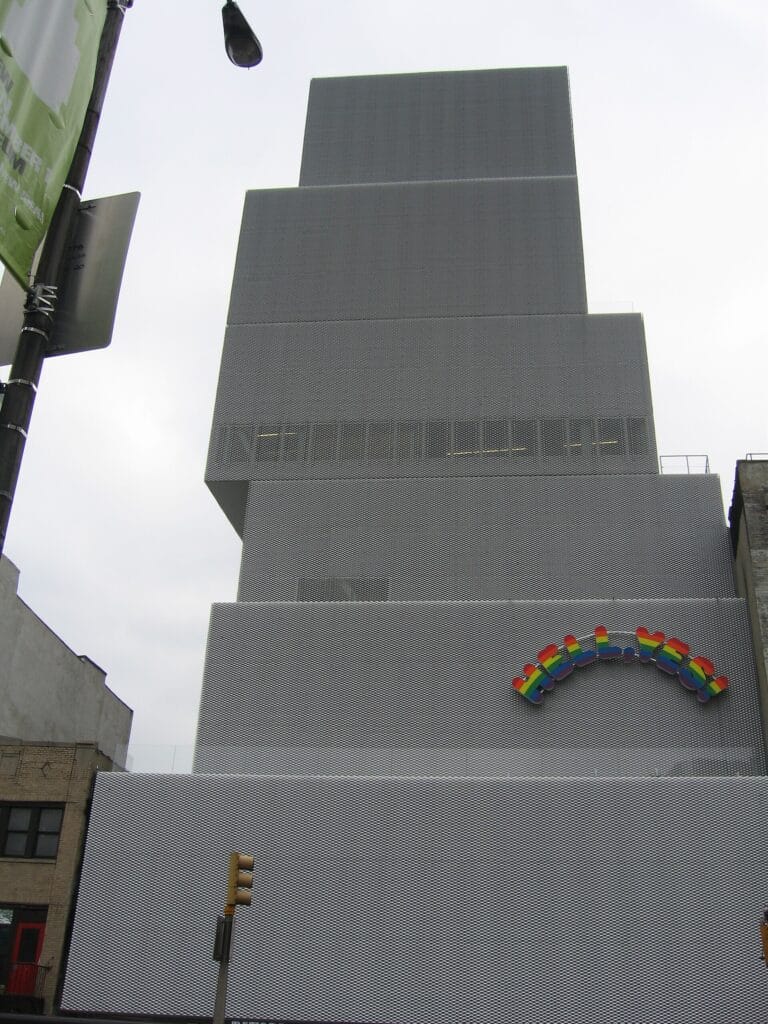
The building itself, designed by the Tokyo-based architectural practice SANAA, is a visible statement of the museum’s commitment to innovation. Its stacked, cantilevered boxes of white corrugated metal create a stark contrast with the older tenement buildings of its surroundings. This architectural boldness aligns with the institution’s focus on newness and risk-taking within its program. Over the years, despite its youth compared to more established museums in Manhattan, the New Museum has maintained a distinct place on the art map by prioritizing a cutting-edge curatorial vision and often spotlighting artists from diverse global backgrounds.
What You See on Arrival
The museum’s location on the Bowery offers an urban, slightly edgy context, notable for being a corridor that has evolved from past industrial and working-class uses to a contemporary arts scene with galleries and studios nearby. Upon approach, the building’s unique architecture immediately signals a departure from traditional museum aesthetics. Its stack of nine shifted boxes stacked vertically conveys a sense of layering and openness, an architectural metaphor for the multifaceted, sometimes disruptive art found inside.
Entering the museum, visitors encounter a relatively compact lobby and a modest entrance area compared to larger, more monumental art institutions. This scale reflects its role as a museum particularly focused on contemporary art’s experimental edge, rather than a repository of a vast, encyclopedic collection. The front desk and ticketing area are integrated thoughtfully to not overwhelm the entrance space, and the visitor flow then moves upward through galleries arranged on floors that sometimes extend beyond the stacked boxes with perimeter terraces providing views of the surrounding Lower East Side.
The architectural design quietly frames the museum’s identity — a place where the new and the ever-changing take precedence over established historic narratives. The sense is of stepping into a venue where art is actively being formed and debated, rather than preserved for posterity.
Highlights and Key Exhibitions
The New Museum’s collection and core exhibitions focus on contemporary and emerging art spanning a wide range of media, including installation, video, performance, painting, sculpture, and digital art. Unlike museums with extensive permanent holdings, the New Museum operates on a model centered around rotating exhibitions, often presenting previously unseen or site-specific works by both American and international artists. This focus on the new means the museum does not maintain a canonical collection for long-term display; instead, it is a platform for art in the process of global dialogue and change.
Significant themes in the museum’s programming include post-internet art, feminist and queer art practices, issues of migration and identity, and responses to socio-political challenges in contemporary culture. Past exhibitions have featured artists who use multi-disciplinary approaches to challenge established art norms and conventions. These might include immersive environments, video installations reflecting on virtual culture, or sculptures engaging with social history.
The museum is especially noted for its Triennial, a large-scale exhibition held roughly every three years that surveys international contemporary art trends among younger artists. Although not a permanent fixture, the Triennial typifies the institution’s overall ethos by showcasing artists whose approaches question traditional artistic categories and often address current global concerns.
Artist selections often deviate from mainstream commercial interests, favoring those whose work is experimental or whose visibility may be limited in other major venues. This creates an atmosphere where visitors encounter a wide array of artistic languages and cultural perspectives, which can be thought-provoking albeit occasionally challenging or opaque. The museum’s non-collection emphasis facilitates this dynamic: visitors are seeing art in transit, art that is still negotiating its place in the art world and society.
Visitor Experience
The New Museum’s visitor experience tends to appeal to audiences interested in contemporary art discourse, especially those who appreciate art as an evolving cultural form rather than settled heritage. The spatial flow of the galleries encourages exploration, with exhibits housed on multiple floors connected via stairs and elevators. On warmer days, access to terraces offers an additional break point, providing views of the surrounding urban context that complements gallery visits.
Interpretation and labeling in the museum generally skew towards supporting informed and engaged visitors, often layered with scholarly material alongside more accessible texts. Visitors unaccustomed to contemporary art’s complexity or conceptual frameworks might find some presentations dense or abstract, but for those willing to engage actively, there is ample material to consider.
The museum’s scale and exhibition layout mean pacing your visit carefully is advisable. Because the exhibitions are often thematic and experimental, some visitors may benefit from supplemental reading or preparation to fully grasp the intentions and significance of the works on display. This makes the museum well suited for art professionals, students, and cultural critics, or visitors with a deliberate interest in the cutting edge of art practice.
On the other hand, the New Museum does not operate with a broad survey of art history or familiar canonical works. Those looking for an introduction to general art history or more representational work might find the museum limiting, since its emphasis is firmly on the contemporary moment and emergent practices. Unlike institutions with expansive permanent galleries, visitors need to be prepared for a core experience defined almost entirely by rotating exhibitions.
Tickets, Access, and Planning
For those planning a visit to the New Museum, it is important to check the official website for the most current information on hours, admission fees, and any special access policies. The museum’s location in Lower Manhattan makes it accessible by public transportation, with several subway lines and buses serving nearby stops.
Admission policies, including concession rates or bundled tickets, can vary, so verifying these details ahead of time is advisable. Additionally, checking for guided tour availability or any programming that might deepen the visitor’s engagement with exhibitions can enhance the experience, though such offerings may not be consistent.
Because exhibitions change regularly, potential visitors would benefit from reviewing current and upcoming shows to ensure the museum’s focus aligns with their particular interests. The New Museum’s relatively small size compared to larger Manhattan institutions typically means visits do not require a full day, but time allowances should be planned depending on the depth of engagement desired.
Final Verdict
The New Museum occupies a distinct niche within New York City’s constellation of art institutions. Its commitment to showcasing contemporary, emerging artists and its focus on experimental work offer a perspective not commonly found in older, more traditional museums. This orientation means visitors encounter art that is often conceptually challenging and representative of the current cultural moment rather than established art history.
Its architectural form mirrors this mission, presenting a sculptural, distinctly contemporary setting that sets visitor expectations from the moment of arrival. The museum’s emphasis on rotating exhibitions ensures each visit is unique, although it also means the institution does not serve as a repository for historical or canonical works.
While this makes the New Museum highly engaging for those invested in contemporary art discourse, it may feel less satisfying for visitors seeking a broad survey of art history or well-known artists. The institutional scale and exhibition style encourage a thoughtful, selective approach to visit planning. For those prepared to engage with challenging contemporary art practices and artists still shaping their reputations, the New Museum offers a valuable and distinct cultural experience in New York City’s dynamic art scene.
Visitors should approach the museum with some background knowledge or a willingness to learn, as the interpretive materials and the nature of the art can require active engagement. In this light, the New Museum stands as a dedicated space for artistic innovation and experimentation, reflecting contemporary artistic concerns while contributing to ongoing cultural conversations.