Musée Nissim de Camondo Review
Paris, France. The Musée Nissim de Camondo is a Parisian house museum dedicated primarily to the art and lifestyle of the French aristocracy during the late 18th and early 19th centuries, situated in the 8th arrondissement…
Paris, France. The Musée Nissim de Camondo is a Parisian house museum dedicated primarily to the art and lifestyle of the French aristocracy during the late 18th and early 19th centuries, situated in the 8th arrondissement…
Best forMuseum lovers, culture travelers, first-time visitors
Review focusCollections, visitor experience, and practical planning
Historical Context
The Musée Nissim de Camondo is a Parisian house museum dedicated primarily to the art and lifestyle of the French aristocracy during the late 18th and early 19th centuries, situated in the 8th arrondissement of the city. It occupies a mansion built in the early 20th century by Count Moïse de Camondo, a wealthy banker and art collector of Sephardic Jewish heritage. The museum takes its name from his son, Nissim de Camondo, who was killed in World War I. After Moïse’s death, the mansion was bequeathed to the French state, with the intention of preserving its carefully curated collection of French decorative arts as a tribute to his son’s memory.
The building itself was designed in the style of a grand Parisian townhouse (hôtel particulier), consciously evoking the elegance and sophistication of the late 18th century. This gives the museum a dual character, functioning both as a repository of fine art and antiques, and as a document of early 20th century interpretations of aristocratic taste and domestic aesthetics. The collection focuses on furniture, porcelain, paintings, silverware, and other objects from the 18th century, particularly from the era of Louis XV and Louis XVI. While the museum offers a window into French decorative arts, it also represents a personal narrative intertwined with family history and loss, as well as the cultural legacy of Parisian Jewish banking families in the early 1900s.
What You See on Arrival
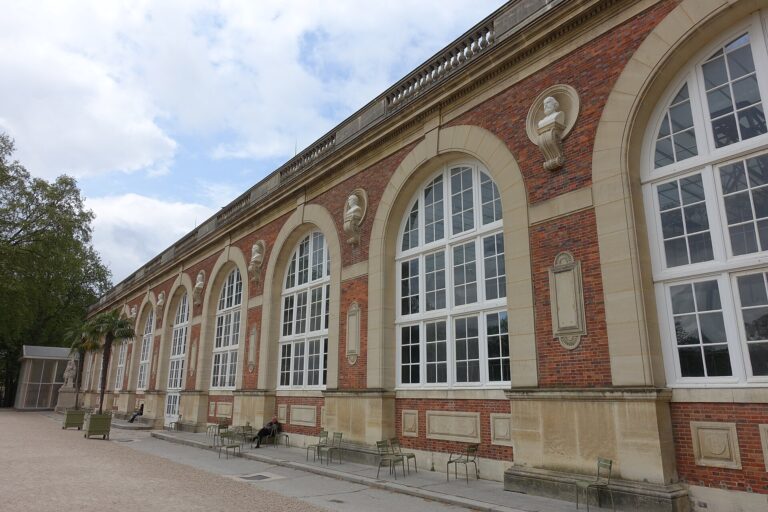
Visitors approaching the Musée Nissim de Camondo encounter a restrained yet elegant façade on Rue de Monceau, reflecting the mansion’s origins as a private home rather than a purpose-built public museum. The exterior is unassuming relative to many institutions in Paris but retains a classic refinement that signals the nature of the collection within. Upon entry, one is presented with an atmosphere that deliberately evokes intimacy and serves to frame the museum as a preserved aristocratic residence rather than a conventional museum gallery.
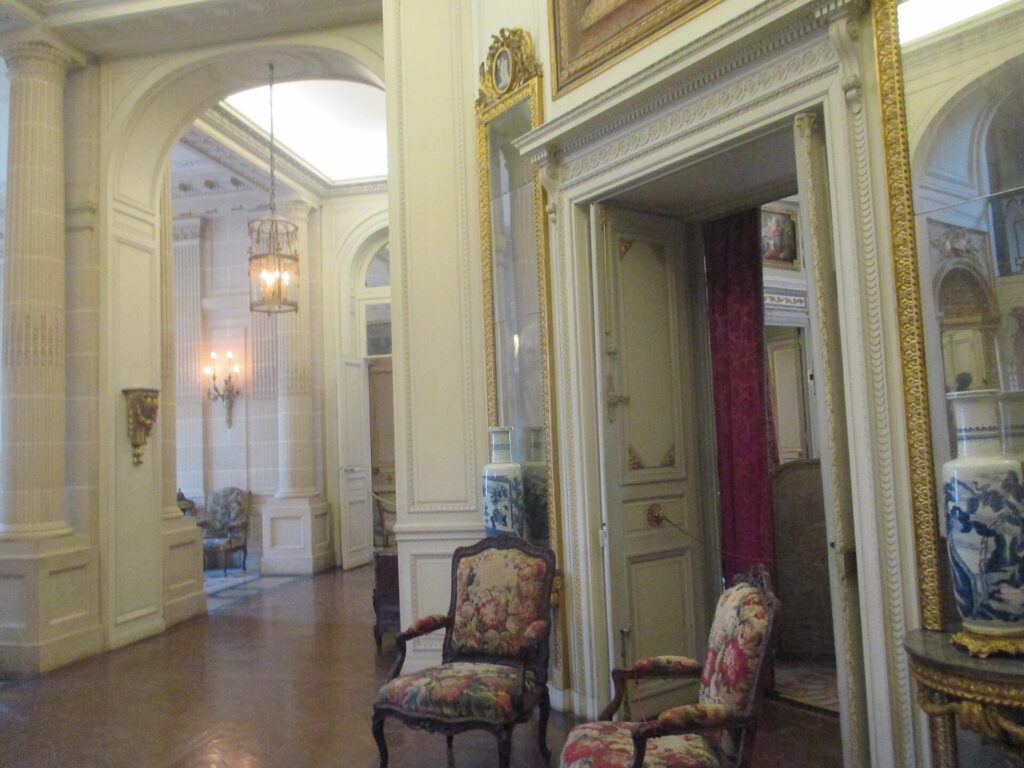
Inside, the visitor is drawn into a carefully staged domestic environment. The spatial arrangement is less about chronological progression and more about guiding the visitor through a sequence of rooms recreated to suggest their original function and decoration. The museum’s identity is deeply embedded in this reconstruction of aristocratic interiors, with furnishings and decorative elements positioned to convey a lived experience. This domestic framing helps situate the visitor within a specific social and cultural context, distinct from more typical white-walled exhibition spaces.
The impression on arrival is of stepping into a private world thoughtfully opened to the public. However, this very intimacy means that the museum’s scale is modest, with a concentrated experience that can feel quite focused and specific rather than broadly encyclopedic. The furniture, textiles, and objects of art that surround the visitor are not displayed as isolated artefacts but as integral components of historic interiors.
Highlights and Key Exhibitions
The core strength of Musée Nissim de Camondo lies in its disciplined and well-maintained collection of late 18th-century French decorative arts, presented within an architecturally authentic setting. A significant portion of the collection is derived from the type of aristocratic homes that typified pre-Revolutionary France, with an emphasis on exceptional examples of French furniture by notable cabinetmakers such as Jean-Henri Riesener. Riesener’s work represents the height of craftsmanship and luxury in cabinetry of the Louis XVI period, and his pieces here stand alongside other fine examples of inlaid marquetry and gilt bronze mounts.
The museum holds an impressive assembly of porcelain, including pieces from the Sèvres manufactory, whose delicate and precisely rendered decoration was favored among the elite. Visitors will also find exquisite silverware on display, which underscores the importance of dining ritual and hospitality in aristocratic life. These objects are more than ornate luxuries; they reflect the social customs and hierarchy of the time.
Paintings and tapestries further enrich the setting, although the collection’s primary focus remains firmly on the decorative arts rather than fine arts in isolation. The portraits and decorative wall hangings serve to visually unify the rooms and add a narrative texture to the domestic tableau. The integration of these elements makes the museum an illustrative case study in period interiors.
Beyond the objects themselves, the museum carefully preserves and presents the layout and ambience of the mansion, including spaces such as the dining room, bedrooms, and staircase. This architectural and spatial integrity offers insight into the hierarchical and functional aspect of aristocratic homes, shaped by formal requirements and social codes. The museum also contains a notable room devoted to personal mementos related to the Camondo family, which places the collection within a deeply personal and tragic story, reflecting the impact of war and the fragility of legacy.
While the museum does not frequently change its displays or hold large temporary exhibitions, this can be an advantage for visitors seeking an undisturbed and coherent experience of a well-defined historical period and style. It prioritizes depth and preservation over breadth or novelty.
Visitor Experience
The Musée Nissim de Camondo is likely to appeal most to those with a specific interest in decorative arts, European aristocratic culture, and period interiors. The staged nature of the museum requires visitors to be attentive to detail and willing to engage with objects in context rather than expecting a large-scale chronological or thematic survey. The museum’s scale means it can be explored comfortably in a few hours, but visitors should not expect expansive galleries or a wide-ranging collection.
Interpretive materials tend to focus on the history of the objects, their makers, and the family who owned them, without extensive digressions into broader historical or social narratives. This targeted approach makes the museum strong in its specialty but may feel limited for those hoping for a comprehensive account of French history or decorative arts beyond the narrow timeframe.
The flow through the mansion is generally straightforward, moving room to room between well-defined domestic spaces. This encourages a careful, paced experience, although some visitors may find that the format requires more patience and attentiveness than typical modern museum layouts. The spatial closeness, particularly in some of the more intimate rooms, can be a challenge during busy periods when visitor numbers increase, potentially affecting the sense of tranquility that the setting seeks to convey.
The museum’s atmosphere is quiet and reflective, with an emphasis on the aesthetic harmony of rooms. Photography policies and visitor regulations are strict, designed to protect the delicate surfaces and fabrics. While this is standard for house museums, it limits interactive engagement and social media sharing.
Overall, the museum is well suited for scholars, design professionals, and visitors who appreciate decorative arts craftsmanship and historical interiors presented as a unified tableau. General visitors with only casual interest may find the experience somewhat specialized and less accessible without prior knowledge or curiosity in the themes presented.
Tickets, Access, and Planning
Practical planning for a visit to the Musée Nissim de Camondo should begin with consulting the official website to confirm up-to-date information on opening hours, entry fees, and any booking requirements. The museum is located within central Paris, in a residential neighborhood close to Parc Monceau, and can be reached by public transport.
Because the museum is housed in a historical residence, visitors should be prepared for the typical constraints of such sites, including limited mobility access in some areas. The intimate room sizes might require queuing or waiting during periods of high visitor volume, so choosing less busy times is advisable.
The museum does not generally offer extensive on-site visitor services such as cafés or shops, reflecting its compact scale and residential character. Visitors who wish to tour with guidance or audio information should verify the availability of such options through the museum’s official channels before visiting.
Visitors interested in the specific focus on French decorative arts or aristocratic domestic culture will find the museum rewarding, but those looking for a broader museological experience might consider complementing this visit with other Paris museums that cover art history, fine arts, or more contemporary collections.
Final Verdict
The Musée Nissim de Camondo stands as a distinctive institution focused on the preservation and presentation of French aristocratic decorative arts within the context of a historically inspired early 20th-century mansion. Its strengths lie in the quality and coherence of its collection and the painstaking reconstruction of period interiors that give the objects a contextual home beyond display cases.
This museum offers a concentrated and well-defined experience, rooted in craftsmanship and historical ambiance. It is best suited for visitors with a clear interest in decorative arts, furniture design, or the details of aristocratic life in 18th century France, as well as those who appreciate the poignancy of the Camondo family history.
However, the museum might feel somewhat narrow in scope for visitors seeking a broad overview of French art or history, and the modest scale requires careful timing to avoid crowds. The focus on period authenticity and restrained interpretation means there is little in the way of interactive or contemporary museum features.
Ultimately, the Musée Nissim de Camondo is a carefully preserved cultural snapshot that offers depth on its specialized themes. It is a valuable addition to the cultural landscape of Paris, particularly for those interested in the material culture of a vanished social world and the personal histories embedded in art collecting. Those planning a visit should prepare for a serene but selective museum experience and consult official sources to ensure a smooth and informed trip.