Scuola Grande di San Rocco Review
Art Museums · Venice, Italy. The Scuola Grande di San Rocco in Venice stands as a monument to the city’s rich Renaissance cultural life, deeply intertwined with its confraternal traditions. Founded in 1478, the Scuola Grande was one of…
Art Museums · Venice, Italy. The Scuola Grande di San Rocco in Venice stands as a monument to the city’s rich Renaissance cultural life, deeply intertwined with its confraternal traditions. Founded in 1478, the Scuola Grande was one of…
Best forMuseum lovers, culture travelers, first-time visitors
Review focusCollections, visitor experience, and practical planning
Historical Context
The Scuola Grande di San Rocco in Venice stands as a monument to the city’s rich Renaissance cultural life, deeply intertwined with its confraternal traditions. Founded in 1478, the Scuola Grande was one of Venice’s most important lay brotherhoods, devoted to charitable work and religious observance. It was dedicated to Saint Roch, the patron saint invoked against plague, a fitting focus for a city that had endured numerous outbreaks over the centuries. Beyond its social and spiritual roles, the Scuola became synonymous with artistic patronage during the Renaissance, largely due to its remarkable collection of works by Tintoretto.
Venice’s scuole grandi (great schools) were secular lay institutions often engaged in charitable activities, but also served as venues for civic pride and artistic display. The Scuola Grande di San Rocco developed as a key location for these dual roles. The current building, primarily dating from the early 16th century, replaced earlier structures and was designed to accommodate both assembly and exhibition of the rich artistic commissions the confraternity undertook. The building’s fabric and decoration reflect Venice’s blend of religious devotion, art, and political autonomy during the Renaissance. The ensemble of paintings by Tintoretto—commissioned over a twenty-year period starting in the 1560s—secured the Scuola’s reputation, providing a thematic narrative grounded in biblical and saintly subjects, which illustrates both theological depth and Venetian aesthetic innovation.
What You See on Arrival
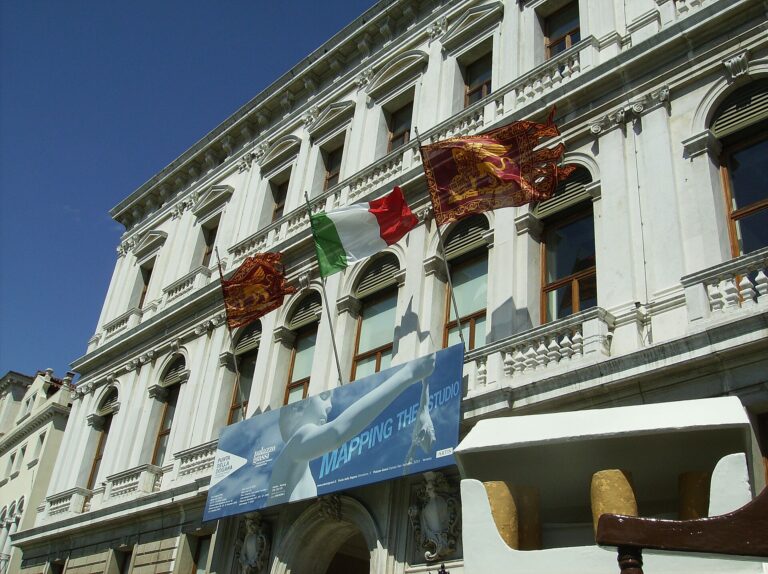
Approaching the Scuola Grande di San Rocco situates visitors within the densely woven urban fabric of Venice, near the bustling Campo San Rocco. The building’s façade is relatively restrained by Venetian standards. It presents a sober, aged stone exterior, set in harmony with the surrounding Renaissance palaces and civic structures. The architectural style resists grandiosity, fitting the gravity and function of the institution rather than overt opulence. This initial impression primes visitors for an interior experience centered on solemn veneration and art rather than architectural spectacle alone.
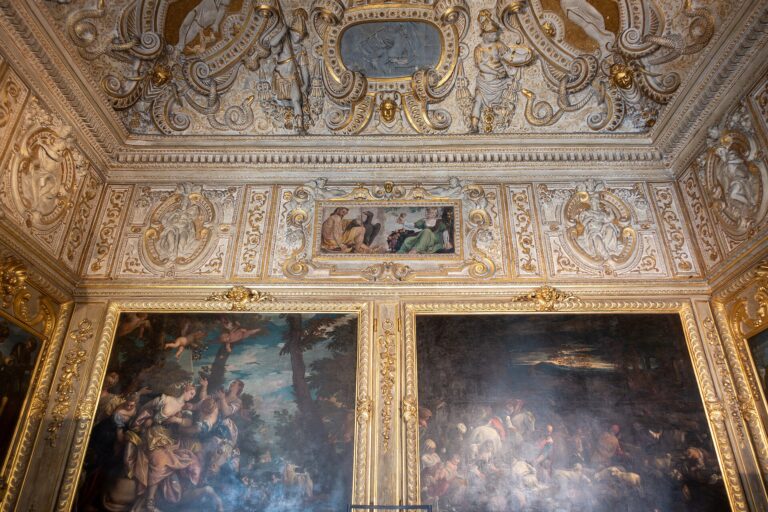
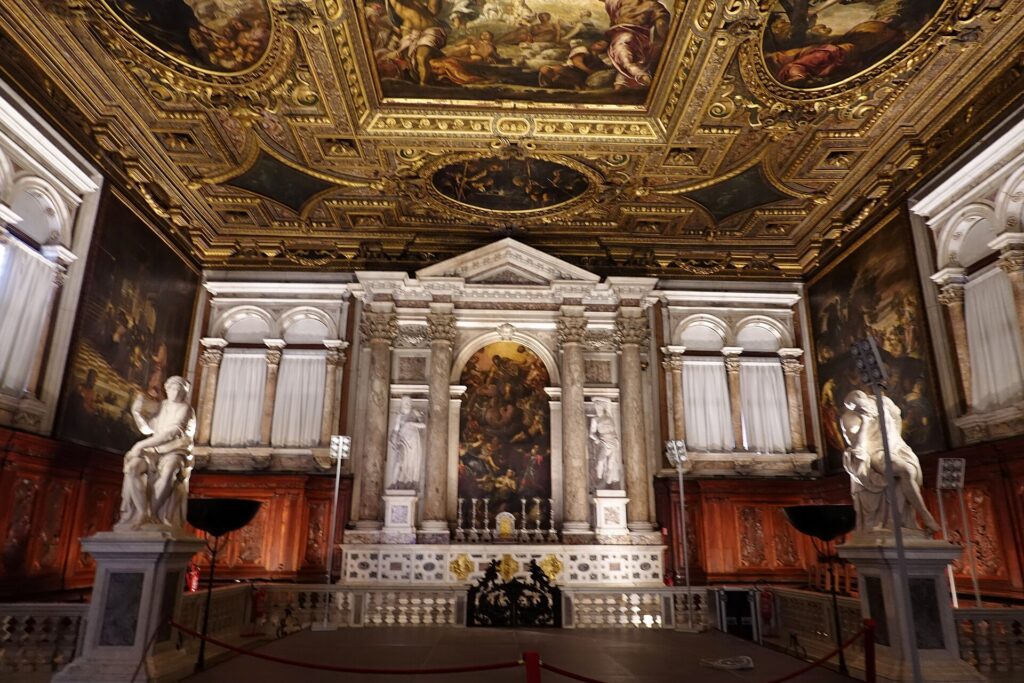
Once inside, the spatial rhythm of the Scuola emerges clearly. The interior’s long rectangular hall, known as the Sala dell’Albergo, is the building’s main ceremonial space. Here the walls and ceilings offer the first sight of the extensive painting program. Visitors confront large canvases and ceiling panels that dominate the space, arranged in a sequence that connects narrative scenes from the Old and New Testaments to episodes in the life of Saint Roch. The effect is a visual immersion in biblical and saintly drama, framed by the architectural structure that supports contemplation and assembly. The layout lacks the complexity or compartmentalization seen in some Venetian palazzi, allowing for a relatively straightforward visitor path.
Highlights and Key Exhibitions
The central attraction of the Scuola Grande di San Rocco is the extraordinary cycle of paintings by Tintoretto, which occupies both walls and ceilings of the main hall and adjoining rooms. This body of work spans approximately twenty years, mainly produced between 1564 and 1587, and is widely regarded as one of the artist’s most ambitious and cohesive projects.
Tintoretto’s work here is characterized by its dramatic use of light and shadow, intense emotional expression, and dynamic compositions. The paintings depict a comprehensive selection of biblical narratives, with important emphasis on scenes from the Old Testament such as the “Creation of the Animals” and the “Fall of Man,” alongside New Testament episodes including the “Crucifixion” and the “Last Judgment.” These biblical subjects are interwoven with the thematic presence of Saint Roch, whose life and miracles are illustrated in numerous panels. This emphasis on Saint Roch reflects both the confraternity’s dedication and the historical context of Venice’s relationship to outbreaks of plague, where hope and protection were sought through religious intercession.
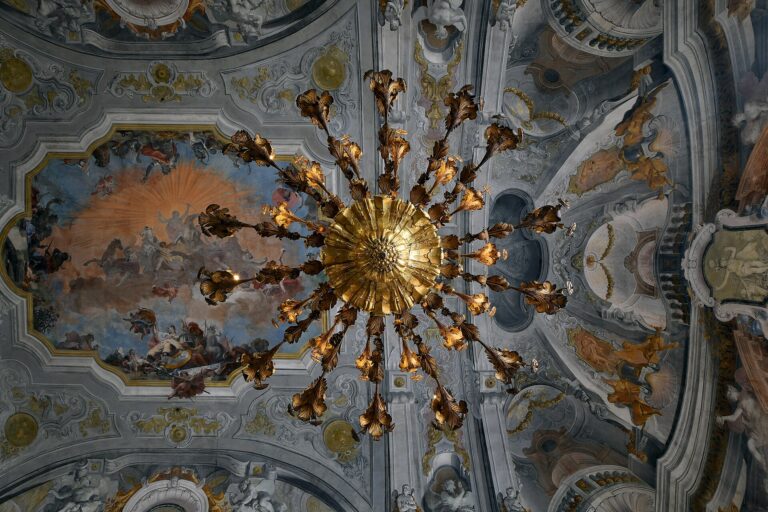
The ceiling paintings command particular attention for their complexity and scale. Panting panels depict scenes of divine intervention and human drama with a theatrical energy that captures the Renaissance Venetian spiritual mindset alongside Tintoretto’s personal stylistic evolution. Some of the most notable works include the “Miracle of the Bronze Serpent” and “The Adoration of the Golden Calf,” which demonstrate his mastery of narrative density and chiaroscuro effects.
Beyond the Tintoretto cycle, the Scuola also preserves its original wooden furniture and decorative elements that enhance the sense of historic continuity. These fixtures include intricately carved benches and a richly decorated wooden gallery, which combine to provide a context for how the space served both functional and ceremonial purposes.
Overall, the collection is unique because it is not a disparate gathering of objects but a unified artistic environment created for the confraternity’s devotional and public functions. Viewers looking for Venetian Renaissance painting within its original setting will find here an exceptional example of religious narrative art integrated with architecture.
Visitor Experience
The visit to the Scuola Grande di San Rocco is typically a contemplative, visual experience focused on the appreciation of Tintoretto’s large-scale majesty and the architectural setting. Due to the linear arrangement of the main room and adjoining spaces, visitors can follow a clear viewing route, which helps in understanding the narrative flow and thematic connections between paintings. This straightforward circulation also aids in accommodating groups without losing the sense of intimacy.
Interpretation within the Scuola is generally handled through wall labels and some bilingual text panels, explaining the biblical stories and the life of Saint Roch. However, the museum does not offer extensive multimedia or interactive displays. This means that visitors with little prior knowledge of Venetian history or Renaissance art may find it more challenging to fully contextualize the works without external preparation. Nonetheless, the sheer scale and emotional impact of the paintings often engage a broad audience.
The space tends not to be crowded compared to Venice’s more frequented art museums, which benefits those wishing to absorb the art at their own pace. However, because of the building’s setting on a main thoroughfare and its relatively compact interior, some background noise and distractions are possible.
The museum draws a diverse range of visitors, including art historians, Renaissance enthusiasts, religious pilgrims, and tourists interested in Venice’s cultural heritage. Scholars and students will appreciate the availability of an unaltered context for Tintoretto’s work, as few other locations preserve such a comprehensive original commission.
However, the Scuola might not suit visitors seeking a wide variety of art forms or thematic variety beyond religious painting. Those expecting large collections of sculptures, decorative arts, or multi-period objects should be aware that the focus here remains predominantly on the Tintoretto fresco cycle and related Renaissance elements.
Tickets, Access, and Planning
Given the historical and cultural significance of the Scuola Grande di San Rocco, it attracts steady visitor interest throughout the year. Entrance and visitor policies, along with opening hours, may vary according to the season, local events, or conservation needs.
Since specific practical information such as ticket prices, opening times, and access facilities was not available for this review, readers planning a visit are advised to consult the official Scuola Grande di San Rocco website or authorized Venice tourism resources directly before making arrangements. This ensures the most accurate and updated details regarding admission, any necessary advance booking, available guided tours, or accessibility provisions.
Venice’s complex urban fabric means that arriving at the Scuola often involves walking through narrow streets or crossing canals. Public transport, particularly vaporetto (waterbus) lines serving the nearby stops, is the primary means of access. Personal car access or parking near the landmark is not practical. Visitors should plan accordingly, especially if mobility is a consideration.
Final Verdict
The Scuola Grande di San Rocco offers a focused, singular experience centered on Tintoretto’s remarkable fresco cycle, housed within a setting that has retained much of its original Renaissance character. This combination makes it an important destination for those interested in Venetian art, religious history, and the interplay between painting and architectural context.
The museum’s strength lies in the quality and cohesion of its Tintoretto collection, which provides insight into the artistic and devotional life of Renaissance Venice. While the building’s exterior presence might appear modest, the interior reveals a powerful narrative environment where art and spirituality intersect. For visitors who appreciate large-scale Renaissance painting and the history of Venetian confraternities, the Scuola provides a concentrated and richly rewarding encounter.
On the other hand, the site may present challenges for visitors unfamiliar with biblical stories or Renaissance Venice due to limited interpretive aids beyond written labels. Also, because the collection focuses predominantly on religious painting by a single artist, it does not offer broad stylistic or period diversity. Practical factors such as arrival logistics and fluctuating visitor flow should be kept in mind when planning a visit.
Overall, the Scuola Grande di San Rocco stands out as an institution that preserves a sharply defined moment of Venetian cultural and artistic history, presented in a setting that remains close to its original function and atmosphere. It should be approached with realistic expectations and some preparatory knowledge to gain the fullest appreciation.