Istanbul Archaeological Museums Review
Historical Context
The Istanbul Archaeological Museums occupy a distinctive position within both the cultural landscape of Istanbul and the broader narrative of archaeology in Turkey. Founded in the late 19th century under the auspices of Osman Hamdi Bey, a pioneering figure who combined artistic and archaeological expertise, the museum complex emerged from a period when Ottoman authorities began to actively collect and preserve artifacts that reflected the empire’s diverse heritage. This era marked a shift towards institutionalized archaeology and museum culture within the region, coinciding with global trends in national heritage preservation.
The complex, located near the outer walls of the Topkapi Palace, showcases extensive collections accumulated over more than a century, originating from excavations across Anatolia, the Middle East, and beyond. These collections reflect the rich tapestry of civilizations that have occupied or influenced what is today Turkey, from the Bronze Age through the Classical period and into later epochs. The museum’s establishment and expansion were critical steps in transitioning local antiquities from private possession and sometimes unregulated trade into publicly curated history.
While the institution’s holdings have been influenced by 19th and 20th-century archaeological practices and collecting priorities that emphasized monumental and classical antiquities, the Istanbul Archaeological Museums remain a crucial reference point for understanding the continuity and complexity of ancient societies in the region. Its status as a public cultural institution within a modern Turkish state connects historic scholarship with contemporary national identity and international heritage discourse.
What You See on Arrival
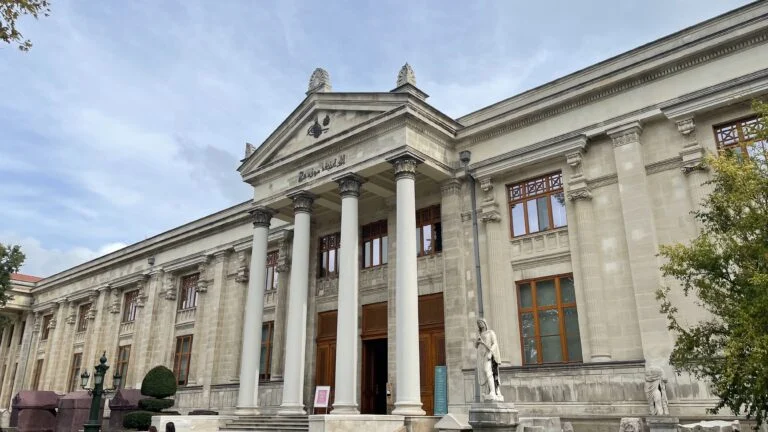
Visitors approaching the Istanbul Archaeological Museums encounter a complex of buildings that articulate a mix of architectural styles, primarily from the late Ottoman period, alongside later 20th-century additions. The site’s setting near Gülhane Park and Topkapi Palace situates it firmly within a historical district dense with layers of Istanbul’s multicultural past.
The entrance area and façade communicate a serious focus on archaeology, featuring decorative elements and inscriptions that reflect the museum’s founding ethos and connection to Ottoman intellectual circles. This framing makes clear that the museum is less a modern, minimalist exhibition space and more a historic institution rooted in an earlier museological tradition. As such, it prepares visitors for an experience that privileges extensive, sometimes densely arranged displays over interpretative minimalism.
Inside, the visitor is directed towards a series of galleries housed across three main buildings: the Archaeological Museum proper, the Museum of the Ancient Orient, and the Tiled Kiosk Museum. The complex’s somewhat sprawling layout underscores its development over time and requires a degree of orientation, as visitors shift between distinct parts that vary in thematic focus and display style.
Highlights and Key Exhibitions
The Istanbul Archaeological Museums’ greatest strength lies in its diverse and historically significant collections. The Archaeological Museum serves as the core, housing artifacts that span prehistoric times through the Roman and Byzantine periods. Here, the visitor will encounter a vast array of objects including sculptures, sarcophagi, ceramics, coins, and inscriptions. Among the most notable is the Alexander Sarcophagus, an imposing limestone piece once thought to be linked directly to Alexander the Great, which exemplifies the skill and artistry of late Classical period sculptors in the region. The detail and preservation of this sarcophagus make it a key draw for those interested in Hellenistic art and funerary practices.
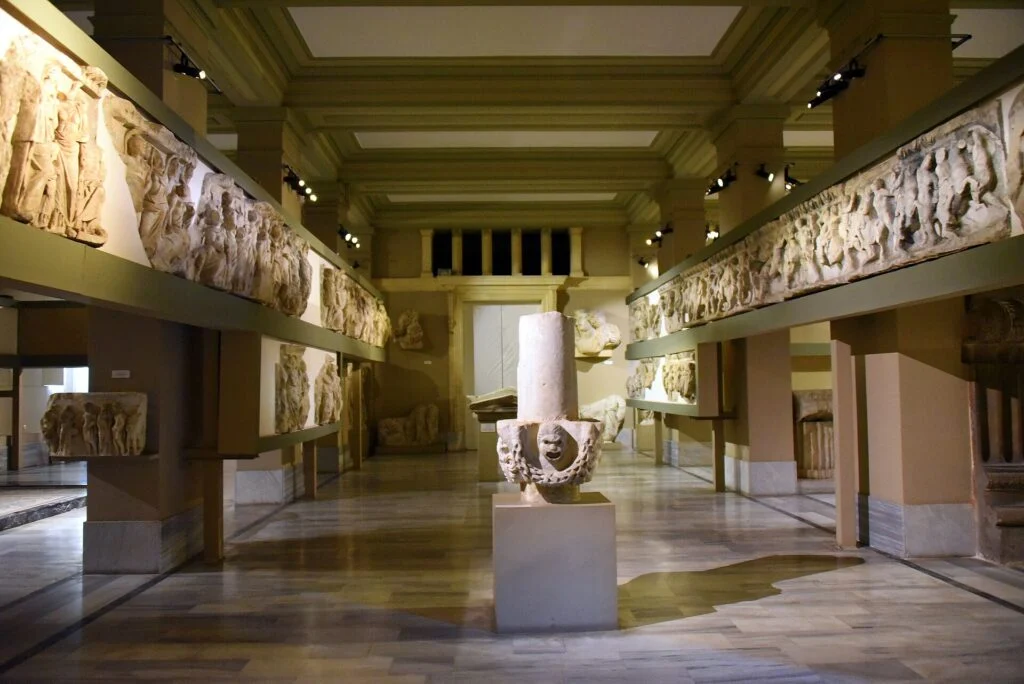
Another focal point in the Archaeological Museum is its collection of funerary artifacts and reliefs from various Anatolian sites, particularly ones uncovered during early 20th-century excavations. These items provide insight into the funerary customs, beliefs, and artistic conventions of diverse cultures including the Lydians, Phrygians, and Urartians. The inclusion of artefacts from different ethnic and cultural groups highlights the museum’s attempt to present a wide geographical and chronological scope rather than a single cultural narrative.
The Museum of the Ancient Orient offers a complementary perspective, displaying objects from Mesopotamia, Egypt, Cyprus, and the Levant. This section provides visitors with important context for understanding the cultural interactions and trade networks that shaped the ancient Near East. Here, cuneiform tablets, cylinder seals, reliefs, and statues shed light on civilizations such as the Sumerians, Assyrians, and Hittites. The collection is valuable not only for ancient art but for its documentation of early written records and administrative systems.
The Tiled Kiosk Museum, smaller and more specialized, focuses on Ottoman and Seljuk ceramic art, illustrating the importance of pottery and tilework in Islamic architectural decoration. This contrasts with the primarily archaeological focus of the other buildings, offering a glimpse into later periods and a different artistic medium.
Together, these three components allow the Istanbul Archaeological Museums to present a broad narrative of human civilization in the region, from prehistory and antiquity through to the Islamic periods. However, the layout and display conventions remain traditional: artifacts are grouped by geography and period, often densely arranged in glass cases or on walls, sometimes with explanatory texts that may not always engage the modern visitor seeking interactive or multimedia engagement.
Visitor Experience
The Istanbul Archaeological Museums meet the needs of visitors who have a particular interest in archaeology, ancient art, and Near Eastern history. The intellectual weight of the collections requires a willingness to engage carefully with sometimes detailed and text-heavy labels. This can be rewarding for visitors who enjoy examining objects closely and who are prepared to spend time understanding chronological and cultural contexts.
Because the museum complex consists of multiple buildings with separate entrances, visitors should plan their route to cover all sections efficiently. The spacing between buildings and the variable conditions of display spaces suggest the need for a moderate level of stamina and time. Those with mobility concerns might need to check current accessibility arrangements before attending, as the historic nature of many museum spaces can present challenges.
Interpretation is more traditional than contemporary. While some labels offer bilingual information, the presentation does not rely heavily on digital guides or interactive displays. This can be seen as a strength by those who prefer a more classic museum experience, but it may feel limited to visitors expecting a more multimedia-driven narrative. The museum’s tone remains scholarly without alienating a general audience, but children and casual tourists may find some exhibits less immediately engaging.
Visitor flow can vary depending on season, but the museum’s layout, with multiple discrete buildings, helps disperse crowds. Still, visitors should anticipate some level of navigation complexity and may benefit from advance research or a map upon arrival. Photography policies should be confirmed ahead of time through official sources.
Tickets, Access, and Planning
Prospective visitors are advised to consult the official Istanbul Archaeological Museums website for current information on tickets, opening hours, and any special access arrangements. Admission policies, including discounts and group bookings, can change, as can access provisions for mobility-impaired visitors or those requiring assistance.
The multiple-building arrangement of the museum means that clear wayfinding and some on-site orientation aids are helpful. Checking current plans and visitor services before arrival enhances the experience, especially given that signage within the complex may not always be straightforward for first-time visitors.
For those planning their visit from outside Istanbul or internationally, the museum’s location near historic districts means it is accessible by a range of local transport options. However, exact travel times and convenience depend on traffic and time of day, so consideration should be made for planning to maximize time at the museum without unnecessary rush.
Final Verdict
The Istanbul Archaeological Museums hold a significant place among cultural institutions in Turkey, offering one of the region’s most comprehensive collections of artifacts spanning multiple epochs and civilizations. The museum is particularly valuable for its breadth, from Anatolian prehistory to Ancient Near Eastern inscriptions, as well as its possession of unique and historically important objects like the Alexander Sarcophagus.
The museum is best suited to visitors with a genuine interest in archaeology and history, willing to navigate a traditional museum environment where displays emphasize quantity and scholarly detail over modern interactive presentation. Its historic buildings and somewhat dense exhibition style may require visitors to dedicate careful time and some effort for full appreciation.
Limitations include the potentially challenging navigation among multiple buildings, the reliance on conventional interpretive methods without extensive multimedia support, and the need for up-to-date practical planning based on official sources. Despite this, the Istanbul Archaeological Museums remain a critical destination for understanding the ancient cultures of the Anatolian and Near Eastern regions within their historical geographic context.
In summary, those seeking depth and historic scope will find much to explore in this museum complex, while visitors looking for a highly accessible, multimedia-rich, or casual experience might encounter some limitations. Proper planning and a clear interest in archaeology will most enhance one’s encounter with the museums’ extensive and important collections.