Es Baluard Museu d’Art Contemporani de Palma Review
Art Museums · Palma, Spain. Es Baluard Museu d'Art Contemporani de Palma is located in Palma, the capital of the Balearic Islands in Spain. The museum opened in 2004 and has since established itself as a significant cultural institution…
Art Museums · Palma, Spain. Es Baluard Museu d'Art Contemporani de Palma is located in Palma, the capital of the Balearic Islands in Spain. The museum opened in 2004 and has since established itself as a significant cultural institution…
Best forArt lovers, visual culture, architecture
Review focusCollections, curatorial focus, and visitor planning
Historical Context
Es Baluard Museu d'Art Contemporani de Palma is located in Palma, the capital of the Balearic Islands in Spain. The museum opened in 2004 and has since established itself as a significant cultural institution dedicated primarily to modern and contemporary art. Its name, “Es Baluard,” refers to the historical bastion of the city’s ancient fortifications, upon which part of the museum is constructively integrated. This unique positioning within a structure that blends military architecture with modern design reflects a dialogue between history and contemporary creative expression. The museum’s foundation was motivated by the desire to create a space that showcases local, national, and international artists who have shaped artistic trends from the twentieth century onwards.
The collection itself has expanded over the years through acquisitions, donations, and collaborations, emphasizing artists connected to the Balearic Islands or whose work resonates with the region’s cultural identity. It aims to provide an account of contemporary art movements, including abstract art, conceptual art, minimalism, and postmodern practices, among others. Es Baluard also seeks to engage with critical debates about art’s role in society, maintaining an active program of exhibitions, education, and community outreach. The museum’s blend of historical architecture and a modern collection offers a distinctive case study in how museums in historic urban centers rethink their relationship to the past and present.
What You See on Arrival
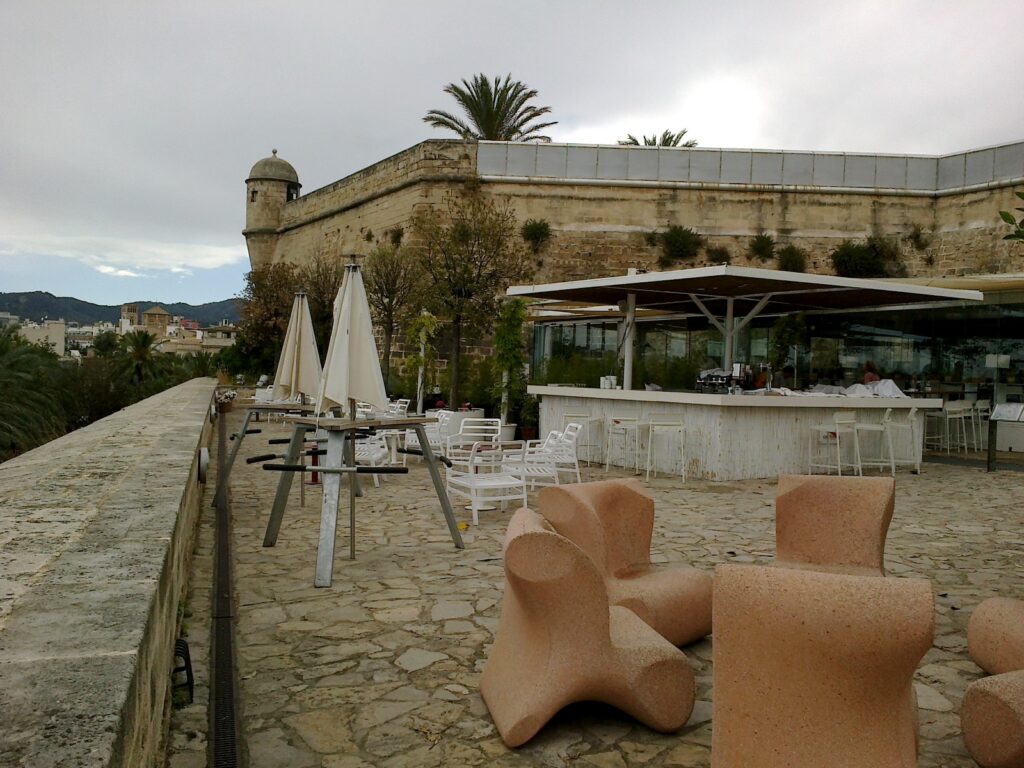
Approaching Es Baluard, visitors first encounter an arresting example of architectural contrast. The museum occupies a section of the old city walls, transforming what was a defensive bastion into a cultural landmark. This melding of old stone fortifications with smooth contemporary volumes and large glass surfaces creates a striking visual impact, signaling the museum’s dedication to both preservation and innovation. The building’s design invites contemplation of its place within the city’s layered urban fabric.
The entrance area generally conveys a calm, spacious feeling, oriented towards welcoming a steady stream of visitors without congestion. Views through large windows offer glimpses of Palma’s harbor and cityscape, situating visitors visually and contextually within the Mediterranean environment from the moment they arrive. The museum’s external terraces and walkways flow naturally from the interior galleries, allowing a spatial shift between contained and open-air experiences.
The museum presents itself clearly as a contemporary art institution with a local emphasis. Signage and introductory panels give insight into the bastion’s original defensive purposes and its transformation into a museum. This framing encourages visitors to consider how the location and architecture contribute to understanding the works inside. The building, while modernist in its updates, does not overshadow the art but rather supports a narrative where history and contemporary practice are related through physical and conceptual proximity.
Highlights and Key Exhibitions
Es Baluard holds a collection that centers on twentieth and twenty-first-century art with a particular focus on artists connected to the Balearic Islands and the wider Spanish context. The breadth of the collection allows for a layered narrative on the development of modern and contemporary art movements.
Among the core holdings are works by significant Spanish artists such as Joan Miró, who, although born in Catalonia, has close ties to the Balearic Islands—his playful abstraction and poetic forms are a key part of the collection. Miró’s pieces offer insight into Spanish modernism and surrealist tendencies, often exhibiting a Mediterranean palette and symbolism. Alongside Miró, the museum features pieces by Miquel Barceló, an artist from Mallorca whose inventive use of materials and textures creates a dialogue between the island’s landscape and contemporary artistic experimentation. Barceló’s works often challenge traditional painting methods, presenting layered surfaces that reveal changes over time.
The collection is not limited to regional artists. It includes notable Spanish artists of the 20th century such as Antoni Tàpies, whose textured, abstract canvases engage deeply with Mediterranean materiality and philosophical themes. Additionally, international artists of prominence who have contributed to major dialogues in conceptual art, abstraction, and minimalism are represented, offering visitors a broader context within which to situate Balearic art.
Es Baluard also dedicates significant attention to new media and experimental forms, reflecting ongoing trends in contemporary artistic production. This includes video art, installations, and mixed-media works, which complicate traditional boundaries between disciplines. The museum’s commitment to these forms helps communicate the evolving nature of art in the contemporary era.
In terms of curatorial approach, the museum tends to organize exhibitions thematically or by artistic movements rather than chronologically. This method allows for cross-referencing between artists and styles, helping visitors spot continuities and ruptures in artistic development. While the permanent collection reveals depth in Mediterranean and Spanish art, the museum’s temporary exhibitions usually complement or question these themes, encouraging dialogue between past and present.
Visitor Experience
The layout of Es Baluard reflects its hybrid architectural identity, with galleries arranged in a way that balances the constraints of the historic bastion with the needs of displaying contemporary art. The varied ceiling heights and irregular gallery shapes sometimes create encounters that differ from conventional white cube spaces. This can be advantageously used to highlight particular works or create moments of intimacy. At times, the integration of the old structure can limit the placement options for large-scale pieces, but the museum generally manages these challenges well through thoughtful curation.
Interpretation at the museum is directed towards an audience that ranges from general visitors to those with some existing knowledge of contemporary art. Wall labels and exhibition texts are clear and informative, though rarely simplified to the point of losing critical nuance. This approach suits an intellectually curious visitor willing to engage with the material in some detail. However, the museum’s content may feel dense for people unfamiliar with the movements or artists featured, meaning that some visitors might benefit from external preparation or guided support.
The scale of Es Baluard is manageable; it neither overwhelms with excess nor feels sparse. Visitor flow is generally smooth, avoiding bottlenecks thanks to spacious galleries and multiple routes through the building. The connection to outdoor terraces and the views they afford provides natural breaks and moments for reflection, which can help prevent fatigue during longer visits.
For families or casual visitors, the museum offers a quieter experience focused on visual engagement and appreciation. The variety in media—from painting and sculpture to video and installation—caters to different preferences, though those interested primarily in classical art might find the museum’s modern and contemporary focus less approachable. Educational programs and workshops are part of the museum’s broader remit, visible in various signage and occasional on-site activities, but specific offerings should be verified in advance.
Tickets, Access, and Planning
Practical details such as opening hours, admission fees, discounts, and guided tours are subject to change and should be confirmed via Es Baluard’s official website before planning a visit. The museum is positioned within Palma’s city center, accessible via public transport and walkable routes from key points in the town. Given its location in a historic fortification with modern architectural elements, some areas may present accessibility challenges. Information on facilities for visitors with reduced mobility should be sought directly from the museum’s administration.
Because the museum can attract a diverse audience—from tourists exploring Palma to locals involved in artistic circles—visitor numbers may fluctuate seasonally. This makes pre-planning advisable, especially during peak tourist periods. Reservations or ticket purchases online, if available, could streamline entry, but current policies should be established beforehand.
The museum’s available resources, such as explanatory material and potentially audio guides, vary and are best checked closer to the intended time of visit. For visitors who want to maximize their understanding, preparatory reading on the region’s art scene or the featured artists might enhance the experience.
Final Verdict
Es Baluard Museu d'Art Contemporani de Palma stands as a distinctive institution that intertwines the historical fabric of Palma with the dynamism of contemporary artistic production. It succeeds in creating a dialogue between place and art by situating a significant modern and contemporary collection within a bastion that once served as a city defense. This architectural and curatorial juxtaposition enriches the visitor’s journey through twentieth and twenty-first-century art with a sense of continuity and transformation.
The museum’s strengths lie in its strong holdings of Balearic and Spanish modernist and contemporary artists, including key figures whose works are pivotal for understanding the region’s contribution to broader art movements. The collection’s diversity—ranging through painting, sculpture, conceptual art, and new media—ensures that a variety of artistic languages are represented, though its general emphasis remains on more experimental and less traditional currents. The museum’s curatorial approach, favoring thematic explorations over strict chronology, provides an accessible framework but occasionally demands attentive visitors willing to engage closely with the interpretive materials provided.
For visitors who are keen on contemporary art with a regional and national focus, Es Baluard offers a rewarding experience. It serves well those interested in the dialogue between historical context and cutting-edge artistic practice. However, it may not fully satisfy those looking for a comprehensive history of Spanish art beyond the modern and contemporary periods or those expecting the conventional museum formats of classical antiquities or Renaissance art.
Planning a visit requires some caution: practical details such as opening times, ticketing, accessibility provisions, and additional visitor services should be confirmed through official channels. The museum’s city-center location is convenient but subject to typical urban traffic and seasonal visitor fluctuations.
Overall, Es Baluard Museu d'Art Contemporani de Palma presents a clear and thoughtfully curated perspective on the contemporary artistic landscape of Palma and its surroundings. It invites visitors to consider how art evolves in conversation with place without overwhelming them with unnecessary spectacle. For those with a genuine interest in the trajectories of modern and contemporary art in Spain, it is a valuable institution that deserves consideration as part of Palma’s cultural itinerary.