Zhejiang Provincial Museum Review
Archaeology Museums · Hangzhou, China. The Zhejiang Provincial Museum, located in Hangzhou, China, serves as the principal cultural institution highlighting the rich heritage of Zhejiang Province and its significant place in Chinese history. Established initially in the early 20th…
Archaeology Museums · Hangzhou, China. The Zhejiang Provincial Museum, located in Hangzhou, China, serves as the principal cultural institution highlighting the rich heritage of Zhejiang Province and its significant place in Chinese history. Established initially in the early 20th…
Best forMuseum lovers, culture travelers, first-time visitors
Review focusCollections, visitor experience, and practical planning
Historical Context
The Zhejiang Provincial Museum, located in Hangzhou, China, serves as the principal cultural institution highlighting the rich heritage of Zhejiang Province and its significant place in Chinese history. Established initially in the early 20th century and later expanded and relocated, the museum reflects the region’s continuous evolution from an imperial seat through periods of economic and cultural prosperity, particularly during the Southern Song Dynasty. Hangzhou itself, historically known as Lin’an, was once the capital of the Southern Song, making the city and consequently the museum a natural center for preserving artifacts related to that era and beyond.
The museum became known for its efforts to document the cultural, artistic, and technological achievements of Zhejiang’s diverse communities across different historical periods. Given Zhejiang’s role as a maritime and commercial hub, its museums tend to focus not only on dynastic histories but also on material culture that reflects trade, craftsmanship, and everyday life in eastern China. It contributes to regional identity by assembling collections that showcase Tang to Qing dynasty artifacts alongside ancient relics from prehistory, all curated with a local focus that hyperlinks broader Chinese history.
In recent decades, the Zhejiang Provincial Museum expanded its facilities and upgraded its research and exhibition capabilities to better accommodate the increasing number of visitors and attention it receives in the heritage preservation community. This progression has helped the museum position itself as a key repository for scholars and the general public interested in Zhejiang’s past, contributing to Hangzhou’s cultural tourism infrastructure.
What You See on Arrival
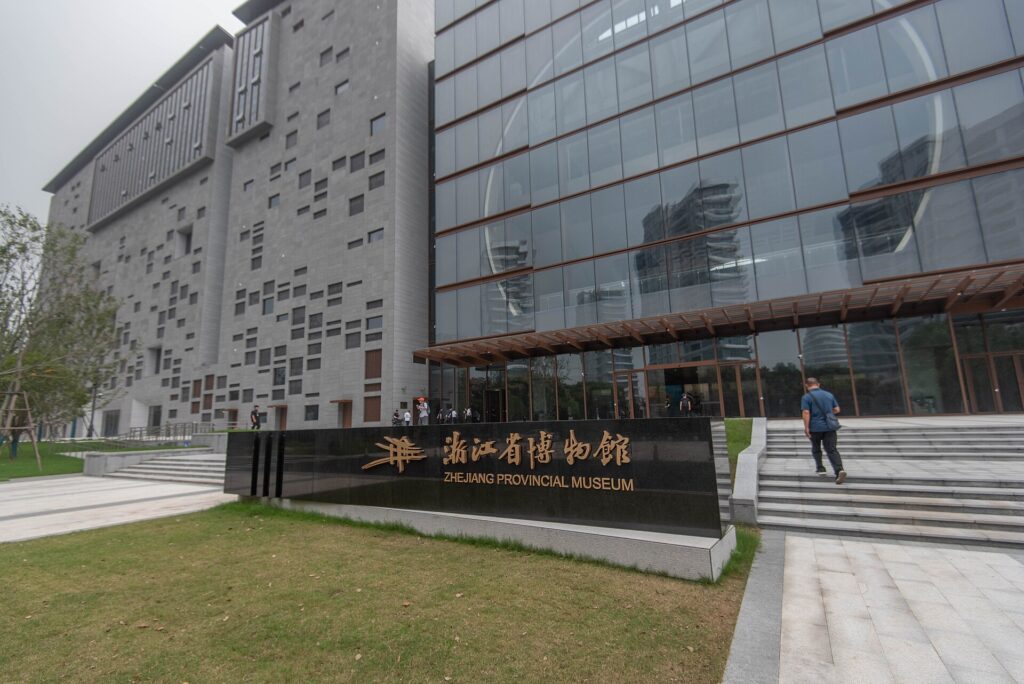
Approaching the Zhejiang Provincial Museum introduces visitors to a modern architectural complex set within a landscaped environment that hints at traditional Chinese garden aesthetics, contextualizing the museum’s role as a cultural site bridging past and present. The building itself is designed to convey a sense of solidity and calm, with its clean lines and use of stone and glass materials inviting reflection on the artifacts housed within.
The museum’s layout and entrance space emphasize open, welcoming areas designed for visitor orientation and a sense of arrival, rather than presenting an overwhelming or flamboyant facade. This initial impression frames the museum as an institution focused on scholarly preservation and public education rather than entertainment spectacle. Where possible, the exterior spaces offer seating and shaded areas, subtly encouraging visitors to transition from the bustling urban surroundings to a slower, more contemplative mode suited to museum exploration.
Visual cues, such as signage and outdoor display boards, align with the museum’s brand identity as a center devoted to the history and culture of Zhejiang Province. The entrance experience is practical and clear, preparing visitors for the thematic journeys inside. The design language supports a museum atmosphere that prioritizes contemplation and cultural immersion, projecting a calm, orderly space dedicated to heritage.
Highlights and Key Exhibitions
The core strength of the Zhejiang Provincial Museum lies in its collections, which survey an expansive timeline covering thousands of years of both regional and national history. A particularly significant focus is on artifacts from the Neolithic period found in Zhejiang, which illustrate the early development of agriculture, pottery, and social organization in the region. These foundational displays provide crucial context for understanding Zhejiang’s role in the broader narrative of Chinese civilization.
The museum is well-known for its assemblage of items from the Southern Song Dynasty, reflecting Hangzhou’s period as an imperial capital. This includes exquisite ceramics, paintings, calligraphy, and everyday utensils that offer insight into the sophisticated urban culture of the time. The ceramics section, in particular, contains notable examples from local kilns, including delicately decorated porcelains that reveal technical mastery and artistic innovation distinctive to the Zhejiang area. These items help to position Hangzhou not only as a political center but also as a city of artistic refinement.
Equally noteworthy are the collections documenting Zhejiang’s cultural interactions through maritime trade. These exhibits feature objects related to the ancient Silk Road by sea, such as bronze wares and foreign imports, highlighting Zhejiang’s historical global connections. This maritime angle adds a dimension of economic and cultural exchange much broader than the typical dynasty-centric narrative.
Additional galleries explore Taoist and Buddhist influences in the region, with sculptures, ritual implements, and religious texts illustrating how spiritual life contributed to Zhejiang’s cultural fabric. The museum’s textual archives and epigraphic collections, including rare manuscripts and steles, offer valuable material for scholars, emphasizing the museum’s research role.
The archaeological section of the museum brings forward items from significant local excavation sites. These finds, including tools, jewelry, and burial goods, provide a tangible link to Zhejiang’s prehistoric and early historical inhabitants. The displays usually integrate artifact contextual information, aiding visitors in understanding how ordinary life and funerary customs evolved over millennia.
While the permanent exhibitions are substantial, the museum’s focus is generally regional rather than national or global. Visitors seeking a sweeping overview of Chinese history should regard the Zhejiang Provincial Museum as a deep dive into one province’s story and how it intersects with broader trends rather than a comprehensive survey.
Visitor Experience
Visitors will find the museum structured in a logical sequence that follows chronological and thematic pathways through the region’s history. The galleries are generally spacious, allowing visitors to move comfortably without crowding, though during peak tourist seasons, congestion can occur, especially at the Song Dynasty ceramics section.
Interpretive materials tend to be clear and informative, with bilingual descriptions in Chinese and English enough to support international visitors’ understanding — though those relying exclusively on translation may encounter some limitations in depth. The museum generally assumes a moderate baseline knowledge of Chinese history, which suits enthusiasts or visitors prepared to engage actively but may challenge those looking for very basic introductions.
For visitors interested in art and archaeology, the museum’s combination of well-preserved artifacts and informative panels offers a satisfying experience where visual examination is matched by sufficient contextual background. However, the museum is less oriented toward interactive or multimedia presentation styles. Visitors who prefer highly interactive exhibits might find the displays somewhat traditional in their presentation.
The museum’s layout aids a self-paced visit. The careful lighting and display cases protect fragile items, but also result in areas that feel slightly dim; this atmosphere fosters preservation but might affect visibility for some objects. Visitors keen on photography should check museum policies in advance.
Overall, the Zhejiang Provincial Museum caters well to visitors with interests in Chinese provincial history, ceramics, archaeology, and culture. It appeals to those looking for academic rigor and quality objects, though it may feel restrained for casual tourists seeking broader or more varied entertainment options.
Tickets, Access, and Planning
The museum’s operational details should be checked on its official website before visiting, as opening hours, ticket policies, and visitor services can change. Admission regulations often vary by season and special exhibitions, which may influence the cost and availability.
Zhejiang Provincial Museum’s location in Hangzhou allows relatively easy access via public transportation, but those unfamiliar with the city may need to research specific routes or transport options in advance. Accessibility services and facilities for visitors with disabilities may be available, but confirmation from the museum directly is advisable.
Because the museum’s permanent displays cover extensive chronological and thematic ground, visitors may wish to allocate several hours for a thorough visit, depending on interest level. Group visits, school tours, or scholarly events likely require prior arrangement.
Further consideration should be given to language support and guided tours, if available, to enhance comprehension. The museum’s official channels are the best source for accurate, current information regarding visitor amenities, access restrictions, and visitor numbers.
Final Verdict
The Zhejiang Provincial Museum offers an in-depth perspective on Zhejiang Province’s rich and varied past, bringing together archaeological finds, historical artifacts, and artistic achievements that collectively narrate the region’s development from prehistoric times through the dynastic periods, particularly emphasizing the Southern Song era. Its strength lies in regional specificity and well-curated collections, which allow for focused study and appreciation of local cultural contributions within the larger framework of Chinese history.
Visitors with an interest in Chinese archaeology, ceramics, and provincial history will appreciate the museum’s thoughtful presentation and the breadth and quality of its permanent displays. The clarity and organization of the exhibitions provide a meaningful educational experience, particularly for those prepared to engage with the material in a measured, reflective way.
However, some visitors may find the museum’s approach conventional, with limited interactive or multimedia elements to enliven the displays. The regional scope means it is most rewarding for those interested specifically in Zhejiang or Southern China history rather than a comprehensive national survey. While signage and explanations are generally accessible, casual visitors unfamiliar with Chinese historical context might benefit from supplementary materials or guided tours.
Overall, the Zhejiang Provincial Museum stands as a solid institution for cultural preservation and education in Hangzhou, offering substantial historical collections that highlight the province’s role in Chinese cultural and economic history. Prospective visitors should plan carefully, consult official resources for the latest information, and set expectations in line with the museum’s academically grounded approach.