Ningbo Museum Review
Architecture Museums · Ningbo, China. Ningbo Museum, situated in Ningbo city, Zhejiang Province, China, offers a window into the region’s local history, culture, and natural environment. Established in the early 21st century, the museum was conceived during a period…
Architecture Museums · Ningbo, China. Ningbo Museum, situated in Ningbo city, Zhejiang Province, China, offers a window into the region’s local history, culture, and natural environment. Established in the early 21st century, the museum was conceived during a period…
Best forMuseum lovers, culture travelers, first-time visitors
Review focusCollections, visitor experience, and practical planning
Historical Context
Ningbo Museum, situated in Ningbo city, Zhejiang Province, China, offers a window into the region’s local history, culture, and natural environment. Established in the early 21st century, the museum was conceived during a period of renewed interest in combining traditional Chinese architectural elements with contemporary design, reflecting both cultural pride and modernization efforts. The building itself was designed by Wang Shu, an architect recognized for integrating local materials and traditional craftsmanship with innovative construction methods, which echoes Ningbo’s historical identity and its role as a longstanding maritime hub.
The museum grew out of the city’s desire to preserve and showcase its archaeological heritage, artifacts, and the living traditions of the Ningbo area. As a regional institution, it emphasizes local history rather than a broad national or global story, aiming to educate visitors about Ningbo’s development from ancient times through the modern era. This focus positions the Ningbo Museum as both a cultural resource for the people of Ningbo and an informative stop for visitors interested in China’s coastal history. Ongoing curation ensures that the museum balances historical authenticity with educational engagement, although its scope remains centered primarily on Ningbo and surrounding Zhejiang Province.
What You See on Arrival
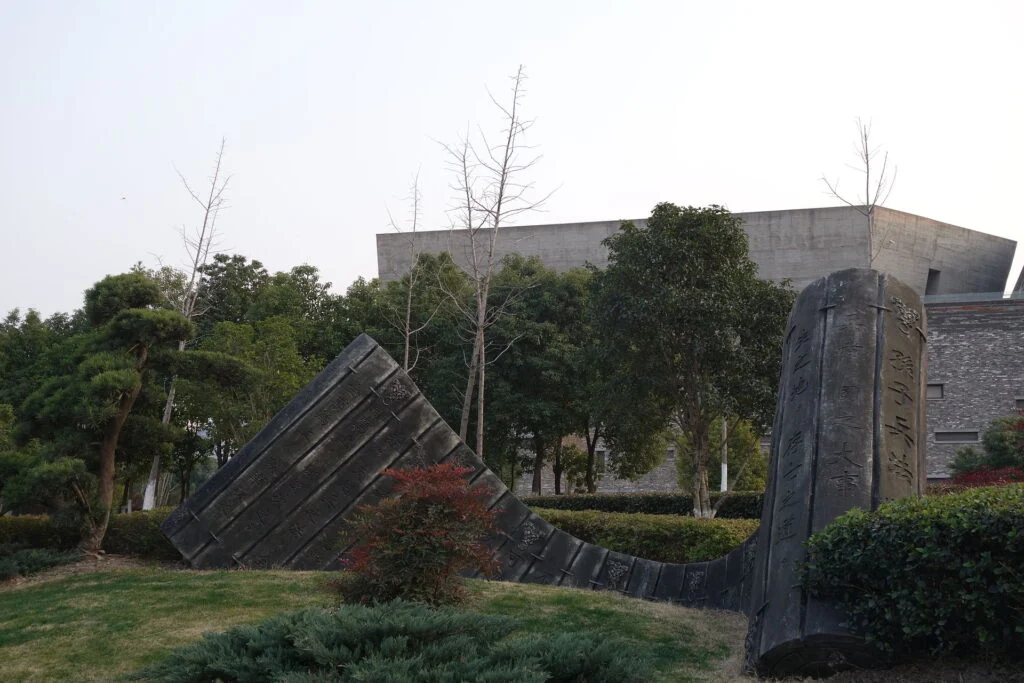
Upon approaching the Ningbo Museum, the building itself is the initial point of interest. Its exterior architecture departs from conventional museum aesthetics by incorporating recycled tiles, bricks, and other materials sourced from local villages. This choice lends the facade a unique texture and visual narrative that immediately ties the institution to the region’s material culture and history. The museum’s physical appearance signals a strong connection between place, history, and identity, framing the visitor’s expectations for a museum that values both story and heritage over grandiosity.
The entry sequence leads visitors into a space that manages to feel both modern and rooted in Chinese architectural traditions. There is an evident balance between indoor and outdoor areas, with courtyards and garden sections integrating environment and display. This design approach emphasizes the museum’s mission to educate through local context and material presence. Visitors coming to the Ningbo Museum should be prepared for an experience focused on regional specifics rather than the broader Chinese national narrative.
Highlights and Key Exhibitions
The museum’s permanent exhibitions chart the history, culture, and natural environment of Ningbo and its surroundings. Collections include a rich array of archaeological finds from the region, ceramics, folk art, and ethnographic objects. Many artifacts trace back thousands of years, such as pottery from the Liangzhu culture or early Southeast Asian-influenced ceramics, showcasing Ningbo’s historical role as a trade and cultural crossroads.
One significant area of focus is Ningbo’s maritime heritage. The exhibition highlights the city’s position as one of China’s oldest ports, with trade links dating back over a millennium. There are various displays illustrating traditional shipbuilding techniques, navigational tools, and items associated with maritime commerce. These artifacts shed light on the economic and cultural importance of Ningbo’s waterfront to local and regional development.
Another important theme is the traditional crafts and daily life of Ningbo’s communities. Exhibits display textiles, tools, and household items that reflect the distinct lifestyle and artisanal practices unique to the area. This segment helps contextualize Ningbo within China’s broader cultural mosaic by emphasizing its localized customs rather than dominant narratives centered on major metropolises.
The museum also includes elements dedicated to the natural environment of Zhejiang Province. Geological samples, local flora and fauna displays, and explanatory panels provide background on how the landscape influenced the settlement patterns and livelihoods of the people.
While the Ningbo Museum excels in presenting these focused themes with clarity and regional specificity, it tends to prioritize depth over breadth. Visitors looking for a comprehensive, all-encompassing view of Chinese history will find its scope limited. The exhibitions are best appreciated by those particularly interested in coastal Zhejiang Province or the interaction between culture and environment at a local scale.
Visitor Experience
The layout of the Ningbo Museum encourages a rounded yet concentrated visit. The path through the galleries allows visitors to progress logically from early history and archaeology to maritime trade, local crafts, and natural history. The museum’s design supports this flow, with clear signage and exhibition design that aids in comprehension without overwhelming the visitor.
Interpretive materials generally balance text, images, and artifacts thoughtfully, catering to a range of audiences including local residents, students, and foreign visitors with some background knowledge. However, English-language materials and labeling may be limited compared to larger institutions in China, which could pose challenges for those who do not speak Chinese. Visitors interested in in-depth explanations or additional context may need to supplement their visit with external reading.
The museum’s atmosphere is quiet and contemplative, suited to visitors who prefer a measured pace rather than a high-energy interactive environment. The design and curation prioritize authenticity and material presence over flashy digital components or interactive technologies, which may or may not align with contemporary visitor preferences.
The spatial arrangement also facilitates reflection on the region’s history as a distinct entity with continuous cultural development. It is a museum that invites visitors to slow down and absorb rather than rush through multiple themes. This approach offers a clear educational payoff but may feel somewhat static or narrowly targeted for those looking for more variety in subject matter or more dynamic presentation styles.
Tickets, Access, and Planning
Details on admission conditions and visitor services should be verified on the museum’s official website before planning a visit. Judging from the museum’s scale and role, tickets are likely to be modestly priced but not necessarily free, and special exhibitions or events could affect entry conditions.
Accessibility features, public transport connections, and parking options are not widely documented in general sources. Potential visitors should look for the most current information from official channels. Similarly, information on guided tours, audio guides, and visitor amenities is not extensively published, so those seeking enhanced interpretive options may need to inquire directly with the institution.
The Ningbo Museum is likely suitable for individual visitors, families, and school groups but may be better suited to those with a particular interest in regional history or Chinese coastal culture. Visitors looking for a broader Chinese historical sweep or more interactive experiences may need to temper expectations.
Final Verdict
The Ningbo Museum represents a considered effort to document and present the cultural and natural history of Ningbo and its surrounding area. Its strengths lie in its strong local focus, careful architectural integration with local materials, and its collection of artifacts that illuminate Ningbo’s maritime connections and traditional life.
While the museum does not attempt to cover the entire span of Chinese history or to compete with larger national institutions, it occupies an important niche by emphasizing the distinctiveness of Ningbo’s geographic, economic, and cultural identity. It supports interest in regional heritage through thoughtful exhibitions and restrained design, appealing to visitors who appreciate depth and contextual specificity over breadth or spectacle.
Visitors should manage expectations in terms of international visitor services and supplementary materials, as these are likely limited compared to more prominent museums in major Chinese cities. The museum’s fixed focus and conventional display methods may not satisfy those seeking highly interactive or multi-thematic experiences.
Ultimately, Ningbo Museum stands as a useful and well-executed destination for those wishing to explore an important chapter of China’s local history within a purposeful architectural setting. It offers a quiet, informative, and authentic experience for culturally curious visitors prepared for a museum grounded in locality rather than global presentation.