Museum and Art Gallery of the Northern Territory Review
Art Museums · Darwin, Australia. The Museum and Art Gallery of the Northern Territory (MAGNT) is located in Darwin, the capital city of Australia’s Northern Territory. Established formally as a public institution in the 1970s, MAGNT serves as a…
Art Museums · Darwin, Australia. The Museum and Art Gallery of the Northern Territory (MAGNT) is located in Darwin, the capital city of Australia’s Northern Territory. Established formally as a public institution in the 1970s, MAGNT serves as a…
Best forArt lovers, visual culture, architecture
Review focusCollections, curatorial focus, and visitor planning
Historical Context
The Museum and Art Gallery of the Northern Territory (MAGNT) is located in Darwin, the capital city of Australia’s Northern Territory. Established formally as a public institution in the 1970s, MAGNT serves as a regional hub for the territory’s unique cultural, natural, and historical heritage. Its origins trace back to earlier government efforts to collect and preserve the Northern Territory’s distinct Aboriginal artefacts, maritime relics, and natural history specimens. Over the decades, the museum’s scope has expanded, encompassing indigenous culture, European settlement history, and the distinctive flora and fauna of northern Australia.
The Northern Territory itself holds a particular place in Australia’s national history, characterized by its tropical climate, sparse population, and rich Aboriginal cultures with traditions dating back tens of thousands of years. The region’s historic events, from early European exploration and colonisation to World War II and Cyclone Tracy, have shaped the Northern Territory’s identity and find representation in the museum’s holdings. MAGNT functions not only as a repository for objects but also as a site for cultural dialogue, especially around Indigenous narratives related to land, kinship, and artistic expression. Over the years, it has consolidated its role with permanent galleries as well as educational and outreach programs that reflect this dedication.
What You See on Arrival
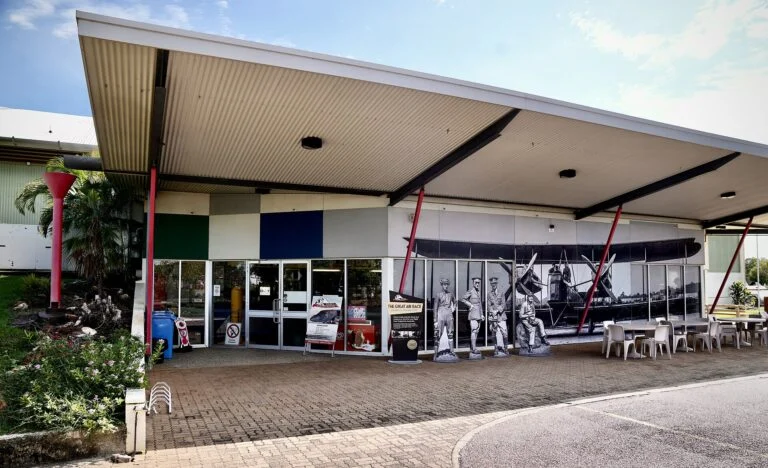
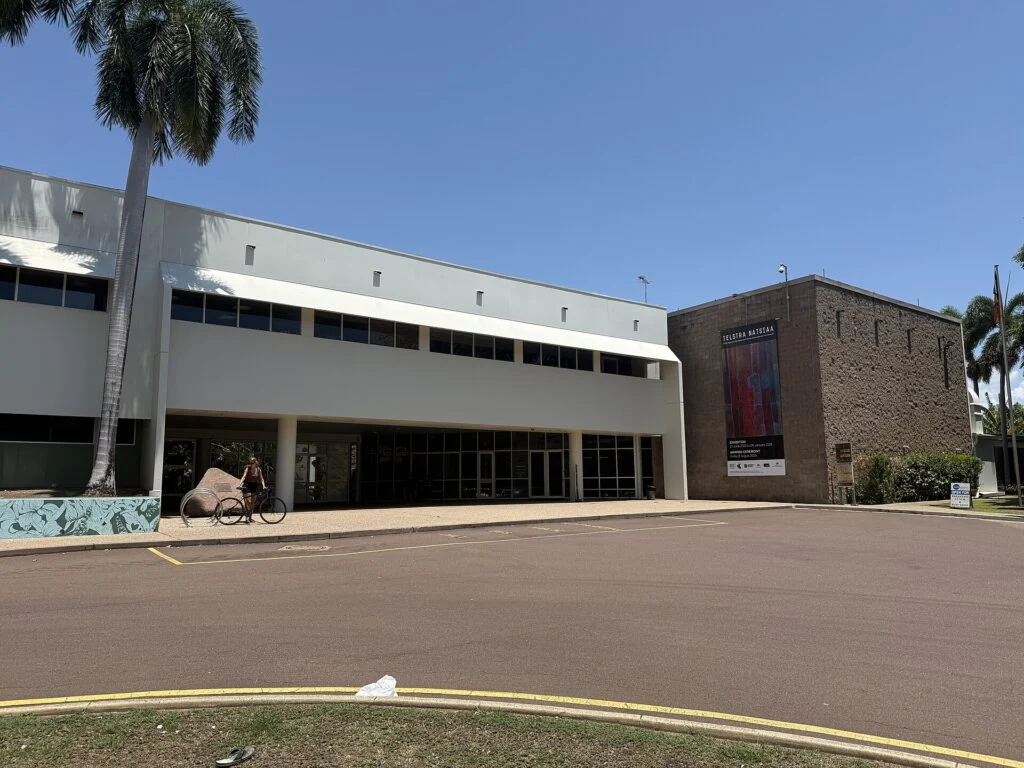
Approaching the Museum and Art Gallery of the Northern Territory, visitors would first notice its distinctive setting slightly removed from Darwin’s more commercial precincts, close to the waterfront near the Botanical Gardens precinct. The building itself presents a combination of modern and functional architectural elements rather than grand or ornate designs, mirroring the museum’s regional rather than metropolitan status.
The entrance and lobby area tend to foreground a clear institutional identity grounded in regional pride and the museum’s mission to present the natural and cultural wealth of the Northern Territory. Visitors arriving here are met with straightforward signage and a reception multiple staff likely assist with information. The spatial organization is designed to lead visitors from introductory displays through various themed galleries, providing a stepped presentation from broad contexts toward specific cultural and historical details.
Outside the entrance, public spaces are often landscaped with Indigenous art and signage that indicate the museum’s engagement with local Aboriginal communities. This setting primes visitors to expect a strong presence of Indigenous culture as integral to the museum’s narrative. Signage and galleries strive to balance the environment’s natural character with built elements. The overall initial impression is one of a regional institution with serious ambitions to educate and engage, rather than an expansive metropolitan art gallery or a major national museum.
Highlights and Key Exhibitions
The Museum and Art Gallery of the Northern Territory offers a collection that is wide-ranging, but many visitors come primarily for its treatment of Indigenous art and natural history, alongside historical exhibitions that document Darwin and the territory’s colonial and wartime past.
The Aboriginal art collection plays a central role. It features significant works from local Indigenous artists, representing various styles and media, from traditional bark paintings and carvings to contemporary visual art. This collection is important because it conveys rich storytelling, cultural practices, and spiritual relationships to the land. Known for featuring Aboriginal artists of the Top End, the museum presents these works not simply as aesthetic objects but as cultural documents requiring thoughtful interpretation. The art galleries are curated to contextualise the artworks within Indigenous frameworks of meaning, although visitors without background knowledge may find some interpretive labels concise rather than exhaustive.
Natural history exhibits cover the unique ecosystems of the Northern Territory. Display cases might include specimens of local reptiles, birds, and marine life emblematic of the tropical Top End environment. Topics such as Darwin’s nearby Kakadu National Park and Litchfield National Park often feature here, providing insight into biodiversity and conservation issues relevant to this northern Australian region. Fossils and geological exhibits related to ancient environmental changes also appear, illustrating long-term natural history.
The museum’s historical galleries delve into the Northern Territory’s European settlement and frontier period, focusing on colonial exploration, pastoral development, and contact with Indigenous peoples. This section necessarily grapples with complex and sometimes painful aspects of frontier history, but visitors will find these themes handled with a generally measured approach, offering a narrative grounded in documented events rather than mythologised accounts.
Particular attention is given to World War II's impact on Darwin and the Northern Territory. The region’s experience of Japanese air raids in 1942 forms a notable part of the narrative, commemorating civilian and military experiences. Exhibits including photographs, personal stories, and wartime artefacts present this dramatic chapter in a manner designed to foster understanding of the territory’s strategic role and the local repercussions of global conflict.
The Cyclone Tracy exhibition is also a key component, recalling the devastating impact of the 1974 cyclone that heavily damaged Darwin. Through photographs, documents, and survivor accounts, the museum presents the disaster’s human and structural toll, as well as the city’s rebuilding process. Such exhibitions are culturally significant for local residents and help international visitors appreciate the challenges posed by the region’s environment.
While temporary exhibitions occur at MAGNT, the core permanent exhibitions focus on these themes and regional narratives rather than art historical surveys or international collections. This museum’s strength lies in its ability to bring together natural science, Indigenous cultural heritage, and recent history in one location, providing a multi-layered story of Northern Australia.
Visitor Experience
The overall experience at MAGNT caters well to audiences interested in Indigenous art, regional history, and natural history with particular attention to the Northern Territory’s unique context. The layout encourages a structured visit, with clear paths through chronological and thematic galleries.
Interpretive materials, including gallery texts and exhibit labels, are generally well-written and aimed at both general and specialized audiences, though visitors seeking deep academic treatment may desire supplementary reading or guided explanation for fuller context. The balance between images, objects, and text supports accessibility, but some sections could benefit from more interactive or multimedia elements to engage younger visitors or those unfamiliar with the region’s complexities.
Pace of visit is flexible: casual visitors can browse artworks and displays, while those with a focused interest in Indigenous culture or wartime history will find enough depth to justify longer stays. Some exhibits, such as the Cyclone Tracy section, provide emotive content that invites reflection rather than mere observation.
MAGNT’s inclusion of Indigenous perspectives is one of its notable qualities, though visitors should bear in mind that the institution operates within broader conversations about representation and reconciliation, which continue to evolve. Some may find the museum’s regional scale means fewer iconic objects compared to larger national museums, but the focused collections offer a concentrated insight into the Northern Territory’s identity.
Visitor flow is managed to avoid congestion, though the museum’s relative distance from central Darwin may influence visitor numbers, particularly outside peak tourist seasons. The building’s straightforward design supports navigation but visitors should check that any temporary closures or exhibition changes are notified in advance.
Tickets, Access, and Planning
Details regarding admission, opening hours, and other visitor services are not provided here. Readers should consult the official Museum and Art Gallery of the Northern Territory website for the most current information on ticketing, discounts, opening times, accessibility provisions, and the availability of tours or audio guides.
The geographic location places MAGNT slightly outside Darwin’s central business district, near the waterfront and Botanic Gardens, so onward travel plans should consider transport options from central Darwin or nearby accommodations. The climate of the region, tropical and often hot, may affect visitor comfort and timing; early morning or late afternoon visits could be preferable.
The museum is likely to attract visitors familiar with Indigenous Australian art, natural history enthusiasts, and those interested in Darwin’s military and disaster history. It may have more limited appeal for those seeking extensive international art or comprehensive Australian art surveys, though it serves its regional mission well.
Final Verdict
The Museum and Art Gallery of the Northern Territory occupies an important niche within Australia’s museum landscape by focusing closely on the distinctive histories, cultures, and environments of the Northern Territory. It offers quality Indigenous art collections and thoughtfully curated exhibitions on natural history and local historical events that are rarely represented in other Australian institutions. Its commitment to interpreting Indigenous perspectives alongside natural and social history provides a valuable and necessary regional viewpoint.
However, visitors should approach MAGNT with an understanding of its scale and regional specialization. It does not have the breadth or the international holdings of larger Australian institutions, and its exhibition style tends to favor straightforward presentation over extensive interactivity or multimedia. Some interpretive text assumes a degree of prior knowledge of Australian history or Indigenous culture.
For those interested in Darwin and the Northern Territory, MAGNT presents a concentrated exploration with meaningful, specific content rather than a broad survey. It is a solid option for visitors who want to engage with local Indigenous art from the top end of Australia, learn about the region’s wartime experiences, and gain insight into the natural environment that shapes this unique part of the continent. As always, potential visitors should verify opening hours and ticket details before planning a visit.
In sum, the Museum and Art Gallery of the Northern Territory is a well-considered regional museum that successfully balances its multiple roles as art gallery, natural history repository, and local history museum. Its specialized focus ensures a degree of depth on subjects essential to understanding northern Australia, even as it invites continued development in presentation style and outreach. For readers seeking to understand the Northern Territory in a museum setting, MAGNT holds tangible value as a dedicated institution reflecting the place’s cultural and environmental vitality.