Chau Chak Wing Museum Review
Archaeology Museums · Sydney, Australia. The Chau Chak Wing Museum is a relatively recent addition to Sydney’s cultural landscape, emerging from the amalgamation of several key collections affiliated with the University of Sydney. Established with the aim of consolidating…
Archaeology Museums · Sydney, Australia. The Chau Chak Wing Museum is a relatively recent addition to Sydney’s cultural landscape, emerging from the amalgamation of several key collections affiliated with the University of Sydney. Established with the aim of consolidating…
Best forMuseum lovers, culture travelers, first-time visitors
Review focusCollections, visitor experience, and practical planning
Historical Context
The Chau Chak Wing Museum is a relatively recent addition to Sydney’s cultural landscape, emerging from the amalgamation of several key collections affiliated with the University of Sydney. Established with the aim of consolidating the university’s diverse holdings in archaeology, anthropology, natural history, and art, the museum opened its doors in 2020. Its creation represents a broader institutional effort to bring together academic and public engagement under one roof, providing access to a wide spectrum of objects that reflect both global cultures and Australia’s regional heritage.
Named after Chau Chak Wing, a prominent businessman and philanthropist whose substantial donation contributed significantly to the museum’s development, the institution reflects the University of Sydney's desire to modernize and unify its collection assets. Before this consolidation, Sydney’s various university collections were housed separately in older facilities, with limited public accessibility and sometimes fragmented curatorial narratives. The museum now serves as both a university facility and a public museum, positioning itself as a hub for research, teaching, and community connection.
This integration allows the museum to present a more coherent story of human history and natural science, spanning ancient civilizations to contemporary cultural expressions, with a particular emphasis on Asia and the Pacific due to the university’s research strengths. However, it remains a museum still defining its public role and identity, balancing academic depth with broader appeal.
What You See on Arrival
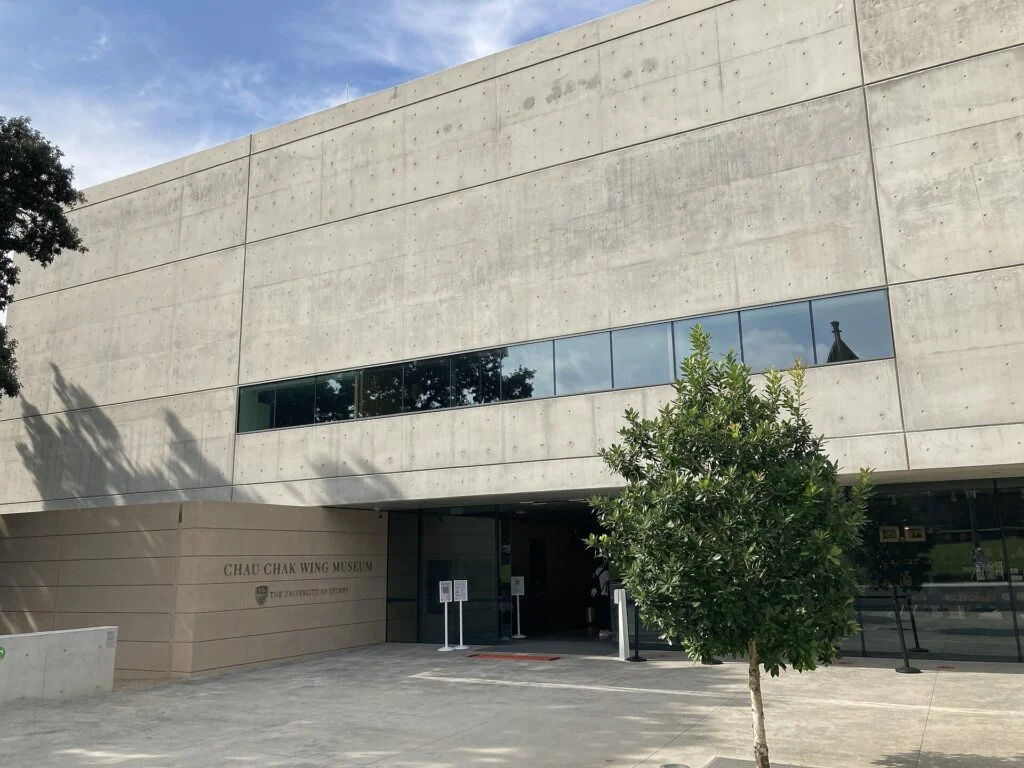
Visitors approaching the Chau Chak Wing Museum encounter a distinctive architectural statement designed by Frank Gehry, whose work is more typically associated with sculptural, non-traditional museum buildings. The façade is immediately recognizable for its undulating brickwork that contrasts with more glass-dominated contemporary museums, offering an intriguing blend of solidity and organic form. This visual character sets a thoughtful tone, suggesting the museum’s ambitions to bridge the past and present in a physically expressive manner.
Inside, the museum’s entrance and lobby area function as a clear threshold from the surrounding university precinct to the variety of exhibitions housed within. Signage and wayfinding at the entrance anchor the museum’s academic heritage while inviting a broader public. There is an openness to the layout, with visible connections between different collection areas, though spatially the museum separates natural history from archaeology and ethnographic exhibits to facilitate focus and preserve clarity in storytelling.
This arrival experience situates visitors between the worlds of university scholarship and community engagement. The museum’s identity is anchored in its role as a university institution, a fact that informs the curation style and the framing of objects. It welcomes both specialists and casual visitors but does so with an emphasis on education and the richness of material culture.
Highlights and Key Exhibitions
The Chau Chak Wing Museum holds collections that cross disciplinary boundaries, but there are several core themes and holdings that shape any visit.
Its archaeology and Egyptology holdings form one of the museum’s foundational strengths. These collections include an extensive array of artifacts from the ancient Near East and Egypt, reflecting the university’s long history of teaching and research in these areas. Visitors can expect to see items such as pottery, stone tools, and craft objects alongside more monumental pieces like fragments of statues and funerary items. The display presents these objects with a scholarly emphasis, drawing attention to their historical context and archaeological provenance, though the presentation style is straightforward rather than theatrical.
In parallel, the museum’s Asian collections also stand out. These encompass a vast range of cultural objects from China, Southeast Asia, and the Pacific Islands, including ceramics, textiles, ritual artifacts, and traditional art forms. Many of these items illustrate connections between Australia and its region, offering resonance with local histories and migration narratives. The museum’s approach to these displays is careful to balance aesthetic appreciation with anthropological insight, supporting multiple layers of interpretation.
The natural history section, derived largely from earlier university collections, provides a distinctly Australian perspective on biodiversity. This includes taxidermy specimens, skeletal remains, and botanical samples, tracing environmental change and species diversity. While this section is more conventional in museum terms, it offers valuable context about Australia’s unique ecosystems, which complements the cultural collections. However, some displays appear utilitarian, bearing the marks of their academic origins rather than tailored visitor experiences.
Art collections within the museum extend from antiquities to contemporary indigenous art, though they are subsidiary to the primary archaeological and ethnographic holdings. The university’s engagement with Aboriginal Australian art is evident but not dominant, which might be a disappointment to visitors seeking an extensive indigenous art focus. Still, these works contribute to the museum’s wider narrative about human creativity and cultural continuity.
Documentation and interpretation across the museum provide thorough explanatory text and some digital enhancements, but immersive or interactive technologies are limited. The exhibitions often require visitors to engage attentively with the written material to fully appreciate the significance of particular objects and themes. This academic flavor may satisfy visitors with a serious interest in subject matter but could be challenging for those looking for more accessible or simplified scenes.
Visitor Experience
The layout, pacing, and interpretive strategies of the Chau Chak Wing Museum reflect a balance between its university heritage and public museum ambitions. The combined collections create a dense but rewarding environment for those prepared to engage at a deeper level. Visitors interested in archaeology, anthropology, natural history, and Asian art will find a substantive variety of objects and information, all framed with a degree of scholarly rigour.
The physical arrangement attempts to delineate discrete thematic zones while maintaining sight lines and a coherent visitor path. This design helps prevent overload and supports focused exploration. That said, the museum does not cater strongly to casual tourists or families expecting child-friendly, interactive exhibits. Attention to detailed labeling and context can demand a paced, engaged visit that might not suit every visitor’s energy or interest level.
Interpretation is clear, relying mainly on traditional exhibit text and labels. While there are some multimedia elements, these remain ancillary rather than central. Visitors can expect to rely predominantly on well-written panels, object descriptions, and occasionally archival imagery or maps. This approach reinforces the museum’s reputation for academic seriousness but can feel less inviting to those new to the subjects on display.
Visitor facilities seem intended to support the university’s academic community, with quieter spaces and study areas complementing exhibition galleries. The museum’s location within the university setting makes it accessible to students and researchers, but visitors coming solely as tourists should plan their visit carefully to align with opening times and visitor information.
Tickets, Access, and Planning
As a university-affiliated institution, information about tickets and visitor access is best sought directly from the museum’s official website. Details such as entry fees, discount eligibility, current opening times, tour availability, and accessibility provisions are subject to change and may differ from standard public museums. Checking for the most up-to-date advice is recommended before planning a visit.
The museum’s physical location in the Camperdown/Darlington precinct of Sydney places it within the central urban university zone, accessible by public transport and on foot from key city points. However, parking and other transport logistics are not widely publicised and may require additional inquiry.
Given the museum’s extensive collections and academic orientation, visitors should be prepared for a visit that rewards sustained attention rather than quick browsing. Scheduling sufficient time for particular areas of interest, especially archaeology and ethnography, will enhance the experience.
Final Verdict
The Chau Chak Wing Museum represents a significant development in Sydney’s museum landscape by uniting formerly separate university collections into a single institution with public access. Its strength lies in the breadth and depth of its holdings, particularly in archaeology, Asian material culture, and natural history. For visitors with a strong academic or specialized interest, the museum offers a valuable and well-curated resource with rich material drawn from diverse cultures and time periods.
At the same time, the museum’s scholarly presentation style and somewhat austere interpretive approach may be less engaging for casual visitors or families seeking entertainment-oriented museum experiences. The lack of extensive interactive or multimedia content limits its appeal to those who prefer more visually or sensorially dynamic exhibitions. Furthermore, the focus on university research materials shapes the museum’s identity as a place of serious study, which might not align with the expectations of some general audiences.
Its architectural presence and integration with the university provide it with a distinctive identity, though the museum is still evolving in terms of how it positions itself within Sydney’s broader cultural scene. For those interested in deepening their knowledge of ancient civilizations, Asian cultures, or Australian natural history in a context that honors academic tradition, the Chau Chak Wing Museum offers a carefully assembled and thoughtfully presented experience. Prospective visitors should plan their visit with attention to practical details available through official channels to maximize their engagement with this unique institution.