Sichuan Museum Review
Archaeology Museums · Chengdu, China. The Sichuan Museum in Chengdu represents the region’s dedication to preserving and presenting its diverse cultural and natural heritage. Established in the early 20th century and moved to its current location in the 1980s,…
Archaeology Museums · Chengdu, China. The Sichuan Museum in Chengdu represents the region’s dedication to preserving and presenting its diverse cultural and natural heritage. Established in the early 20th century and moved to its current location in the 1980s,…
Best forMuseum lovers, culture travelers, first-time visitors
Review focusCollections, visitor experience, and practical planning
Historical Context
The Sichuan Museum in Chengdu represents the region’s dedication to preserving and presenting its diverse cultural and natural heritage. Established in the early 20th century and moved to its current location in the 1980s, the museum’s collections reflect the unique geographic and historical landscape of Sichuan Province. Sichuan’s position as a crossroads of different ethnic groups, varied climates, and significant ancient civilizations has produced a rich array of artifacts and art that the museum curates. Over the decades, the institution has evolved from a regional repository into one of southwest China’s major museums, aiming to balance academic research with public engagement.
The museum’s holdings cover several millennia, touching on prehistoric cultures discovered in the province’s archaeological sites as well as the more recent dynastic periods known for their artistic and craft developments. As a provincial-level museum, it also serves a role in education and local identity, offering residents and visitors a chance to encounter the distinctiveness of Sichuanese history within the broader Chinese context. Its development reflects broader trends in Chinese museology—emphasizing state-led efforts to document cultural heritage while expanding physical space to accommodate growing collections and visitor numbers. Understanding the Sichuan Museum means situating it within both local pride and national cultural policy, where regional museums have become important nodes in the cultural landscape.
What You See on Arrival
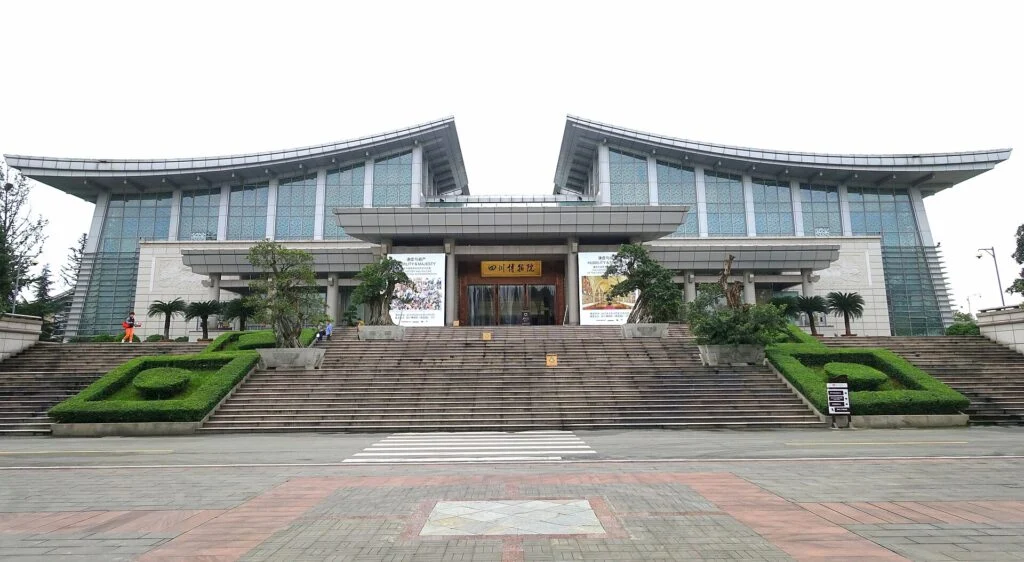
Arriving at the Sichuan Museum, visitors are greeted by a large, modern building complex located on the western edge of Chengdu’s historical center. The museum’s design features a combination of contemporary architectural elements with traditional Chinese motifs, intended to convey a sense of scholarly gravitas. The entrance is usually marked by a spacious plaza and clear signage that identifies the institution as a key cultural landmark in the city.
The physical scale of the museum signals its ambition as a comprehensive repository of Sichuan’s archaeological, historical, and artistic treasures. From the outside, the building presents a restrained but dignified presence, avoiding ornate or overly extravagant gestures. The setting nearby includes landscaped gardens and broad pedestrian paths which frame the institution as a civic space. Visitors can expect the museum to present itself with a degree of formality and institutional authority, setting the tone for the exhibitions inside.
Inside the entrance hall, one might encounter introductory displays that outline the museum’s curatorial mission and provide a framework for exploring the collections. This initial encounter encourages visitors to see the museum as a place for both learning and reflection, inviting a measured approach to the displays ahead. The Sichuan Museum prioritizes its identity as a provincial historical museum above spectacle, and this is evident as soon as one approaches the building.
Highlights and Key Exhibitions
The core strength of the Sichuan Museum lies in its extensive and varied permanent collection, which can be broadly divided into several thematic areas. The prehistoric archaeology section includes important artifacts from Sichuan’s Neolithic cultures. Items such as pottery shards, jade carvings, and tools excavated from sites like Sanxingdui and Jinsha provide evidence of early human settlement and a sophisticated level of craftsmanship that predates the better-known Bronze Age cultures of China’s Central Plains.
The museum notably features relics from the Shu culture, an ancient civilization unique to the Sichuan Basin. This collection encompasses bronze objects, gold masks, carved stone statues, and other ceremonial artifacts that speak to the spiritual beliefs and artistic practices of the region’s early inhabitants. The Shu materials often provoke interest because of their distinctive style, which differs markedly from the artifacts of other contemporary cultures in eastern China. These items underline the diversity of early Chinese civilization and the autonomous development within Sichuan.
Historical exhibits extend from Qin and Han dynasty remains through to Tang and Ming periods, documenting the region’s integration into broader imperial structures along with its local variations. Pottery, silk textiles, calligraphy samples, and Buddhist statuary are well represented, revealing aspects of daily life, religious practices, and artistic preferences across centuries. The museum also holds a noteworthy collection of traditional Sichuanese folk art, including wood carvings, embroidery, and paper-cutting, shedding light on regional cultural continuities.
Notable among the art holdings are pieces from more recent history, particularly from the Qing dynasty onward, which illustrate the province’s contributions to Chinese painting and ceramics. These collections provide visitors with a window into the evolving aesthetics of southern China. The breadth across time periods and artifact types makes the Sichuan Museum a valuable resource for understanding the province’s long cultural trajectory.
Apart from artifacts, the natural history displays highlighting Sichuan’s biodiversity are also part of the museum’s offer. These include geological samples and taxidermy specimens that contextualize the environmental conditions influencing the region’s human and cultural development. While not the museum’s primary focus, these exhibits complement the historical material, presenting a more holistic view of Sichuan.
The museum does not heavily emphasize temporary exhibitions, so its appeal lies strongly in the permanent collection. For visitors more interested in popular, blockbuster shows, this may limit the scope of new experiences. However, the stable holdings provide depth and detail for those seeking an informed understanding of Sichuan’s past.
Visitor Experience
Navigating the Sichuan Museum offers a largely straightforward experience. The galleries are arranged by theme and chronology, allowing visitors to follow the development of Sichuan’s cultural heritage in a coherent sequence. The flow from prehistoric times into modern historical and artistic expressions is logical and helps frame the progression of local society.
Exhibition spaces tend to be spacious and well-lit, displaying artifacts securely without overcrowding. Labeling is generally clear, with bilingual descriptions in both Chinese and English that succinctly explain provenance, cultural significance, and material composition. This bilingual approach reflects the museum’s role in serving both local audiences and international visitors, though the English translations occasionally lack in depth or exactitude. Some of the more nuanced cultural references and academic terminology might therefore require prior knowledge or further research by visitors.
Interpretive methods within the museum are predominantly text-based, with supplementary photographs and occasional multimedia elements. Interactive technology is relatively limited; this is a museum that prioritizes direct observation over digital mediation. This approach suits visitors who prefer a traditional museum environment but may feel less engaging for younger audiences accustomed to more interactive, technology-led presentations.
The museum’s relatively calm atmosphere suggests it attracts a mix of school groups, tourists with serious interests in historical cultures, and local residents appreciating the collection. It is less suited for casual, freeform browsing or very young children who might require more hands-on experiences. Nonetheless, the clear layout and thematic grouping help visitors establish context and maintain orientation throughout their visit.
For those with a specialized curiosity about Sichuan’s archaeological record or regional ethnography, the museum offers a substantial amount of artifact material supported by scholarly research. The institution fulfills an important educational function in this regard. However, visitors seeking extensive narrative storytelling or dynamic multi-sensory installations will find this museum more traditional in style.
Tickets, Access, and Planning
Information about visitor entry requirements, ticket prices, and opening hours for the Sichuan Museum should be verified through the official website or reliable local sources prior to planning a visit. The museum’s policies on admission, discounts, guided tours, audio guides, and accessibility options can change and may vary depending on the time of year or public health considerations.
The museum’s location in Chengdu makes it accessible via the city’s public transport network, and it is positioned relatively close to other cultural institutions and public spaces. Visitors should check local maps and transit schedules to ensure efficient routing. Given the museum’s size and the extent of its permanent exhibitions, allowing several hours for a thorough visit is advisable.
Suitable for travelers with an interest in Chinese history, archaeology, and folk culture, the museum also serves educators and researchers who want access to a concentrated collection of Sichuan province artifacts. Those traveling without knowledge of Chinese culture will benefit from basic preparatory reading, as the displays mostly presume some familiarity with Chinese dynastic history and cultural terms.
The museum does not universally emphasize amenities such as cafés or retail shops; visitors should plan accordingly if they require refreshments or souvenir options. Advanced booking may be recommended during peak tourist seasons or major public holidays since popular regional museums can experience high visitor volume at those times.
Final Verdict
The Sichuan Museum in Chengdu stands as an important regional institution dedicated to the province’s deep historical and cultural lineage. Its comprehensive permanent collections, particularly those relating to ancient Shu culture and Sichuan archaeology, make it an informative destination for those interested in the specifics of this southwestern Chinese region. The museum’s steady presentation style, clear thematic organization, and bilingual labeling offer a largely accessible experience to Chinese-speaking and international visitors alike.
While it may lack some of the technological enhancements and temporary programming that characterize larger metropolitan museums, the Sichuan Museum’s strength lies in the quality and breadth of its enduring collections. It appeals primarily to visitors with an academic or focused cultural interest rather than those seeking broad entertainment or highly interactive exhibitions. The institution’s role in the cultural landscape of Chengdu and the wider Sichuan province is significant, providing a valuable repository and learning center.
Prospective visitors should prepare by consulting official sources for practical visit information and consider their own interests in Chinese provincial history. The museum rewards careful engagement with its artifacts, especially for those intent on exploring less mainstream chapters of Chinese civilization. Overall, the Sichuan Museum is a solid example of a provincial museum balancing educational mission and cultural stewardship, worthy of attention for a demographic that values depth over spectacle.