Ájtte Swedish Mountain and Sami Museum Review
Indigenous Culture Museums · Jokkmokk, Sweden. The Ájtte Swedish Mountain and Sami Museum is situated in Jokkmokk, a small town north of the Arctic Circle in Swedish Lapland. It was established in 1989 with a mission to document and exhibit…
Indigenous Culture Museums · Jokkmokk, Sweden. The Ájtte Swedish Mountain and Sami Museum is situated in Jokkmokk, a small town north of the Arctic Circle in Swedish Lapland. It was established in 1989 with a mission to document and exhibit…
Best forMuseum lovers, culture travelers, first-time visitors
Review focusCollections, visitor experience, and practical planning
Historical Context
The Ájtte Swedish Mountain and Sami Museum is situated in Jokkmokk, a small town north of the Arctic Circle in Swedish Lapland. It was established in 1989 with a mission to document and exhibit the cultural and natural heritage of the mountainous region, particularly focusing on the indigenous Sami people. The museum’s foundation reflects both regional pride and recognition of the need to preserve and communicate the traditions, environment, and history of the Arctic north, areas that have seen considerable social and environmental change over the past century.
Ájtte’s dual focus on nature and culture aligns with the historical ties between the Sami communities and the harsh Nordic mountain environment. This relationship encompasses reindeer husbandry, early trade routes, and sustained lifestyles adapted to Arctic conditions. The museum’s name, “Ájtte,” meaning “storage hut” in the Lule Sami language, hints at its role in safeguarding cultural artifacts and natural specimens. Over the decades, it has developed a reputation as a center for ethnographic, archaeological, and environmental collections related to northern Sweden, serving as both a local and national reference point for Sami heritage and mountain ecology.
Despite being in a relatively remote location, the museum has attracted scholars, cultural organizations, and tourists interested in the often overlooked Arctic and Sami cultures. Ájtte thus functions at the intersection of ethnography, natural history, and regional identity, helping contextualize the pressures and narratives faced by indigenous peoples in northern Scandinavia.
What You See on Arrival
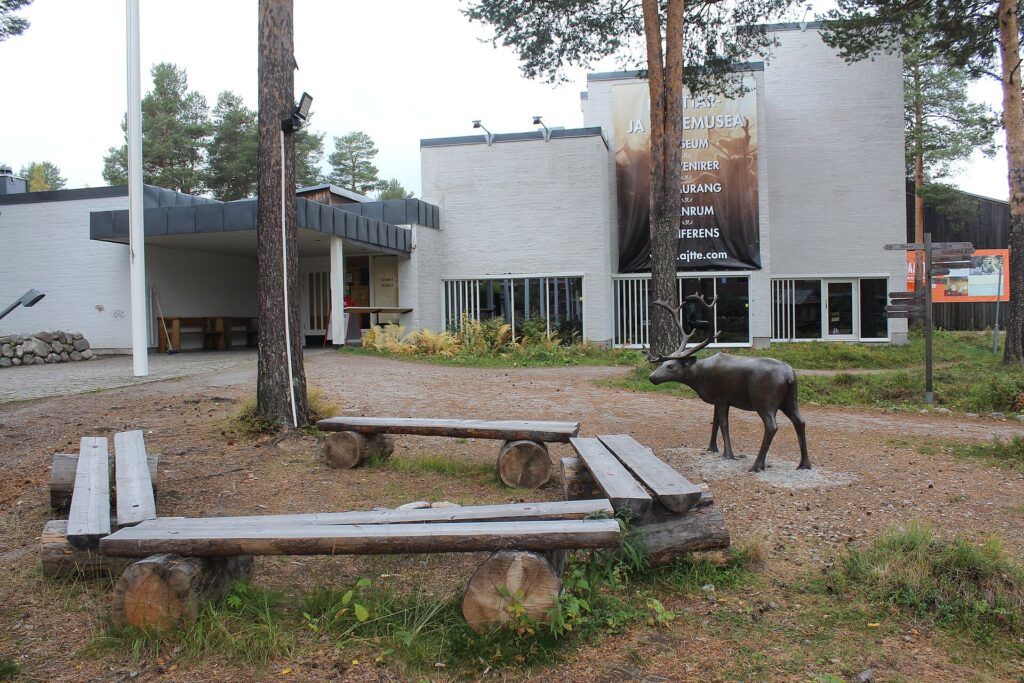
Approaching the museum in Jokkmokk, visitors encounter a building designed to reflect its northern roots with clean, modern lines that integrate subtly into the surrounding landscape. The architectural style and layout make it clear that this is not only a repository for artifacts but also a space for education and cultural dialogue. Outdoors, the museum grounds incorporate natural elements indicative of the region’s environment, emphasizing the inseparability of Sami culture and the mountainous landscape.
The entrance area serves as a transition zone, orienting visitors toward the broader themes of the museum. Here, introductory panels and signage communicate the museum’s primary focus on the Sami people and the northern mountain environment. The design avoids overly ornate or decorative elements, opting instead for simplicity that foregrounds the collections inside. Overall, the initial impression conveys a serious, research-based institution rather than a commercial tourist attraction.
This framing sets expectations clearly: the museum invites visitors to engage with a particular cultural and ecological context that may be unfamiliar but is presented with careful attention to detail and respect. The presence of native language inscriptions alongside Swedish and English also signals a commitment to Sami linguistic heritage.
Highlights and Key Exhibitions
Ájtte Museum’s permanent collection is divided broadly into two interrelated spheres: Sami cultural history and natural history of the mountain region. These sections work in tandem to illustrate the interplay between people and environment.
The Sami cultural exhibits focus heavily on traditional livelihoods, especially reindeer herding, which remains a cornerstone of Sami identity. Visitors can view items such as traditional clothing (including colorful gákti garments), tools, handicrafts, and household objects that provide insight into daily life across seasons and generations. Equally important are displays on spiritual and social traditions, including joik (traditional Sami singing), mythology, and community organization, highlighting how these have evolved or persisted over time.
Several ethnographic reconstructions and dioramas help contextualize Sami living conditions and their connection to natural resources like wood, fur, and fish. The museum also tackles the effects of modern pressures—national borders, industrialization, and climate change—on Sami traditions, though this is more subtly integrated rather than explicitly critical or polemical.
On the natural history side, Ájtte features taxidermy specimens, geological samples, and botanical collections that showcase the unique Arctic flora and fauna of the Swedish mountain region. It presents the ecological challenges of this environment, including climate conditions and habitat fragility, framing them in relation to human adaptation. This includes insight into migratory patterns, predator-prey dynamics, and environmental stewardship practices.
Archaeological finds from Sami settlements and ancient mountain cultures are often included, providing a longer historical perspective on human presence in these areas. These finds reinforce the continuity of Sami culture while also placing it within broader northern European prehistory.
The exhibits are arranged thematically rather than chronologically, encouraging visitors to consider interconnected natural and cultural systems. Textual information is generally detailed but accessible, with supplementary images and audiovisual materials to support understanding. Some panels specifically highlight local Sami voices or quotations, offering a degree of authenticity to the representation.
While most of the collection is drawn from northern Sweden, there is acknowledgment of broader Sami territories extending across Norway, Finland, and Russia. This comparative angle adds a layer of complexity reflecting the fragmented political contexts in which Sami people live today.
Visitor Experience
The Ájtte Museum appears to cater primarily to visitors with a genuine interest in ethnography, natural environments, or indigenous cultures. The pace encouraged by the exhibit design is measured, inviting attentive reading and reflection rather than rapid walkthroughs. This may suit scholars, students, and culturally engaged tourists better than casual visitors looking for entertainment-oriented experiences.
Interpretive aids such as information panels, photographs, and artifact labeling are carefully constructed to elucidate the significance of objects without overwhelming visitors. Some parts rely on quiet observation, while others engage multiple senses through sound recordings or tactile elements. These varied modes can help reach different learning styles but require focused attention.
One of the museum’s strengths is its contextual framing—understanding Sami culture as deeply embedded in the northern mountain environment rather than as isolated folklore. This promotes a nuanced appreciation of survival strategies, social structures, and contemporary challenges faced by the Sami.
However, visitors should be prepared for a museum that privileges context and substance over flashy displays or interactive entertainment. This means the experience might feel subdued or academic to those expecting more theatrical presentation styles. The absence of overly commercial elements means the atmosphere remains contemplative.
For those new to Sami culture or the geography of northern Sweden, the museum offers a solid foundation but could be supplemented by readings or guided explanations to deepen comprehension of some more specialized content areas. While many exhibits are bilingual, complex terminology and cultural references may require patience on the visitor’s part.
Tickets, Access, and Planning
As with many regional museums, practical details such as opening hours, admission costs, guided tours, or audio guide availability are best confirmed directly through the official Ájtte Museum website or reputable tourism sources before planning a visit. Since Jokkmokk lies quite far north and is not a major urban center, travelers should consider seasonal variations in daylight and weather that may affect travel ease and overall comfort.
Access to the museum generally requires some degree of travel planning, with few immediate alternative museums of similar focus in the proximity. Visitors aiming to experience local Sami culture in a broader sense might also align their trip with the annual Jokkmokk Winter Market, a cultural event with strong indigenous participation, though this is outside the museum’s regular programming.
It is advisable to approach Ájtte with time to absorb the exhibits thoughtfully, rather than rushing through. Visitors interested in mountain ecology, Sami ethnography, or northern archaeology will find it useful to allocate at least several hours. Practical arrangements around accommodation and transport need to be considered since Jokkmokk is a smaller town with limited visitor infrastructure.
Final Verdict
Ájtte Swedish Mountain and Sami Museum stands as a focused, well-curated institution that successfully bridges natural history and indigenous cultural heritage in northern Sweden. Its considered presentation offers a substantive introduction to Sami lifeways and the Arctic mountain environment, framed with care and respect.
The museum’s clear strengths lie in its balanced portrayal of tradition and change, combined with detailed, carefully labeled collections. It avoids simplistic storytelling, instead inviting visitors to engage deeply with complex cultural and environmental realities. This will appeal most to visitors seeking education and context rather than spectacle.
That said, its remote location and sober presentation style may limit its appeal to casual tourists or those expecting more interactive or entertainment-driven experiences. The content requires concentration and some prior interest in the region’s cultures and nature to fully appreciate. Practical considerations around travel and local infrastructure also suggest that advance planning is important.
In sum, Ájtte serves as an important cultural repository that contributes meaningfully to the visibility and understanding of the Sami people and northern mountain ecosystems. It reminds visitors of the richness housed in smaller, regionally focused museums and the value of sustained attention to often marginalized indigenous histories. Checking official sources before visiting will ensure a well-prepared and rewarding experience in this unique part of Sweden.