Pushkin State Museum of Fine Arts Review
Tickets & Tours
Compare ticket options and guided tours from trusted booking partners.
We may earn a commission if you book through these links.
Historical Context
The Pushkin State Museum of Fine Arts in Moscow occupies a distinctive position within Russia’s cultural landscape. Founded in 1912 and named after the celebrated Russian poet Alexander Pushkin in 1937, this institution was originally conceived as a center for Western art, distinct from the holdings of the Hermitage in Saint Petersburg, which primarily concentrated on Russian and European art. Its foundation intersected with the tumult of early twentieth-century Russian history, bearing witness to political upheaval, war, and cultural shifts that shaped both the nation and its artistic institutions.
Unlike many museums that developed from princely collections or imperial palaces, the Pushkin Museum was built expressly as a repository and research center for Classical and European art. The Soviet era saw the institution adapt its role into a key venue for educating the public in art history, showcasing acquisitions brought in from various sources, including confiscations and nationalizations. Through the Cold War and into the post-Soviet period, the museum expanded its collections, emphasized international cooperation, and sought to establish itself as a scholarly hub and public exhibition space. Today, it stands as one of Moscow’s major fine arts museums, notable for its diverse collection that spans ancient civilizations through modern European art.
What You See on Arrival
Approaching the Pushkin State Museum of Fine Arts, visitors encounter a Neoclassical façade that echoes its early twentieth-century origins and scholarly intent. The building’s architecture, though not ostentatious, signals an institutional seriousness focused on art studies rather than entertainment or spectacle. Situated on Volkhonka Street, the museum offers clear visibility from the main thoroughfares, signaling its public accessibility amid a city dense with museums.
The entrance welcomes visitors into a sizable atrium, allowing a sense of open space before one moves into the galleries. The museum’s identity from this vantage point is of a place geared towards scholarly appreciation and systematic exploration rather than casual browsing. Signage and graphic design within the entrance area and lobby prioritize clarity and functionality, with a formal yet approachable atmosphere. Visitor orientation, in terms of maps and directional aids, tends toward the traditional, guiding patrons to the museum’s thematic and chronological galleries with straightforward information panels.
The setting outside the museum is relatively quiet compared to Moscow’s city centre, which helps to frame the institution as a space of calm cultural contemplation amid the urban environment. There is a restrained, academic aura rather than a tourist spectacle. For those unfamiliar with the Pushkin Museum, this initial impression frames the visit as one of measured engagement with fine arts traditions.
Highlights and Key Exhibitions
The core distinction of the Pushkin State Museum of Fine Arts is its extensive collections of European art, ranging from Antiquity to the early twentieth century. Unlike Russian museums focused on national art traditions, the Pushkin presents international masterpieces and artifacts, curated with an emphasis on their historical development and artistic craftsmanship.
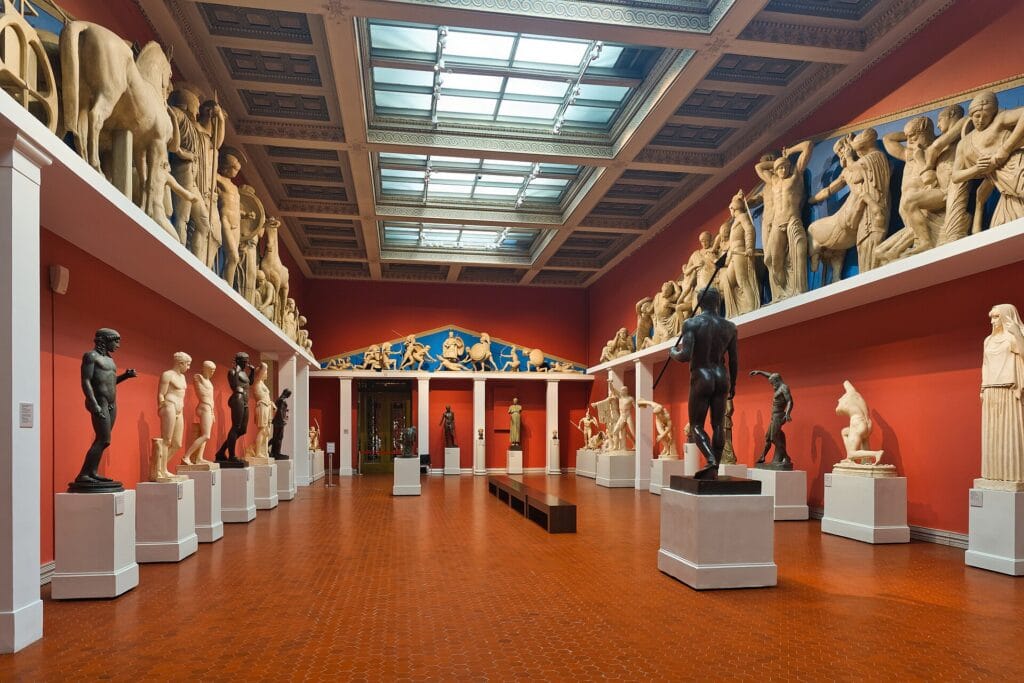
Ancient art forms a significant component. The museum houses notable collections of Classical antiquities, including Greek, Roman, and Egyptian sculptures, pottery, and artifacts. These exhibits, while not as large as those in some Western institutions specialized solely in ancient art, offer a coherent overview of early artistic traditions and cultural exchanges across the Mediterranean world. Noteworthy are the marble sculptures, reliefs, and funerary art, providing insight into ancient techniques and aesthetic values.
The museum’s scope expands into the Middle Ages and Renaissance periods with paintings, sculptures, and decorative arts from Italy, France, Germany, and the Netherlands. Key highlights include works associated with the Italian Renaissance masters, presenting visitors with an opportunity to track the evolution of European art from medieval religious iconography toward humanist ideals.
The department of French art is particularly strong, including Impressionist and Post-Impressionist paintings by artists such as Monet, Renoir, Cézanne, and Van Gogh. These works illustrate a pivotal century in Western art history, focusing on developments in color, light, and subject matter. The Pushkin Museum’s holdings in this area are often noted for their quality and thoughtful presentation.
In addition to painting and sculpture, the museum collects decorative arts and prints, offering a comprehensive understanding of fine arts beyond paintings alone. The collection includes significant examples of European graphic arts, which are useful for scholars and enthusiasts interested in printmaking techniques and history.
The museum also holds a number of Rodin sculptures and works connected to Auguste Rodin’s artistic circle, providing a tangible link to late nineteenth-century creativity and the rise of modern sculpture.
Temporary exhibitions tend to complement the permanent collection’s themes or draw connections with contemporary artistic dialogues, though these are subject to change and should be checked on the museum’s official channels.
Visitor Experience
The visitor experience at the Pushkin State Museum of Fine Arts reflects its dual mission as a public exhibit space and academic institution. The galleries are arranged largely by period and geographic origin, allowing for a chronological and thematic journey through the history of European and ancient art. This arrangement serves those seeking to understand the progression of artistic styles and techniques over time.
For visitors with some background or interest in art history, the museum offers a substantial opportunity to study significant works in situ. Labels and accompanying texts are generally clear and detailed, although those without prior knowledge may find some of the scholarly presentations less accessible without supplementary materials or guided interpretation.
The scale of the museum is considerable but manageable. It does not overwhelm with volume, but the breadth of the collection requires paced visits to appreciate fully. The space allows for reflection, with many galleries offering individual works the room to be studied without excessive crowding. However, at peak times, such as weekends or public holidays, visitor density can increase, which may somewhat affect the viewing experience.
The museum’s strategy places emphasis on education and research. It appeals particularly to visitors motivated by study and those prepared to engage closely with artworks in a quiet, respectful environment. It is less tailored to casual tourists looking for entertainment or interactive experiences. The absence of extensive multimedia or interactive displays may be a limitation for those expecting a more contemporary museum visit.
Interpretation focuses on historical context, artistic techniques, and stylistic evolution, aligning well with academic interests but requiring patience from a general audience. Some signage is available in multiple languages, yet non-Russian speakers should verify current language support before visiting.
Tickets, Access, and Planning
Practical details about tickets, opening hours, and access should be verified directly with the museum. Given frequent changes in cultural institution policies in Moscow and Russia more broadly, relying on the official site for the latest information is advisable.
The museum is located centrally in Moscow and is reasonably accessible by public transport. However, visitors should be aware of potential queues during busy periods, especially for entry, as well as security procedures typical of major public buildings in Russia.
Admission policies and available discounts may vary, and it is recommended to check these in advance. Information about audio guides, tours, and accessibility accommodations should also be confirmed on official channels, as such services may change or require bookings.
Visitors planning a comprehensive visit may wish to allocate several hours, with breaks, to explore the museum’s main collections at a comfortable pace. Those with specific interests—such as particular periods or artists—can tailor their visit accordingly, since the collection’s thematic and chronological grouping facilitates targeted exploration.
Final Verdict
The Pushkin State Museum of Fine Arts is a museum that privileges depth, scholarship, and a comprehensive overview of European and ancient art traditions over superficial or entertainment-based experiences. Its collection is strong in classical antiquities, Renaissance and Baroque art, and nineteenth-century French painting, making it a valuable destination for those interested in these areas.
What the museum excels in is providing a structured and methodical presentation of fine arts history, with works displayed to encourage close study. It is less suitable for visitors seeking an interactive or highly contemporary museum format.
The boundaries of the Pushkin Museum lie primarily in its focus: it does not concentrate on Russian art, nor does it emphasize contemporary or non-Western art forms outside its classical and European remit. Visitors should align their expectations accordingly.
As a cultural institution, it plays a significant role in Moscow’s museum ecosystem by complementing other prominent institutions through its focus on Western art traditions. While its atmosphere can feel restrained, this reflects its origins and mission as much as a moment of cultural curation.
In summary, the Pushkin State Museum of Fine Arts offers a solid, well-curated experience for visitors with a serious interest in classical and European art history, provided they come prepared for a more traditional museum visit rather than a leisure-focused cultural outing. Prospective visitors should consult official information to plan effectively and ensure their visit aligns with the museum’s offerings and operational conditions.