Du Fu Thatched Cottage Museum Review
House Museums · Chengdu, China. The Du Fu Thatched Cottage Museum in Chengdu, China, commemorates one of the most influential poets in Chinese history, Du Fu, who lived during the Tang Dynasty (618–907 CE). Du Fu’s contributions to Chinese…
House Museums · Chengdu, China. The Du Fu Thatched Cottage Museum in Chengdu, China, commemorates one of the most influential poets in Chinese history, Du Fu, who lived during the Tang Dynasty (618–907 CE). Du Fu’s contributions to Chinese…
Best forMuseum lovers, culture travelers, first-time visitors
Review focusCollections, visitor experience, and practical planning
Historical Context
The Du Fu Thatched Cottage Museum in Chengdu, China, commemorates one of the most influential poets in Chinese history, Du Fu, who lived during the Tang Dynasty (618–907 CE). Du Fu’s contributions to Chinese literature are widely regarded for their depth, emotional richness, and reflections on social issues of his time. The museum is set on the site of what was once Du Fu’s humble residence. It was rebuilt during the Qing Dynasty after the original thatched cottage deteriorated over centuries. The site has evolved from a memorial garden into a comprehensive cultural complex dedicated to Du Fu’s life and work. A national monument since the 1960s, it serves both as a literary shrine and a public park, blending natural scenery with historical reverence.
The importance of the museum lies in its role as a cultural touchstone that connects visitors not only to Du Fu’s poetry but also to the broader literary traditions and history of Chengdu itself. The city was a significant cultural hub during the Tang era, and the museum reflects this heritage while situating Du Fu’s legacy in a tangible landscape. It also represents a distinct type of museum experience in China, where historical preservation often intersects with literary appreciation and tourism. Understanding this background aids in grasping the intent and scope of the museum, which emphasizes both cultural memory and artistic expression.
What You See on Arrival
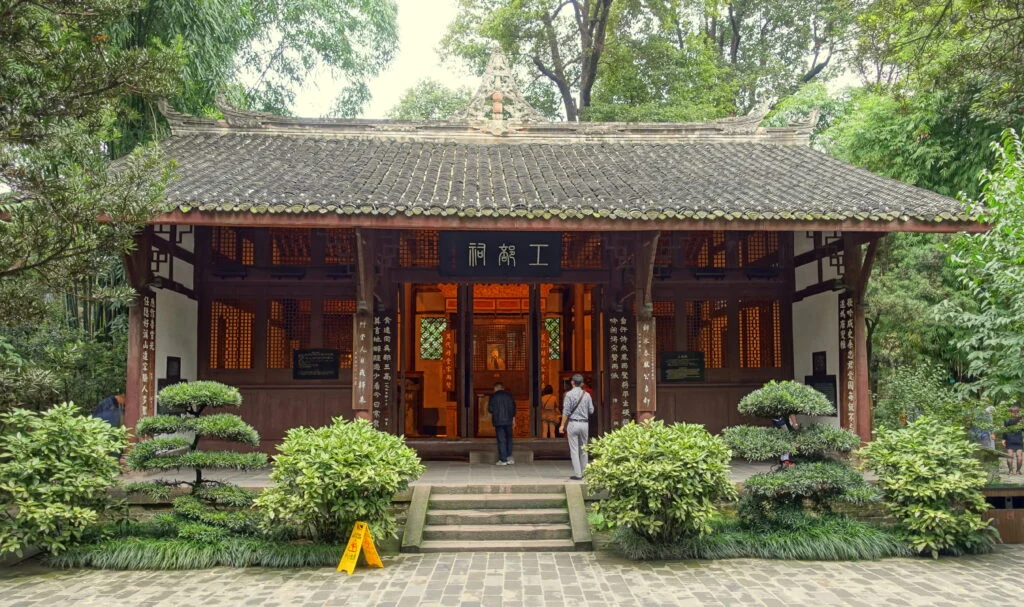
Visitors approaching the Du Fu Thatched Cottage Museum will encounter a site that combines built heritage with landscaped gardens. The entry is generally marked by traditional Chinese architecture, including tiled roofs and wooden pavilions designed to echo styles from the Tang and subsequent periods. The museum complex is situated alongside a quiet park area, often described as emotionally evocative due to its tranquil ponds, willow trees, and winding paths.
This setting prepares visitors for an experience that is as much about atmosphere as it is about exhibits. The overall design invites reflection and provides a pause from urban life, reinforcing the contemplative qualities central to Du Fu’s poetry. The museum’s exterior signals its dual nature as a historical memorial and a public leisure space.
Inside the grounds, visitors will find reconstruction of the original thatched cottage, small exhibition halls, and several sculptures and inscriptions related to Du Fu’s work. The blend of literary artifacts and garden landscaping is intended to immerse visitors in the aesthetic and historical environment that shaped Du Fu’s poetry, giving a sense of both place and period from the moment of arrival.
Highlights and Key Exhibitions
Central to the museum’s appeal is its focus on Du Fu as a poet and historical figure. The exhibitions place strong emphasis on his life’s trajectory, his poetic output, and the turbulent political and social backdrop against which he wrote. Displayed in several halls are facsimiles of his manuscripts, historical editions of his poetry, and explanatory panels that contextualize his writing within the Tang Dynasty.
The reconstructed thatched cottage is itself a key attraction, offering a physical link to Du Fu’s modest living conditions. While the reconstruction is not original, it adheres closely to historical descriptions and traditional architectural techniques. This element helps visitors visualize the conditions under which Du Fu composed many of his poems.
The museum also includes numerous plaques and calligraphic displays featuring excerpts from Du Fu’s poems, often presented in both classical Chinese and modern translations. These are complemented by visual art inspired by his themes—landscape paintings, ink drawings, and woodblock prints that attempt to capture the moods and motifs recurrent in his work, such as nature’s cycles, war and suffering, and human resilience.
Supplementing the focus on Du Fu’s personal oeuvre are exhibits about Tang Dynasty culture, history, and poetry more broadly. These provide context for understanding the literary conventions and social realities informing his writing. Visitors interested in Chinese cultural history will find sections addressing the poetry scene of ancient Chengdu and the dynasty’s broader artistic environment.
The museum displays also include works by later poets and scholars who engaged with Du Fu’s poems, illustrating his lasting influence in Chinese literature up to modern times. In this way, the exhibition conveys a sense of continuity and ongoing relevance rather than presenting Du Fu solely as a historical relic.
Visitor Experience
The visitor experience at Du Fu Thatched Cottage Museum tends to be paced around a blend of indoor and outdoor spaces. The gardens and natural areas encourage a slower, reflective visit, which can be appealing for those drawn to literary history or serene environments. The setting encourages lingering, and many visitors use the opportunity to appreciate both the museum and the park setting simultaneously.
Interpretive materials are presented primarily in Chinese, with translations available in English at key points. While translation quality varies, the museum does make an effort to cater to international visitors, though some sections assume a degree of prior familiarity with Chinese literature or history. Those without a background in Du Fu’s work may find certain references and allusions challenging but not impenetrable, especially if they approach the visit with curiosity about Tang culture.
The balance between text-heavy displays and artistic elements supports a variety of interests. Those invested in literary scholarship can delve into the manuscripts and interpretive panels, while visitors more attracted to scenic and cultural aspects will appreciate the garden layout and architectural recreations.
One limitation worth noting is that, because the museum occupies a large outdoor area, weather conditions can affect the visitor experience significantly. Rain or high heat can limit enjoyment of the gardens and encourage a more compressed visit focused on indoor exhibits. Seasonal changes in the landscaping also alter the mood of the site, which means visitor impressions may vary greatly depending on timing.
Despite this, the museum’s arrangement sustains interest throughout a typical visit, allowing time to engage with both poetic and physical elements of Du Fu’s legacy. The Decorum and contemplative atmosphere make it suitable for families, students of Chinese culture, and literary enthusiasts, though it may hold less immediate appeal for visitors seeking more interactive or multimedia-driven exhibitions.
Tickets, Access, and Planning
Details on ticketing and current opening hours should be confirmed through the museum’s official website or other authoritative sources prior to planning a visit. Public transportation options connect the museum with Chengdu’s city center, but the site is located somewhat peripheral relative to other major tourism points, so visitors should plan for additional travel time.
While the site is noted for its traditional paths and garden landscaping, those with limited mobility should verify accessibility measures before attending, as the terrain includes uneven surfaces and variable elevation. The museum grounds are large enough to require comfortable footwear and moderate stamina for a full visit.
Visitor services such as guided tours, educational programs, or audio guides are not guaranteed and require confirmation ahead of time if desired. The museum’s pace and design suggest that self-guided visits are common, with staff available on site for general information. Seasonal closures or restrictions may apply, so checking for updates is advisable.
Final Verdict
The Du Fu Thatched Cottage Museum offers a focused, culturally rich experience centered on one of China’s key literary figures. It stands out for successfully integrating historical reconstruction, literary interpretation, and naturalistic landscaping to create a contemplative environment that resonates with Du Fu’s poetry. By presenting both the poet’s personal circumstances and his broader cultural impact, the museum allows visitors to appreciate the continuing significance of Du Fu’s work.
Its strongest appeal lies with visitors interested in Chinese literature, history, and traditional garden aesthetics. The site functions well as a literary memorial and cultural park, encouraging reflection in a setting that feels grounded in history rather than overtly commercialized.
However, potential visitors should recognize the museum’s limitations in terms of language accessibility, climatic dependence, and transport logistics. The absence of extensive interactive or multimedia elements may also restrict appeal for those accustomed to more technologically driven museum experiences. Planning ahead is essential to accommodate these factors.
On balance, the museum succeeds as a specialized destination that deepens understanding of Du Fu and his era. It is unlikely to satisfy all museum-goers equally but remains a substantive experience for those willing to engage with classical Chinese poetry and Tang Dynasty culture in a peaceful, historically resonant setting.