Du Fu Thatched Cottage Museum
House Museums · Chengdu, China. The Du Fu Thatched Cottage Museum in Chengdu, China, is a site dedicated to one of China’s most revered poets, Du Fu (712–770), who lived during the Tang Dynasty. This museum takes the form…
Best forMuseum lovers, culture travelers, first-time visitors
Setting / nearbyChengdu, China
Overview
The Du Fu Thatched Cottage Museum in Chengdu, China, is a site dedicated to one of China’s most revered poets, Du Fu (712–770), who lived during the Tang Dynasty. This museum takes the form of a historic house museum and a memorial park centered around a traditional thatched cottage. The site commemorates Du Fu’s life and work, presenting visitors with a cultural and literary experience that connects deeply with classical Chinese poetry. It is both a place of historical significance and a cultural symbol in Chengdu, reflecting the city’s literary heritage and its regard for poetic tradition.
Du Fu is often considered among the greatest poets in Chinese history, known for his vivid descriptions of social realities, nature, and the hardships of his time. The museum’s focus on his thatched residence—the place he lived for a short but creatively fertile period—offers a tangible link to his personal and artistic life. Visitors to the museum move through carefully preserved gardens, reconstructed buildings, and exhibition spaces that together cultivate an atmosphere evocative of the Tang era and Du Fu’s poetic themes.
Collection Highlights
The Du Fu Thatched Cottage Museum primarily centers on the poet’s life, work, and legacy. The core of the collection involves historical and literary artifacts related to Du Fu and the Tang dynasty. Rather than extensive artifact displays typical of art or archaeological museums, the site emphasizes manuscripts, calligraphy, inscriptions, and reproductions of Du Fu’s poetry carved in stone or displayed in various artistic forms.
One may find collections of classical Chinese calligraphy featuring Du Fu’s poems, which are important not only for their literary content but also as fine examples of brushwork and traditional artistic expression. Some exhibits present the historical context of Du Fu’s life—illustrating the political and social unrest he endured—as well as how his poetry reflects those challenges.
The museum grounds include several pavilions, halls, and galleries displaying related cultural relics and artworks inspired by Du Fu’s poetry. Scroll paintings, woodblock prints, and scholar’s objects further enhance the experience by showing how the poet’s work influenced artistic circles over centuries. In this way, the museum acts as a cultural repository for both textual and visual remembrances linked to Du Fu.
Despite its literary focus, the collection is neither large in the conventional museum sense nor fully contemporary in presentation style. Those interested primarily in material culture or interactive displays might find the offerings more contemplative and traditional. The museum’s emphasis is on atmosphere and scholarly reflection rather than commercial or high-tech exhibition methods.
Building and Setting
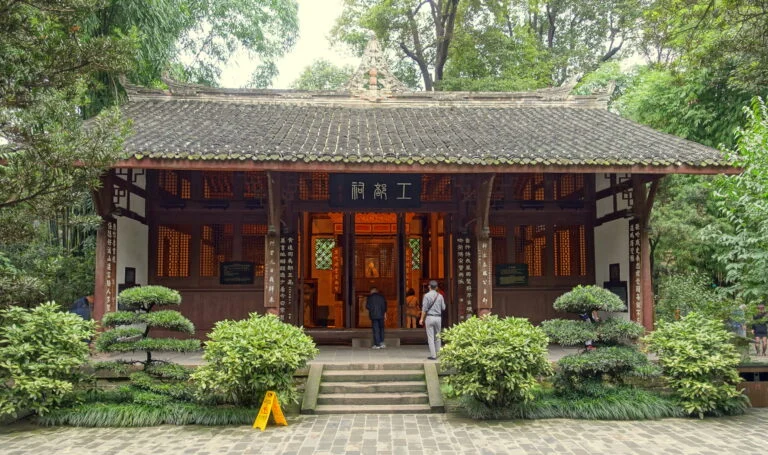
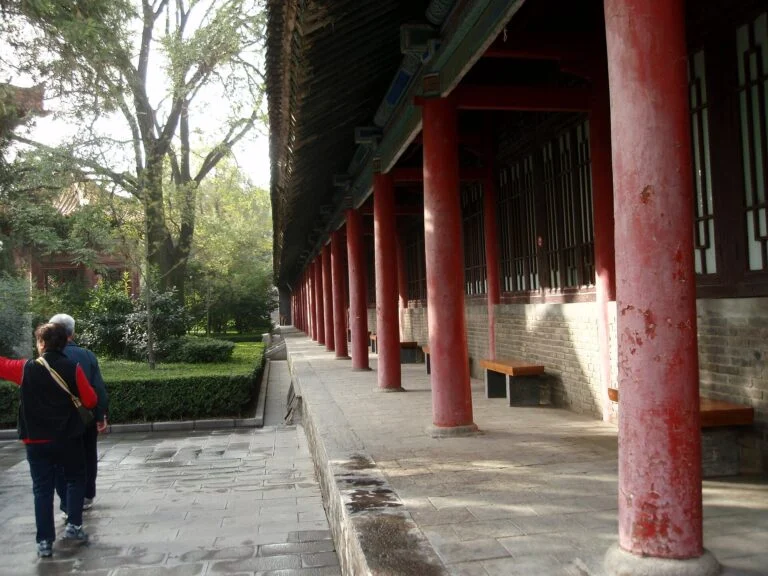
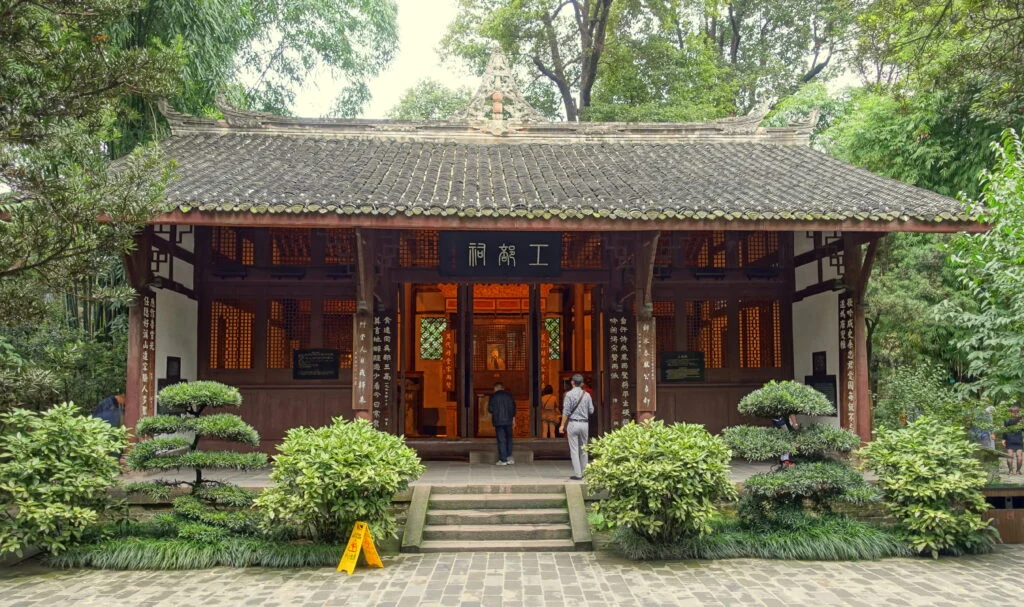
The museum is set in a landscaped park in Chengdu, believed to approximate the site of Du Fu’s original thatched abode. This setting blends garden space and historic architecture, designed to evoke the natural and rustic environment the poet described in his writings. The recreated thatched cottage is the focal point, surrounded by auxiliary buildings, stone paths, and willow trees, all intended to reflect the aesthetic of a rural retreat where a scholar-poet might seek solace.
The architecture and garden are traditional in style, with attention to detail that suggests the Tang dynasty atmosphere. The thatch, wooden beams, and courtyard layout are meant to recreate a simple, humble dwelling consistent with the period and Du Fu’s personal circumstances during his stay here. This approach supports an immersive experience that complements the textual exhibits.
Situated in a quiet part of Chengdu, the surroundings provide a relative sense of retreat from urban life, although the museum remains accessible within the city. The garden and water features invite leisurely exploration, allowing visitors to appreciate the connection between natural beauty and poetic inspiration that defined Du Fu’s work.
Practical Information
Visitors planning a trip to the Du Fu Thatched Cottage Museum should verify schedules and ticketing information via the museum’s official website or trusted local sources before arrival. Details such as opening hours, admission costs, and available guided or audio tours can vary over time. The museum’s layout includes outdoor areas and indoor galleries, so preparation for weather conditions and comfortable walking shoes is advisable.
Because the museum deals primarily with literary and historic material and is set within a garden, it may appeal differently depending on individual interests and mobility. Visitors who enjoy poetry, Chinese history, traditional architecture, and garden design will find this site particularly rewarding. Those expecting extensive interactive features or purely visual arts exhibitions might want to set their expectations accordingly.
Planning a visit outside peak holiday seasons may help avoid larger crowds, as the museum enjoys steady local and tourist attendance. However, the site is not typically associated with large-scale events or exhibitions that might dramatically affect visitor flow. Regardless, checking current visitor guidance, health policies, or special notices on the official site is recommended.
Why Visit
The Du Fu Thatched Cottage Museum stands out as a specialized cultural institution centered on one of China’s most important literary figures. It offers more than just historical facts; it affords a chance to engage—in a quiet and reflective environment—with the legacy of classical Chinese poetry and the life of a poet who chronicled turbulence and beauty alike with remarkable skill.
For those with an interest in literature, especially classical East Asian poetry, the museum holds particular appeal. It provides context for Du Fu’s work through both textual displays and the atmospheric reconstruction of his living environment, allowing deeper insight into what influenced his creativity. The carefully maintained gardens and the reconstructed thatch cottage serve as a peaceful backdrop that closely corresponds to the themes found in Du Fu’s verses.
The museum’s focus on literary heritage, traditional architecture, and serene landscaping also makes it suitable for visitors seeking a contemplative cultural experience rather than a fast-paced sightseeing stop. It offers an opportunity to slow down, absorb historical depth, and appreciate a poetic voice central to Chinese cultural identity.
At the same time, this site has limitations. It is a niche museum, and those without prior interest or background in Chinese poetry or history may find it less engaging. The exhibits rely heavily on textual interpretations and traditional presentation, which may be less appealing to visitors who prefer interactive technology or broad historical displays.
Ultimately, the Du Fu Thatched Cottage Museum suits visitors looking to explore Chinese literary history amid a setting designed for reflection and appreciation. It speaks to the endurance of poetry as cultural memory and the ways physical place can connect people to artistry that continues to resonate after many centuries.
Before visiting, it is wise to consult the museum’s official website for up-to-date visitor information, as policies regarding tickets, opening hours, accessibility, and tours may change. This preparation can help ensure a visit that is both informative and comfortably paced.
In sum, the Du Fu Thatched Cottage Museum is an important cultural site that anchors literary history in architectural and natural surroundings, offering an experience distinct from typical art or history museums. Its atmosphere encourages quiet contemplation, making it an intriguing destination for those seeking insight into one of China’s most treasured poets.